Hurricane resistant landscaping in Florida means choosing deep-rooted, wind-tolerant plants, placing trees well away from the house and power lines, pruning so wind can pass through the canopy, and clearing loose items before a storm. In Palm Coast, live oak, sabal palm, southern magnolia, and bald cypress hold up best, while sand pine and water oak fail most often.
We have designed and cared for yards in Palm Coast since 2015. A tree in the wrong spot becomes a roof repair, and a bed with no mulch becomes a washout. The fixes in this guide cost little when you plan them early.
What a Palm Coast Yard Really Faces in a Hurricane
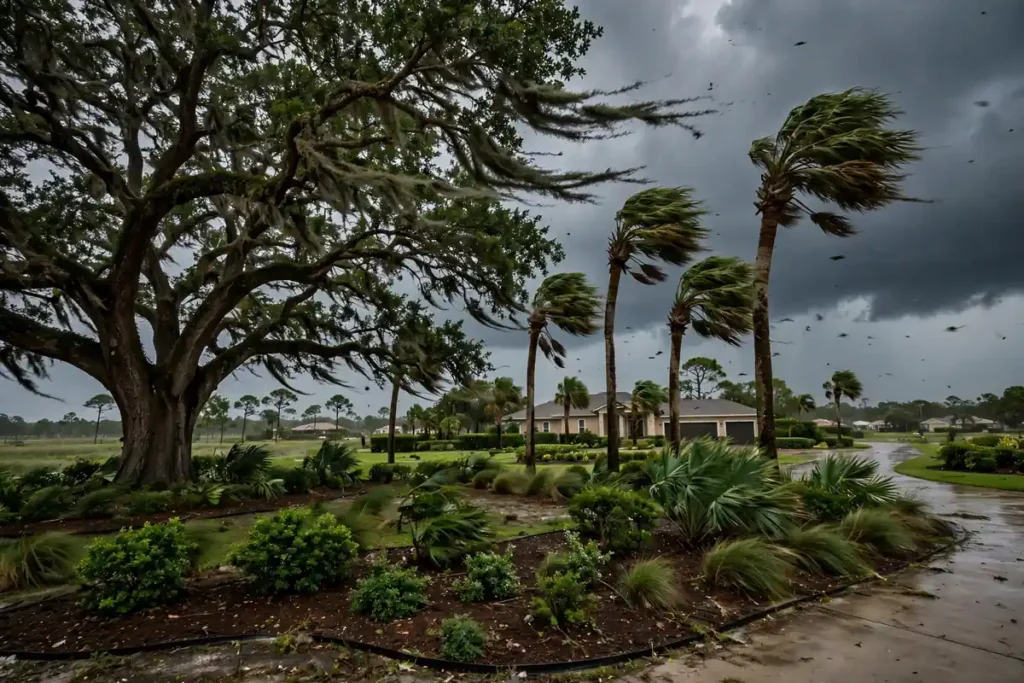
Hurricane season runs from June 1 to November 30. Palm Coast sits on the Northeast Florida coast, so a storm can bring strong wind, heavy rain, and salt spray at once. Sandy soil drains fast on a normal day, but hours of rain soak it through, and wet sand holds roots far less firmly than dry soil.
Wind is the main threat to trees. A full canopy catches wind like a sail and pulls at the roots with every gust. Weak wood snaps, shallow roots lift out of the ground, and loose pots and chairs turn into flying objects. A storm-ready yard deals with all of this before the forecast turns serious, not the day the storm arrives.
Start With Trees That Bend Instead of Break
Tree choice is the biggest decision in a storm-ready yard. Researchers at the University of Florida studied tree damage after several hurricanes, and the winners shared the same traits: deep roots, strong wood that bends, and a shape that lets wind slip past.
These four trees top the list for Palm Coast yards:
- Live oak. Deep, wide-spreading roots and strong wood that bends in wind instead of snapping. Give it room to grow wide.
- Sabal palm. Florida’s state tree. Its fronds spill wind instead of fighting it, and its fibrous root system holds firm in sandy soil. It handles salt air well too.
- Southern magnolia. Strong wood and deep roots, with a dense canopy that holds up well in storms. Plant it where it has room to spread, away from the roof and the driveway.
- Bald cypress. A buttressed trunk and roots that handle wet soil, so it suits low spots where water collects after heavy rain. It drops its needles in winter, so winter wind passes through easily.
For a tight lot, crape myrtle is a good smaller choice. Its flexible wood bends well in wind, and it stays small enough for a front bed. If you add a palm, read our guide to planting a palm tree in Florida first. Planting depth and early watering decide how well it anchors in year one.
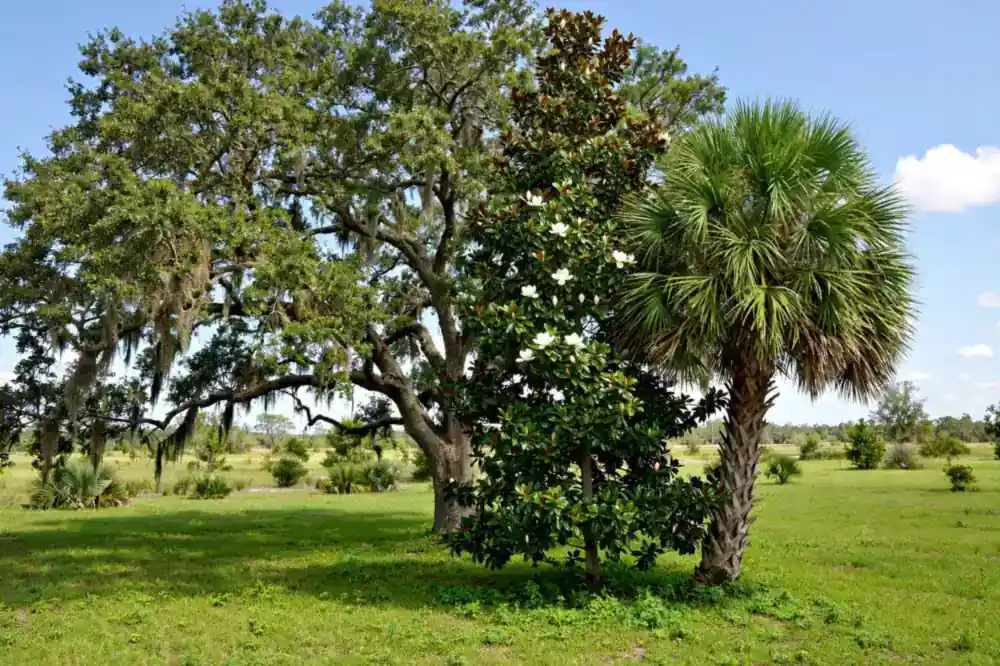
The Trees We Leave Out of a Storm-Ready Yard
Some trees fail so often in Florida storms that we do not plant them near homes. Sand pine has shallow roots and pulls out of wet soil in high wind. Water oak has brittle wood and drops large limbs. Laurel oak and queen palm topple easily when soil turns soft.
If one already stands close to your house, have it checked before June. A weak tree near a roof is a repair bill waiting for a storm, and removing it costs far less than fixing a roof or a fence. Replace it with a wind-tolerant species in a better spot.
Give Each Tree Room to Stand Its Ground
A strong tree in a tight spot is still a weak tree. Roots need room to spread wide and deep, and a tree against a foundation or under a power line never gets it. The first rule of Florida-Friendly planting is right plant, right place.
Keep trees at least 15 feet from the foundation, and give a large tree like a live oak room equal to its mature canopy width. That keeps roots off the slab and the canopy off the roof. Plant well clear of power lines too, since a limb in a line is a hazard for the whole street.
Roots lift pavers, crack driveways, and push into drain lines when they have nowhere else to go, so a little extra space now saves years of repairs. Our notes on landscaping around trees show how to use beds and ground cover to protect the root zone instead of paving right up to the trunk.
Plant Trees in Groups So They Hold Each Other Up
Trees planted in groups survive storms better than trees planted alone. Research from the University of Florida found grouped trees had about a 10 percent survival edge over single trees in hurricane-force wind, since each tree breaks the wind for the next and their roots knit the soil together.
A group of three to five trees works well in most yards. Mix species so one weak point does not take the group down, and space them so canopies can grow without crowding. A loose cluster gives shade, privacy, and wind protection in one planting.
Give the group breathing room. Trees packed in a tight row grow tall and thin and fall like dominoes when one goes over.
Prune for Wind Flow, Not for a Shorter Tree
Pruning is where many yards go wrong before a storm. The goal is a canopy wind can pass through, not a shorter tree. A thick canopy catches wind, while an open one lets it slip past and takes load off the trunk and roots.
What to Cut, and What to Leave Alone
Each year, remove dead, dying, and crossing limbs, plus any branch that rubs the roof or a power line. Thin crowded growth so air moves through the crown, and keep the tree’s natural shape and main leader intact.
Never top a tree or cut it back to bare stubs, a practice some people call hat-racking. Topping does not make a tree safer. It strips the leaves the tree needs to feed itself, and the weak shoots that sprout back break first in the next storm. Never remove more than a quarter of a tree’s foliage in one year.
Do the main pruning in late winter into spring, well before June 1, so cuts heal before storm season. Handle small cuts yourself with sharp, clean tools, and hire a trained professional for large limbs or any work near a roof or a power line. The same care applies to smaller flowering trees. Our guide to pruning crape myrtles the right way shows how light, regular cuts keep a small tree strong.
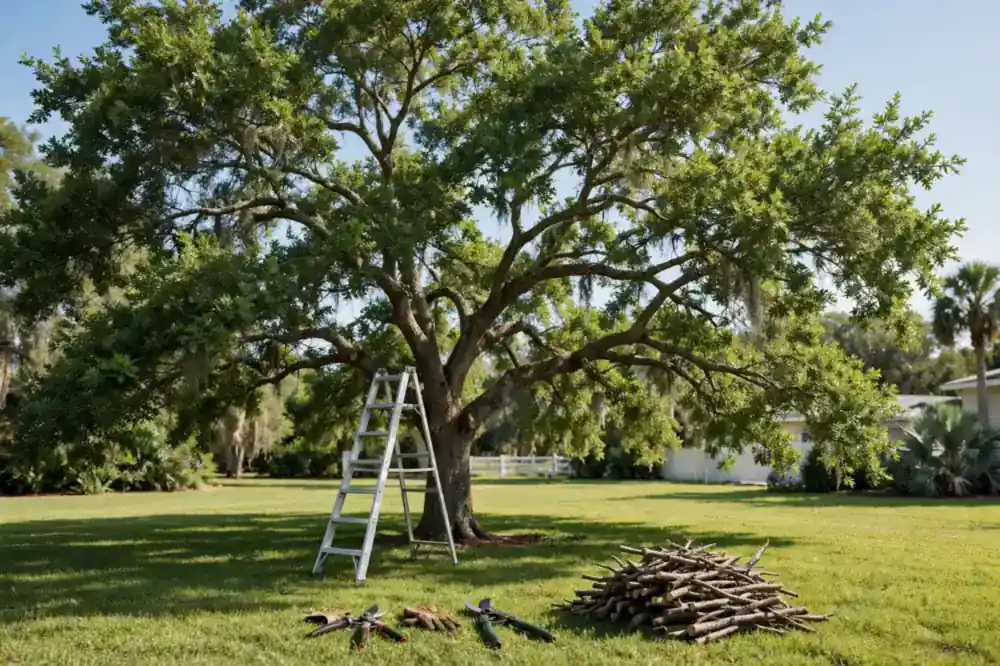
Tie Down, Store, and Clear the Yard Before the Wind Arrives
A storm-ready yard has nothing loose in it when the wind rises. Walk your yard and ask about every item: will this stay put in a 100-mile-an-hour gust? If not, store it, tie it down, or remove it.
- Stake young trees. A new tree needs support for its first year or two while roots take hold. Use flexible ties that let the trunk sway, since a tree that never moves grows a weak trunk. Check stakes each spring and remove them once the tree stands firm.
- Store patio furniture and pots. Bring chairs, tables, grills, hanging baskets, and garden art inside. Heavy items that must stay out should be tied down or laid flat against a sheltered wall.
- Clear dead wood and debris. Pick up fallen limbs, old stakes, and broken pots. Dead branches should come down before the storm takes them down for you.
- Check fences, gates, and sheds. Fix loose boards and weak hinges. A fence panel that lifts in wind becomes a heavy object flying across the yard.
Do this walk-through in May, and repeat it when a storm watch is posted. A short list on the fridge makes the second pass fast.
Keep Heavy Rain Moving Away From the House
Wind gets the attention, but water does much of the damage. A yard that holds water against the house soaks the foundation, floods low rooms, and drowns plants that cannot stand wet roots for days.
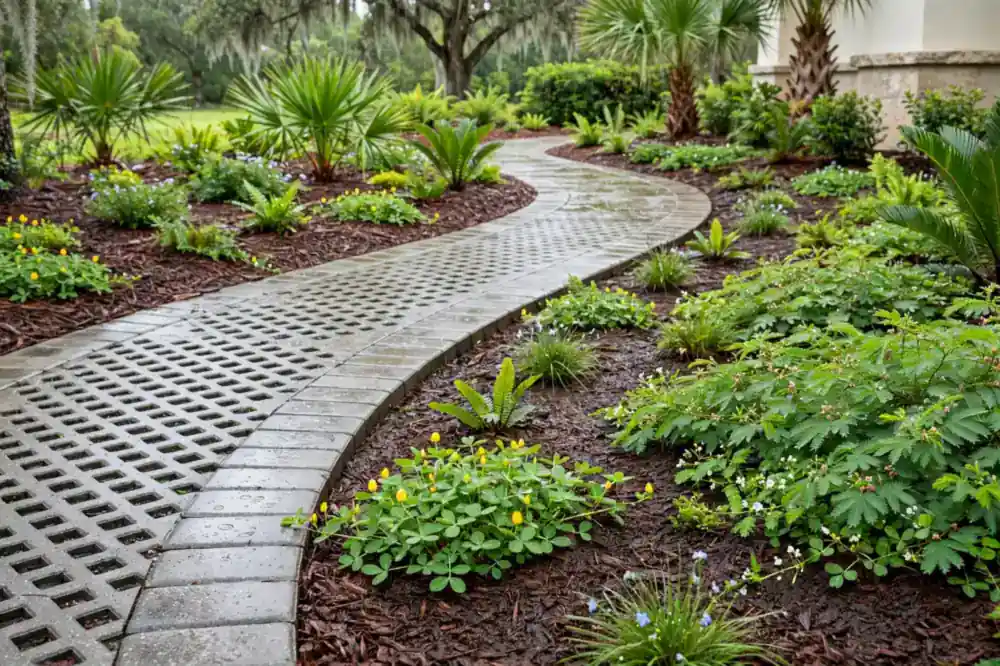
Grade soil so it slopes gently away from the house. Keep gutters clear and extend downspouts well away from the foundation. Permeable paths and patios let rain soak in instead of sheeting toward the door.
A low spot can work for you. Planted as a shallow rain garden, it catches runoff from the roof and driveway and lets it soak in slowly. Our guide on how to build a rain garden in Florida covers depth, distance from the house, and plants that handle both wet spells and dry weeks. Check drains and low spots each spring, before the first storm of the season tests them.
Let Mulch and Ground Cover Hold the Soil in Place
Bare soil washes away in heavy rain. A 2 to 3 inch layer of organic mulch protects the soil, slows runoff, and feeds the ground as it breaks down. It also holds moisture in dry weeks, so plants face storm season in good shape.
Spread mulch in a wide ring around trees and shrubs, but keep it a few inches from trunks so bark stays dry. Low ground cover does the same job on slopes where mulch slides away. Its roots knit the soil together, and its leaves break the force of falling rain.
Refresh mulch each spring so beds enter storm season with full cover. Old, thin mulch washes off in the first heavy rain. See how long mulch lasts in Florida and plan your spring refresh around it.
After the Storm: Check, Save, and Replant With Care
Once the storm has passed and it is safe to go outside, walk the yard slowly. Watch for downed power lines and do not touch any wire on the ground. Check each tree for a lean, a cracked trunk, or lifting roots. A small leaning tree can often be straightened and staked within a day or two, while its roots are still alive.
Prune broken limbs back to a clean cut, and remove only what is dead, broken, or dangerous. Many plants that look beaten will recover with water and time, and a palm with a bent crown may still push out new growth.
Note what failed before you forget. If a tree toppled, ask why: shallow roots, a tight spot, or the wrong species? Replace losses with wind-resistant species in better spots with more room.
Plan a Storm-Ready Yard With Dreamscapes Florida
A hurricane-ready yard is not built in a weekend. It grows from steady choices: the right trees, room to grow, honest pruning, and nothing loose when the wind rises. Start in spring and work the list one step at a time.
We can help you plan a landscape design that holds up to Florida weather, from tree placement and beds to drainage and ground cover. We serve Palm Coast, Flagler Beach, Bunnell, Ormond Beach, and St. Augustine. Call Dreamscapes Florida at (386) 237-2983 and we will help you build a plan that stands up to the next storm.
Frequently Asked Questions
Live oak, sabal palm, southern magnolia, and bald cypress hold up best in Florida storms. They have deep roots and strong, flexible wood, and University of Florida research ranks them among the strongest survivors after hurricanes.
Keep trees at least 15 feet from the foundation, and give a large tree like a live oak room equal to its mature canopy width. Plant well clear of power lines too, since a limb in a line is a hazard for the whole street.
No. Topping, also called hat-racking, strips the leaves a tree needs to feed itself, and the weak shoots that grow back break first in the next storm. Instead, prune lightly for wind flow and never remove more than a quarter of the foliage in one year.
Stake young trees with flexible ties, store or tie down patio furniture and pots, clear dead wood and debris, and mulch beds to slow runoff and hold soil in place. Do the main pruning in late winter into spring, well before June 1.
Sabal palm and pygmy date palm handle hurricanes well. Sabal palm fronds spill wind instead of fighting it, and both palms have fibrous root systems that hold firm in sandy soil.
Start in spring, well before hurricane season opens on June 1. Plant new trees early so roots have time to take hold, prune in late winter into spring, refresh mulch, and check stakes, fences, and drains in May so nothing is left to the last minute.