Reviewed November 2026
Lawn aeration in Florida usually costs about $85 to $145 for a quarter-acre lawn, according to Lawn by Season (2026), and many sandy Palm Coast lawns need it less often than lawns up north. These figures are market averages for lawn aeration cost in Florida, not our prices. The cheapest aeration is the one you skip when your soil is not compacted. This post covers 2026 prices by city, what drives the quote, and how to tell if your lawn needs it at all.
How Much Does Lawn Aeration Cost?
How much does lawn aeration cost in Florida? Florida homeowners pay $85 to $145 for professional lawn aeration in 2026, according to Lawn by Season, with a typical rate of $115 for a standard quarter-acre lawn. Florida prices run lower because sandy native soils rarely need aggressive core aeration. That range is the starting point for lawn aeration cost on a standard lot, and the price is per visit. It covers the machine, the crew, and travel to your home.
For national context, HomeGuide lists aeration at $75 to $200 per service visit, with 1 to 2 treatments per year. Most Palm Coast lawns sit near the Florida range, not the national top end. If your lot is larger than a quarter acre, expect the quote to rise with size. See our guide to lawn mowing cost for the other half of a basic lawn care budget.
Lawn Aeration Cost in Florida by City
One statewide range hides real differences between cities, so here are five named sources side by side. Every figure below comes from the source listed in the same row.
| Source | Area | Price |
|---|---|---|
| Lawn by Season | Florida statewide | $85 to $145, $115 typical |
| Lawn by Season | Jacksonville | $75 to $135, about $100 typical |
| HomeAdvisor | Jacksonville | $199 average, $115 to $390 range |
| Angi | Orlando | $120 average, $90 to $120 range |
| LawnStarter | Tallahassee | $118 average |
Northeast Florida prices sit near the statewide range. Ask for a written quote after a site check, since lot size and compaction move the final number.
What Drives the Price
Two lawns can get two different quotes for the same service. These are the factors that move the number.
- Lawn size. A quarter-acre lot is the base for most published prices, and larger lots cost more.
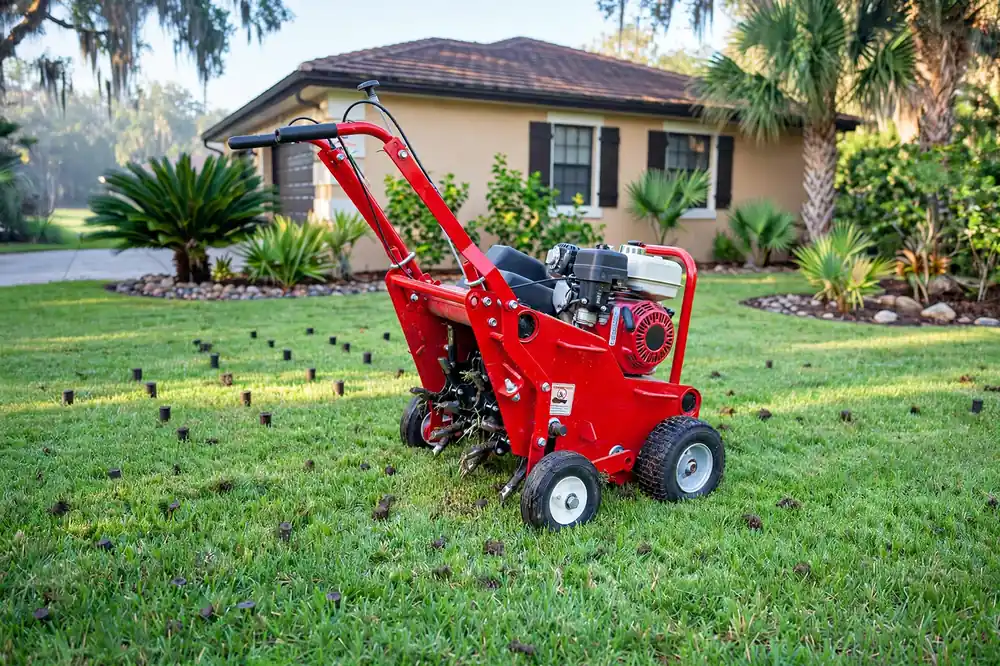
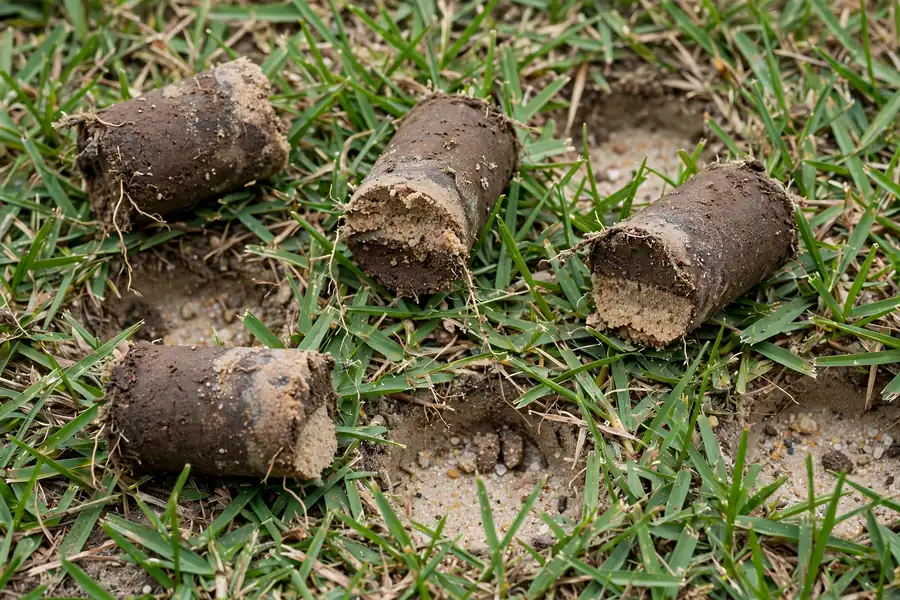
- Core or spike service. Core aeration pulls plugs of soil, while spike service only pokes holes, and the two are priced differently.
- How compacted the soil is. Hard, packed soil takes more passes and more time.
- Obstacles and sprinkler heads to flag. Heads, shallow lines, and landscape lights must be marked before the machine runs.
- Slopes and access. Steep grades and tight gates slow the crew down.
- First visit or repeat visit. A first visit on a neglected lawn often takes longer than a repeat visit on a maintained lawn.
- Bundling. Pairing aeration with dethatching or fertilization can change the per-visit total, so ask how aeration and dethatching cost changes when you book both together.
Some homeowners ask about lawn aeration cost per square foot. No source in this guide publishes a per-square-foot figure, so do not judge a quote by that number alone. Compare the full per-visit price and what it includes instead.
Core vs Spike Aeration Price
Aggregators report that spike service costs less than core aeration on sandy soil, so core aeration cost sits higher in most quotes. University research supports core aeration that pulls plugs for compaction. UMass Amherst Extension notes that core aeration lets air, water, and nutrients move down to the roots, and for heavily compacted areas it calls for tines with inside diameters of 1/4 to 3/4 inch and penetration of about 2.5 to 4 inches. See our guide to liquid vs core aeration for the full comparison. We do not recommend spike aeration for compacted soil.
Is Lawn Aeration Worth It in Florida?
Is lawn aeration worth it in Florida? Only if the soil is compacted. Sandy Flagler County soil compacts less than clay, but traffic paths, parking strips, play areas, and packed builder fill in newer subdivisions can still need it.
Test first. Push a screwdriver into moist soil. If it slides in easily, your soil is not compacted and you can skip aeration. If it stops short, the lawn may need it. Our guide to liquid vs core aeration explains the full test.
Watch for the signs. Hard soil underfoot, water that runs off instead of soaking in, and thin turf in traffic paths all point to compaction. Thin turf in the same worn paths often points to compaction, not feeding. If the turf is dead rather than thin, read our guide to restore a dead lawn before you pay for aeration. When the problem is bumps and low spots instead, see how to level a lawn. If the grass is too far gone to save, compare sod installation cost before you decide.
Best Time to Aerate St. Augustine in Palm Coast
Aerate in late spring through summer, while St. Augustinegrass grows actively, according to Clemson Cooperative Extension. Aerate on moist soil, not wet soil, with tines about 2 to 3 inches apart. Skip dormant or drought-stressed turf, since it recovers slowly. Fall aeration and yearly aeration by default do not fit Florida lawns.
Do You Need Both Aeration and Dethatching?
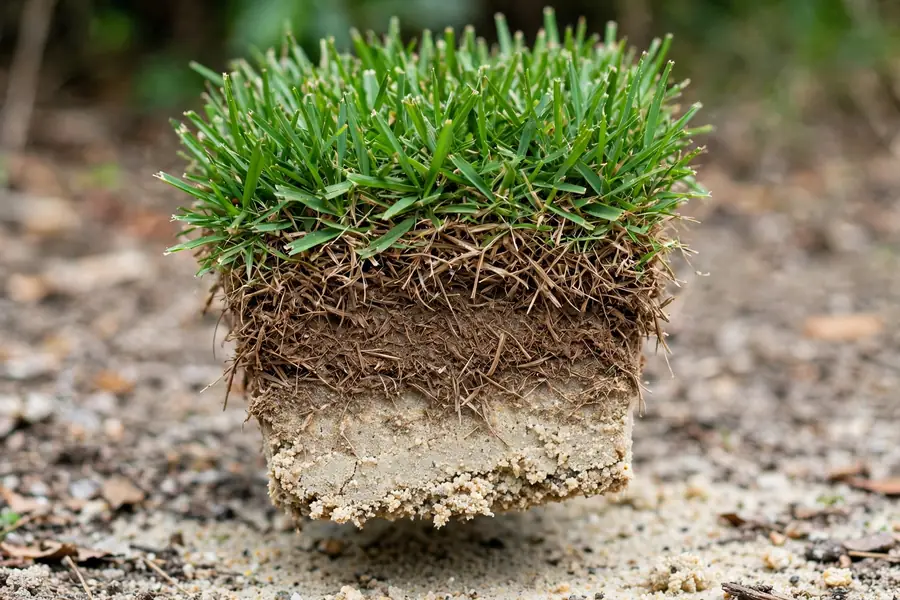
Aeration and dethatching fix different problems. Aeration fixes compaction below the surface, and dethatching removes the spongy layer above it. Most lawns need one or the other, not both. If your lawn needs both, aerate first and dethatch a week or two later. Ask for one quote if you book both jobs together, so you can see the combined total before you agree. Our guide to dethatching St. Augustine grass explains the dethatching side in full.
DIY Lawn Aeration vs Professional
DIY lawn aeration is possible on a small lot with a rental machine. The risks are real. You can hit sprinkler heads and shallow lines, and a heavy machine is hard to run on dry, hard sand. A pro crew flags heads before the job, waters ahead so the soil is moist, and leaves the plugs on the lawn to break down. If your lot is small and flat with no heads to hit, a rental can work. On a larger lot or a lawn with heads and lights everywhere, a pro saves you the repair bill.
Lawn Aeration in Palm Coast
Dreamscapes Florida checks soil, thatch, and watering before recommending aeration, so you pay only for what your lawn needs. We quote after a site check, and our figures here are market averages, not our prices. Pair aeration with seasonal feeding in a lawn maintenance plan, and see our Florida lawn fertilizer schedule for timing. If you searched for a lawn aeration service near me, start with a free estimate or through our lawn maintenance in Palm Coast page. We serve Palm Coast, Flagler Beach, Bunnell, Ormond Beach, and St. Augustine. Call (386) 237-2983.
Frequently Asked Questions
Lawn aeration cost in Florida runs about $85 to $145 for a quarter-acre lawn in 2026, according to Lawn by Season, with $115 typical. City averages vary. HomeAdvisor lists $199 in Jacksonville and Angi lists $120 in Orlando. Ask for a written quote after a site check.
Only when the soil is compacted. Sand compacts less than clay, but traffic paths, parking strips, and packed builder fill can still need it. Push a screwdriver into moist soil first. If it slides in easily, skip aeration and save the money.
University extension research supports core aeration, which pulls plugs of soil, for relieving compaction. Some Florida companies offer spike service at a lower price on sandy soil. If your soil is truly compacted, ask for core aeration when you book the job.
Late spring through summer, while St. Augustine grows actively, according to Clemson Cooperative Extension. Aerate on moist soil, not wet soil. Tines should sit 2 to 3 inches apart, and the lawn should be growing fast enough to fill the holes quickly. Skip dormant or drought-stressed lawns, since they recover slowly.
Most lawns need one or the other, not both. Aeration fixes compaction below the surface, and dethatching removes the spongy layer above it. If your lawn needs both, aerate first and dethatch a week or two later. Book both in one visit only when the lawn truly needs both.
Liquid aeration may cost less, but Colorado State University Extension found no scientific evaluation showing it works and says no chemical replaces physical removal of compacted soil. It may act as a wetting agent on dry sand only. Stick with core aeration when compaction is the problem.