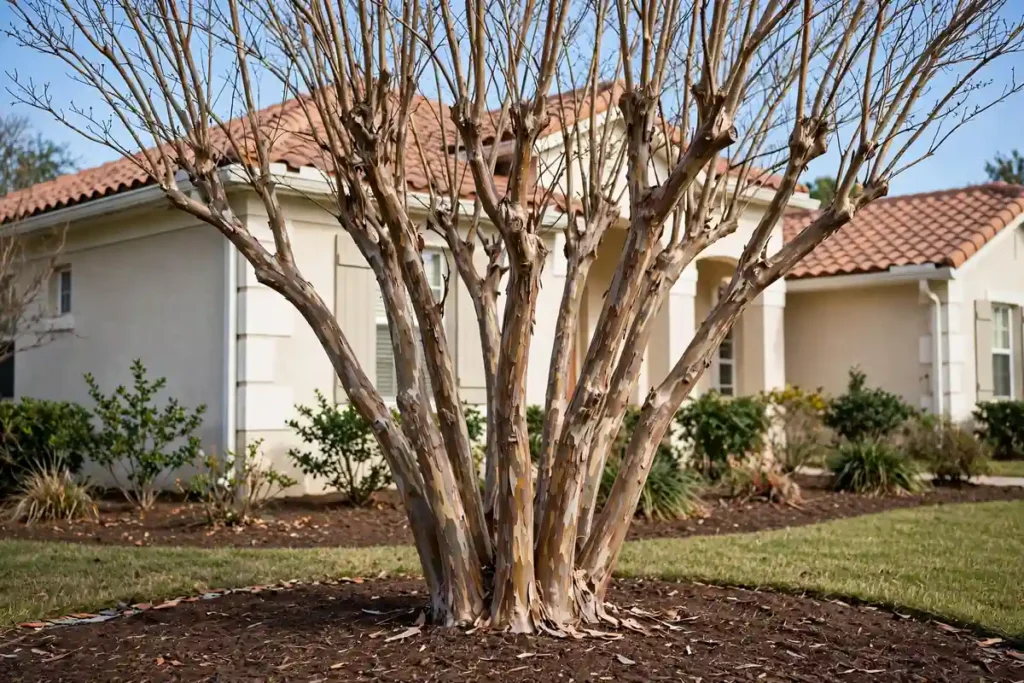
Prune crape myrtles in Florida in late winter, about December through February, while the tree is bare. Remove suckers, dead or crossing branches, and limbs growing into the center, and trim only pencil-size tips if you want. Skip topping the trunks. UF/IFAS research shows topping delays blooms and leaves weak, drooping branches.
Most crape myrtles in Flagler County need only a light touch each year. We see the same mistake every winter: a healthy tree cut back to bare stubs in the hope of more flowers. The tree usually grows back fast, but the new growth is weak, and the flowers arrive late. Light pruning keeps the natural vase shape and keeps the tree strong for years.
When to Prune Crape Myrtles in Florida
Late winter is the best time to prune crapemyrtles in Florida. UF/IFAS puts the window at about December through February, when the tree has no leaves. With no leaves in the way, you can see the full branch structure and spot what needs to go. That clear view is the main reason winter beats summer for this job.
Save severe cuts for late in the dormant season. A hard cut made too early can push soft new growth, and a cold snap can damage that growth. Safety pruning is different. You can remove a broken limb or a branch that blocks a walkway any time of year. Hard pruning in summer is discouraged, since the tree is in full leaf and under heat stress.
Tools You Need
You do not need much gear. Sharp, clean blades matter more than a big tool collection, since a clean cut heals better than a torn one.
- Bypass hand pruners, for small stems and suckers.
- Loppers, for branches too thick for hand pruners.
- A small pruning saw, for larger limbs.
- Work gloves, for grip and protection from bark and twigs.
How to Prune Crape Myrtles, Step by Step
Work from the bottom of the tree upward, and from the inside out. Take a step back often to check the shape. Small, careful cuts beat one big cut every time.
Step 1: Remove Suckers at the Base
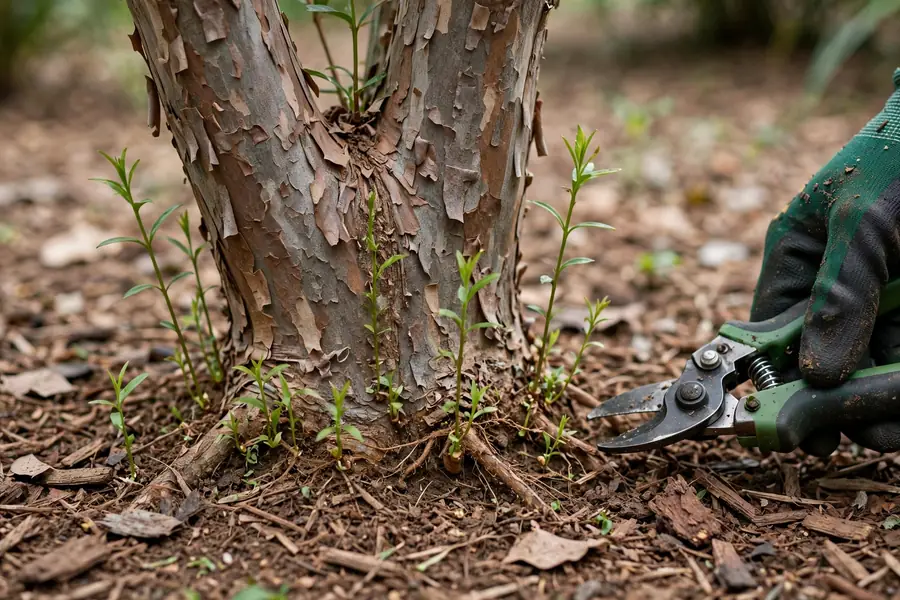
Crape myrtles send up thin sprouts from the roots and from the base of the trunks. Cut these suckers off at the base before they thicken into extra stems. A tree with too many stems looks crowded, and each extra stem pulls energy from the main trunks. Left alone, suckers can turn a clean multi-trunk tree into a thicket. Check for new suckers through the growing season and remove them while they are still thin.
Step 2: Cut Dead, Damaged, or Diseased Wood
Next, take out wood that is dead, damaged, or diseased. Dead branches feel brittle and snap easily, and damaged bark often looks split or dark. Cut back to the branch collar, the slightly raised ring where the branch meets a larger limb or the trunk. Do not cut flush with the trunk. A flush cut leaves a larger wound that takes longer to close.
Step 3: Remove Crossing and Inward Branches
Now look for branches that cross or rub against each other. Rubbing bark wears thin and opens a path for decay, so take out the weaker of the two branches. Also remove vigorous shoots that grow toward the center of the tree. Opening the center lets light and air reach the inner branches, and it keeps the natural vase shape.
Step 4: Raise Low Limbs If Needed
Low limbs are worth keeping unless they get in the way. Remove lower side branches when they block a walkway, brush a driveway, or cover a window. Raising the canopy also shows off the smooth, peeling bark that makes crape myrtles stand out in winter. Take only what you need for clearance, and keep the overall shape balanced.
Step 5: Tip Lightly, If You Want
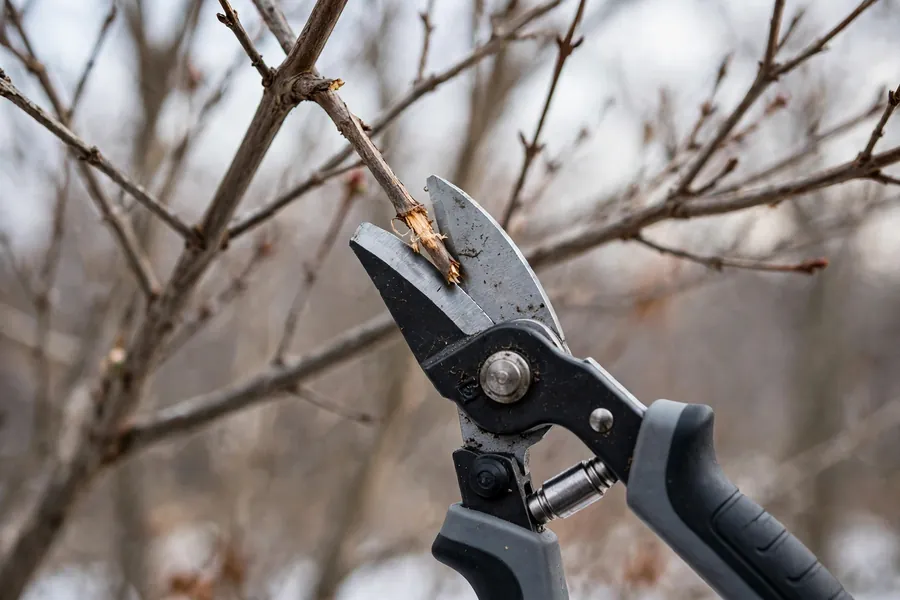
Tipping is optional, and it is the lightest cut you can make. It means trimming small stems about the diameter of a pencil on the outer canopy. UF/IFAS tested tipping and found it did not change bloom timing, bloom length, or plant health in a meaningful way. In plain terms, tipping will not give you more flowers, but it will not hurt the tree either. If you like a tidy outline, tip lightly. If you skip it, the tree will still bloom well.
After you finish pruning, our garden fertilizer tips can help you plan spring feeding for the bed.
What Is Crape Murder (and Why to Skip It)
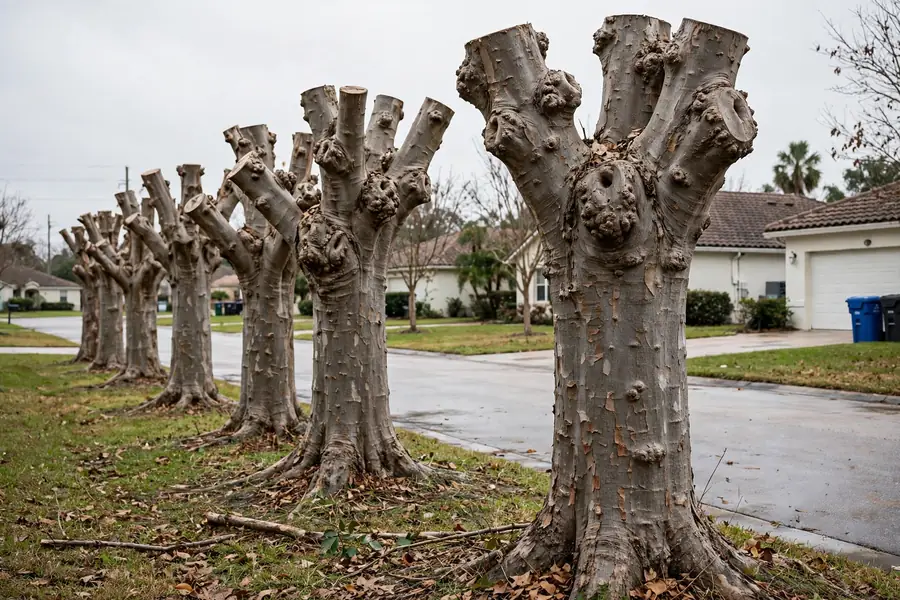
Crape murder is the nickname for topping a crape myrtle: cutting the trunks back to stubs, often at the same height, every year. The cuts land on large wood that is several years old, not on small twigs. The tree responds with a burst of thin shoots from each stub, which gives the knobby, witch’s broom look you see all over Florida neighborhoods.
UF/IFAS research shows why topping backfires. Flowering can be delayed by up to a month, and flower numbers fall as the size of the cuts grows. The blooms that do appear may look larger, but they grow on thinner, weaker branches that droop after rain and may break in a summer storm. Large stubs also invite insects and decay, and topping can shorten the life of the tree.
Topping also fails at its own goal. Regrowth is fast, and it often restores the original size within a couple of years, so the tree ends up just as big, with a worse shape. Pollarding is different: it is a planned, yearly method with a set height and a regular routine, not a random hard cut. For most home yards, though, the simpler path is light pruning and the right size tree.
How to Fix a Topped Crape Myrtle
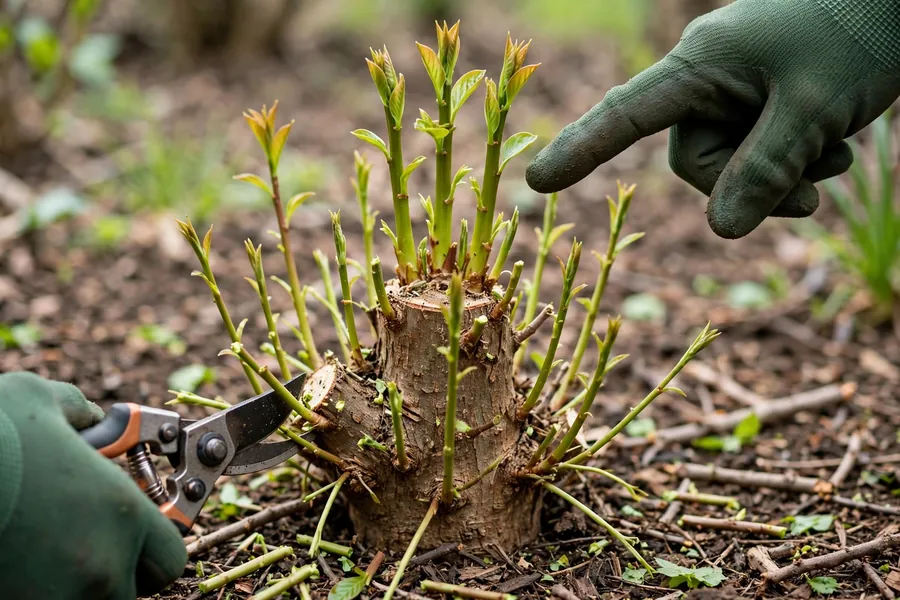
A topped tree is not a lost cause. UF/IFAS gives two ways to bring one back, and both take time. The first option works with what is already there. Keep the strongest two or three sprouts on each stub and remove the rest. Repeat that thinning for a couple of seasons, and the kept sprouts will thicken into new branches with a better shape.
The second option starts over. While the tree is dormant, cut it to one to two inches above the ground. After two to three weeks of growth, keep three to five strong shoots per trunk and remove the rest. Full recovery takes three to five years, but the result is a tree with a natural shape instead of a set of knobs. Whichever option you pick, avoid topping again, or the cycle starts over.
Should You Remove Seed Pods?
Seed pods hang on the branch tips through winter, and many owners wonder if they should cut them off. UF/IFAS says winter pod removal is only for looks. Pods left on the tree do not reduce the next season’s flowers, so you can leave them alone with no harm done.
The story is a bit different during the growing season. Removing spent flowers as they fade can encourage more bloom on some older types. If your tree is a newer variety that already reblooms well, you may see little change. Either way, pod and flower removal is a choice about looks, not a must-do job.
When the Real Fix Is a Smaller Crape Myrtle
If you must cut a crape myrtle hard every year just to keep it out of the roof or off the driveway, the tree is too big for the spot. No pruning routine fixes a tree planted in the wrong place. UF/IFAS suggests replacing it with a smaller cultivar that fits the space at full size.
A smaller tree gives you the flowers without the yearly fight. Our guide to the best trees to plant in Palm Coast and our list of trees for small yards can help you pick a variety that suits the spot. Planting the right size once beats topping a big tree every winter.
Crape Myrtle Pruning in Palm Coast
Here in Palm Coast, we prune crape myrtles in late winter as part of bed maintenance, when the trees are bare and the work is easy to do well. Flagler County yards add their own wrinkles: sandy soil, salt air near the coast, and summer storms that test weak branches. A lightly pruned tree handles those storms better than a topped one.
If you would rather leave the ladder work to us, Dreamscapes Florida can prune your crape myrtles and keep suckers in check through the season. We also replace oversized trees with the right size for the spot. We serve Palm Coast, Flagler Beach, Bunnell, Ormond Beach, and St. Augustine. Call (386) 237-2983, ask for a free estimate, or see our lawn maintenance and landscape installation services.
Frequently Asked Questions
Prune in late winter, about December through February, while the tree has no leaves. Bare branches make the shape easy to see, so you can spot suckers, dead wood, and crossing limbs. Save severe cuts for late in the dormant season. A broken or hazardous limb is different: remove it as soon as you see it, any time of year.
Not far at all. Take out suckers at the base, dead or damaged wood, and branches that cross or grow toward the center. If you tip, cut only small stems about the thickness of a pencil on the outer canopy. Leave the thick trunks alone. Hard cuts on large wood do more harm than good and invite weak regrowth.
Yes. UF/IFAS research found that topping can delay flowering by up to a month and reduce flower numbers as the size of the cuts grows. The new growth comes back on thin, weak branches that droop after rain and may break. Large stubs also open the tree to insects and decay, and topping can shorten its life.
Usually, with time. One option is to keep the strongest two or three sprouts on each stub and remove the rest, then repeat for a couple of seasons. The other option is to cut the tree to the ground while dormant and regrow new trunks. Full recovery can take three to five years, so patience matters.
Only if you dislike how they look. UF/IFAS notes that seed pods left on the tree over winter do not reduce the next season’s flowers, so removal is purely cosmetic. If you do remove them, do it in winter when the tree is bare. During the growing season, deadheading spent flowers can encourage more bloom on some older types.
Cut them off at the base whenever they appear, before they thicken into extra stems. Check the base of the trunks and the roots through the growing season. Hard pruning causes more sprouting, so a light touch now means fewer suckers later. A topped tree will often send up far more sprouts than one pruned lightly.