Reviewed November 2026
Yard grading cost averages about $2,178, and most homeowners pay $1,022 to $3,334 to regrade part of a yard, according to HomeAdvisor and Angi. In Palm Coast, where the water goes matters as much as the price. Grading moves soil so water runs away from the house, and in Palm Coast that water has to go to a swale or an approved point, not the neighbor. This post covers 2026 prices, the Florida slope rule, and Palm Coast quotes.
How Much Does It Cost to Regrade a Yard?
How much does it cost to regrade a yard in Florida? HomeAdvisor and Angi put the average at about $2,178, with most homeowners paying $1,022 to $3,334. Most jobs regrade part of a yard, not all of it, such as the strip along the foundation or one side yard. Fixr lists a national average of $1,800, with a typical range of $1,500 to $2,600.
HomeGuide lists $500 to $1,000 for small lawns and $1,000 to $5,000 for the average backyard.
Yard Grading Cost per Square Foot and by Yard Size
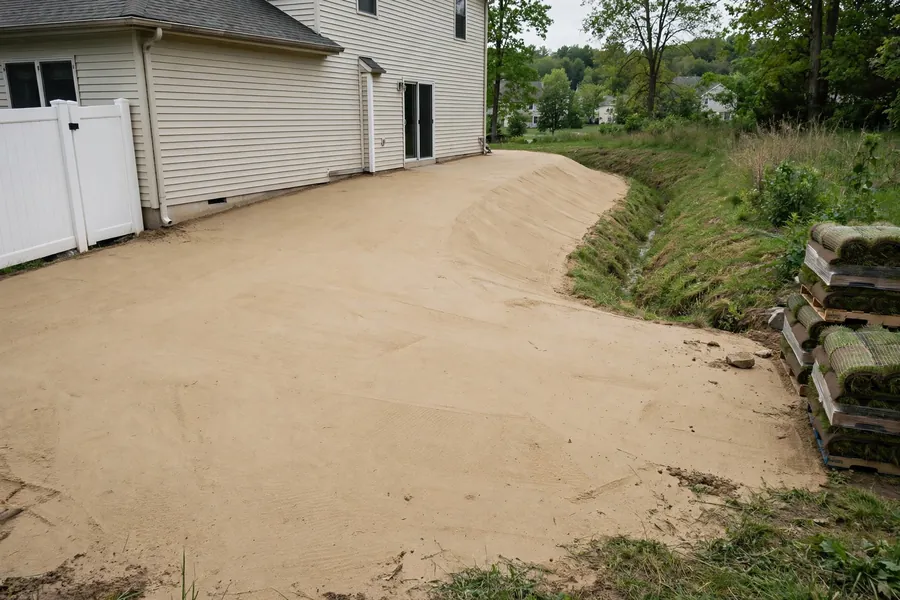
Yard grading cost per square foot runs $1 to $2, according to Angi and HomeAdvisor. HomeGuide lists land leveling at $0.40 to $2.00 per square foot. Lawn Love lists land grading at $0.08 to $2.00 per square foot for 2026, with most homeowners paying $770 to $3,000 for a 1,000 to 2,000 square foot lot.
| Yard size | Cost to regrade |
|---|---|
| 250 sq ft | $250 to $500 |
| 500 sq ft | $500 to $1,000 |
| 1/5 acre | $3,000 to $9,000 |
| 1/4 acre | $4,200 to $11,250 |
| 1/2 acre | $7,500 to $22,500 |
These ranges come from Angi and HomeAdvisor and do not include extra fill dirt. A yard that needs soil brought in costs more.
Cost by Project
Three jobs make up most of the yard grading cost in Palm Coast.
Regrading Around the Foundation
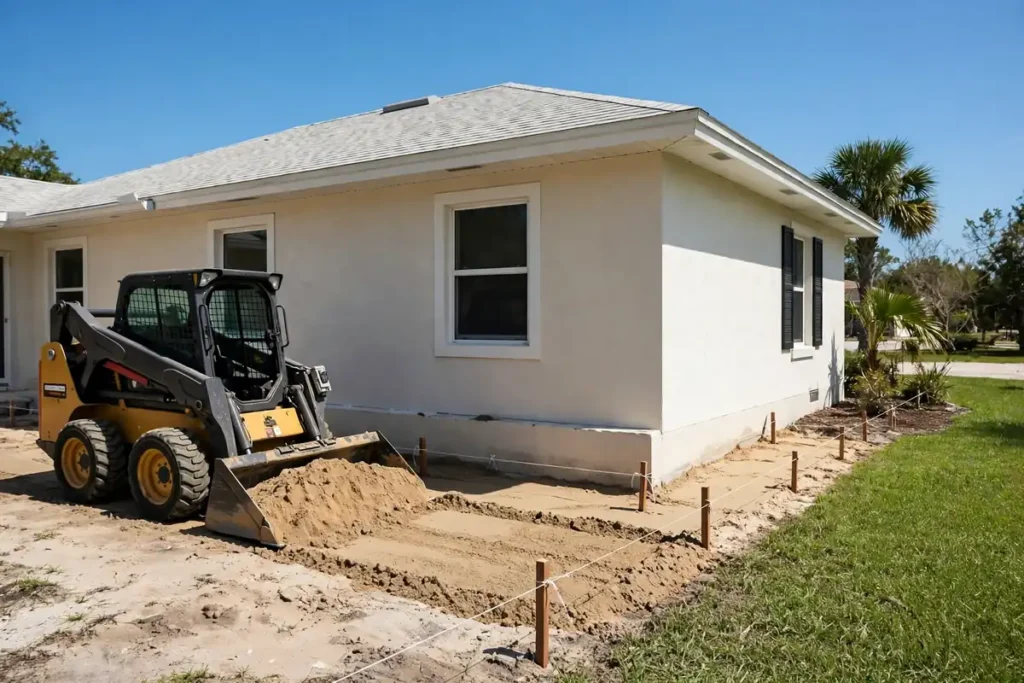
The cost to regrade around a foundation runs $1,000 to $3,000, according to HomeAdvisor. HomeGuide lists $500 to $3,000 to fix grading around a house. This job matters most because the slope next to the house decides whether water runs away or sits against the foundation.
Regrading a Driveway Edge or Side Yard
HomeAdvisor lists $1,500 to $9,500 to regrade a driveway. A driveway edge or side yard job often costs more than a foundation strip because the area is larger and the slope has to carry water a longer way. On Palm Coast lots, side yards often carry the swale.
Small Areas Around a Patio, Pool, or Low Spot
HomeGuide lists $500 to $1,000 for small lawns. A single low spot near a patio or pool is the cheapest grading job, but grading alone cannot fix every wet spot. Where water has no place to go, see our guide to French drain cost for the drain option.
What Affects Your Yard Grading Cost
No two yard grading cost quotes match because no two yards match. These are the factors that move the number.
- Area size. A bigger area needs more machine time and more soil moved.
- Slope steepness. A steep slope takes longer and may need more fill to shape.
- Fill dirt cost per yard runs $5 to $30 per cubic yard, according to Angi.
- Haul-off. Extra soil has to leave the lot, and that adds truck time.
- Access for equipment. Tight gates and narrow side yards slow the crew down.
- Hourly labor. Angi lists labor at $50 to $100 per hour to regrade a yard.
- Sod or beds to remove and replace. Plants in the work area come out first.
- Sunshine 811 locates. Call 811 before any digging so marked lines stay safe.
- Flagler County sandy soil. Sand is easy to move, but bare sand washes out fast.
The 6-Inch Rule Florida Code Sets for Yard Slope
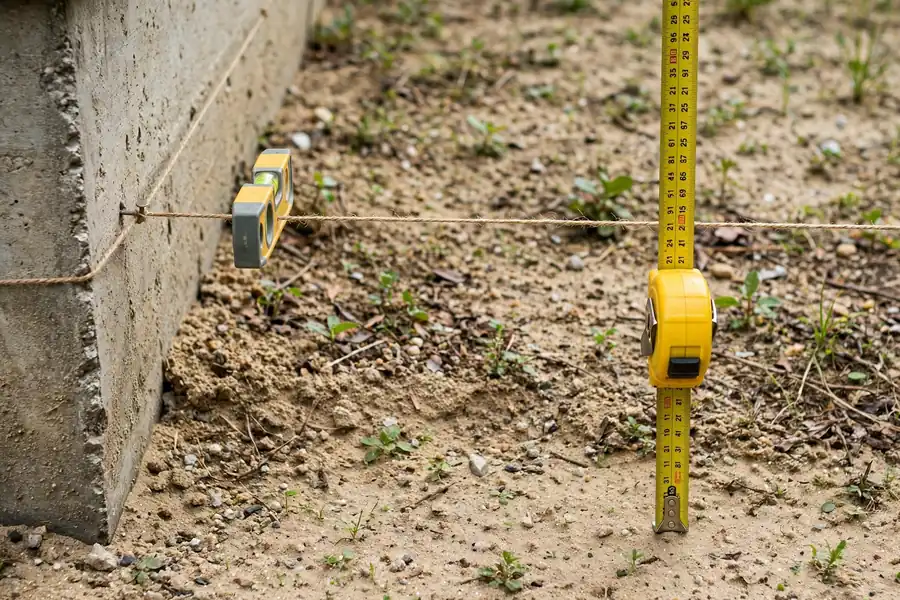
Florida Building Code, Residential, Section R401.3 sets the slope rule for every lot. The grade must fall at least 6 inches within the first 10 feet of the foundation, so water runs away from the house. Where lot lines, walls, or slopes stop that fall, drains or swales must carry the water away.
Here is the plain English test. Set a stake at the foundation wall and another stake 10 feet out. Run a string line between them and level it. Then measure down from the line to the soil at the far stake. The drop should be at least 6 inches.
If a lot line or a wall blocks the 6-inch fall, a drain or a swale has to take the water instead. See our guide to French drain vs dry creek bed for the two options that move water without a slope.
Do You Need a Permit to Regrade a Yard in Palm Coast?
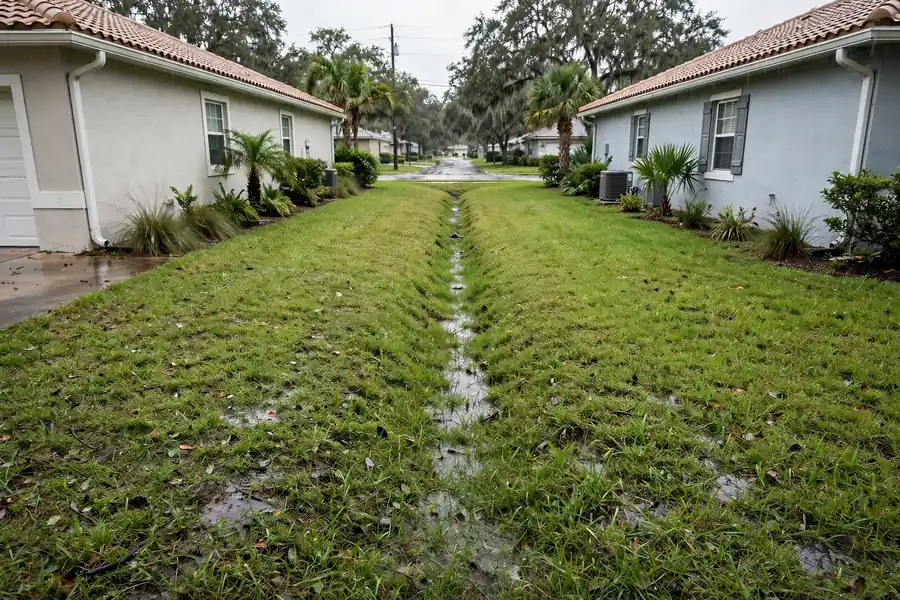
Do you need a permit to regrade a yard in Palm Coast? Small grading near the house may not need one, but swale and drainage changes can. Drainage or swale changes can need city review, so confirm with the city before work starts.
The City of Palm Coast says homeowners may remove high spots that block water flow in a swale. Major swale changes need city approval. Lawn Love notes that a permit may be needed when more than 5,000 square feet of land is disturbed, but that is a national figure.
The City of St. Augustine has seen the other side. Property owners who brought in fill to raise their lots have flooded neighboring properties, which is why some cities ask for lot grading plans. Florida code requires surface drainage to reach an approved point.
Signs Your Yard Needs Regrading
Most yards show the problem before it gets expensive. Watch for these signs after a hard rain.
- Water flows toward the house instead of away from it.
- Puddles sit against the foundation for hours after rain stops.
- Soil washes off beds and leaves roots bare.
- A side yard stays wet long after the rest of the lawn dries.
- Low spots appear where builder fill settles over the first few years.
If two or more signs show up, get a closer look before the next storm season. Our guides to fix a muddy backyard and standing water in your yard walk through the diagnosis checks first.
Yard Leveling vs Grading, Which Do You Need?
Leveling and grading sound alike, but they fix different problems and carry different prices.
| Job | What it does |
|---|---|
| Leveling | Topdressing fills low spots under an inch or two, and the lawn stays in place. |
| Grading | Moving soil changes the slope and drainage, and new sod often follows. |
Leveling is the smaller job, and our guide to how to level a lawn covers the topdressing steps. Grading is the bigger job, and it starts with a plan for where the water goes.
Sod, Beds, and Erosion Control After Grading
Bare sand moves in the first hard rain. Plan sod or mulched beds right after grading, before the next storm washes the slope away. See our guide to sod installation cost and our guide to erosion control landscaping for the finish.
New sod needs steady water for the first weeks. Leave the slope bare through a summer storm and the job may need doing twice.
Yard Grading in Palm Coast
Dreamscapes Florida grades to a plan so water reaches the swale or an approved point, then finishes with sod or planted beds. A landscape grading contractor checks the slope, the soil, and the drainage path first. We quote after a site visit, and the figures here are national averages, not our prices.
We serve Palm Coast, Flagler Beach, Bunnell, Ormond Beach, and St. Augustine. See our landscape installation and what is landscape construction services, or call (386) 237-2983 for a free estimate.
Frequently Asked Questions
Yard grading cost averages about $2,178, according to HomeAdvisor and Angi, with most homeowners paying $1,022 to $3,334. Most jobs regrade only part of a yard, such as the foundation strip or a side yard. Extra fill dirt and haul-off are usually priced on top.
HomeAdvisor lists $1,000 to $3,000 to regrade around an entire foundation, and HomeGuide lists $500 to $3,000. The goal is the Florida Building Code slope, at least 6 inches of fall within the first 10 feet from the wall for drainage.
Small grading near the house may not need one, but swale and drainage changes can. Palm Coast lets homeowners remove high spots that block swale flow, while major swale changes need city approval. Confirm with the city before work starts.
Leveling fills shallow low spots with a thin topdressing so the lawn stays in place. Grading moves soil to change the slope, usually so water drains away from the house. Grading costs more and often means new sod after grading.
A small area near the foundation can take a day. A full backyard with soil delivery, haul-off, and new sod can take several days. Weather matters in Palm Coast, since summer storms can pause work on bare soil, and grading stops until the ground dries.
Yes. Moving or adding soil changes where water goes. The City of St. Augustine notes that added fill has flooded neighboring lots, and Florida code requires runoff to reach an approved point. Grade to a plan that sends water to a swale or drain.