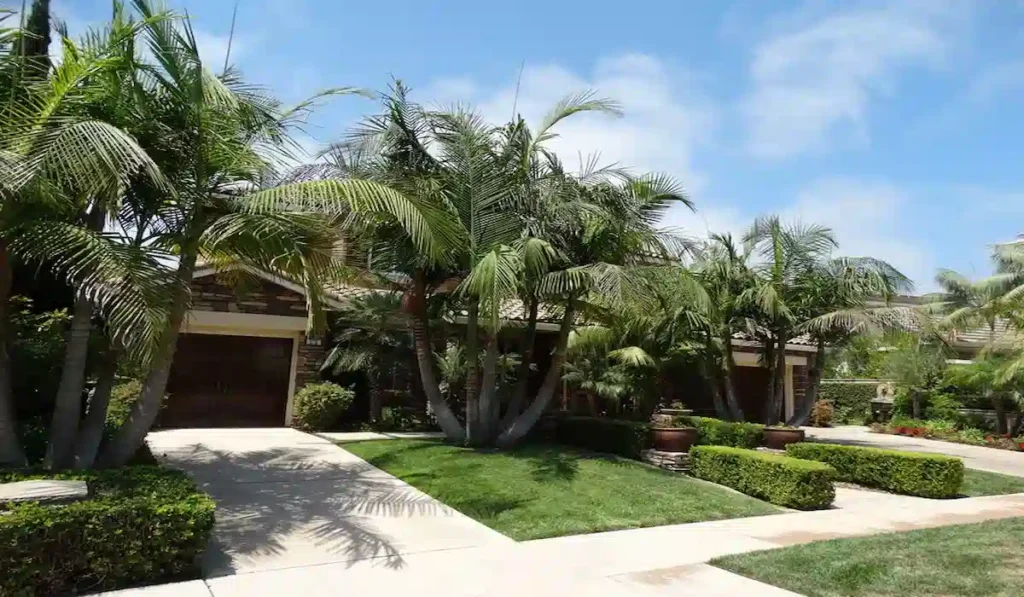
Drive down A1A through the Hammock on a July afternoon & you will see them leaning over driveways with those long, arching green fronds — king palms. They give a yard that clean resort look without the stiff, boxy feel of a Christmas palm or the heavy trunk of a Canary Island date. Homeowners in Flagler County ask us about them constantly, usually after seeing one in a neighbour’s front bed.
Here is the part most nursery tags leave out: king palm plants are gorgeous, but they are also one of the fussier palms you can put in the ground here. Palm Coast sits right on the edge of where they survive. Plant one in the wrong spot and you will be looking at brown, shredded fronds by February. Plant it in the right spot with the right soil prep and you get twenty years of shade and curb appeal.
This guide covers what a king palm actually is, whether your property can support one, and how to keep it green year after year.
What Is a King Palm?
The king palm you buy at a Florida garden centre is almost always Archontophoenix cunninghamiana, sometimes sold as the Bangalow palm. It comes from the rainforest belt of eastern Australia, which tells you a lot about what it wants — steady moisture, rich soil, and protection from wind. A second species, Archontophoenix alexandrae (Alexander palm), shows up in South Florida but is even less cold-tolerant, so it rarely does well north of Orlando.
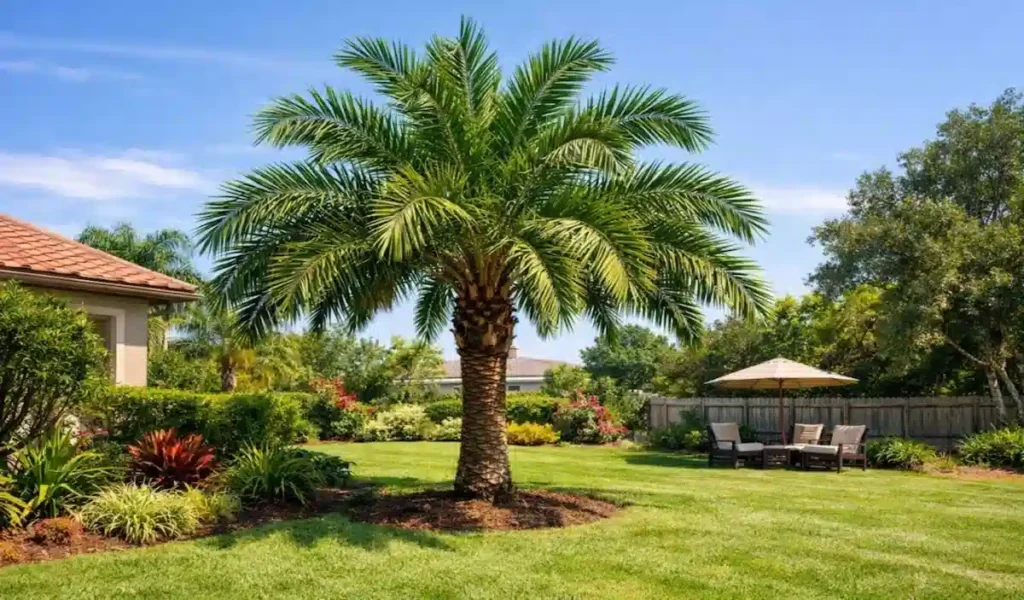
A mature king palm tree in a residential yard usually reaches 25 to 40 feet with a slim grey trunk marked by clean ring scars. The crown holds eight to twelve feather-shaped fronds, each one six to ten feet long. Above the trunk sits a smooth green crownshaft, and that crownshaft is the reason people love this palm — it is self-cleaning.
Old fronds turn brown, detach on their own, and fall. No hiring a crew every spring to strip dead leaves off the trunk. If you are still weighing your options across different species, our breakdown of the best palm trees for landscaping puts king palms side by side with sturdier picks like sabal and pindo.
King palms also flower. In late spring, lavender-to-cream blooms push out from under the crownshaft, followed by clusters of bright red fruit. Birds love the fruit. Pool decks and light-colored pavers do not.
Will King Palms Survive Palm Coast Winters?
This is the question that matters most, so let’s be straight about it. Palm Coast falls in USDA zones 9a and 9b. King palms are rated for 9b through 11, which puts most of Flagler County right at the boundary line.
In practical terms: frond tips start burning around 28°F. A short dip to 26°F will scorch the canopy badly. Sustained hours below 25°F can kill the growing point, and once the bud is gone, the palm does not come back. We saw this play out across Palm Coast and Bunnell after the hard freezes a few winters ago — the king palms tucked against south-facing walls pulled through, while the ones standing alone in open front yards did not.
So king palm plants are not impossible here. They are a microclimate plant. That single distinction decides everything about where you put them.
Choosing the Right Planting Spot
Give a king palm the warmest pocket on your property. The south or southeast side of a house works best, because the wall holds heat overnight and blocks the north wind that does the real damage during a cold front. Courtyards, screened pool enclosures, and spots sheltered by an existing oak canopy all buy you several degrees of protection.
Young king palms actually prefer partial shade for their first two or three years. Full afternoon sun on a freshly planted specimen will yellow the fronds fast. As the trunk gains height, the palm handles more sun, which is why they look so good planted under or near taller shade trees — a pairing we cover in our guide to the best trees to plant in Palm Coast yards.
One more thing for anyone east of the Intracoastal: king palms have poor salt tolerance. Salt spray off the ocean will burn the foliage and stunt growth, so oceanfront and dune-adjacent properties in Flagler Beach or Ocean Hammock should look at salt-tolerant plants for Florida instead of fighting a losing battle.
Soil Prep for Flagler County Sand
Most yards in Palm Coast sit on fast-draining sand that holds almost no nutrients. A rainforest palm hates that. You need to amend the planting area before the palm ever goes in the hole.
Dig wide, not deep — three times the width of the root ball, but only as deep as the root ball itself. Palms planted too deep suffer root rot and slow decline. Blend the backfill with compost or aged pine bark at roughly one part organic matter to two parts native soil. That mix holds moisture without turning into a bathtub. If you want to understand what you are actually building here, our explainer on loam soil covers the sand-silt-clay balance in plain language.
Finish with a two- to three-inch mulch ring extending out to the drip line, pulled back a few inches from the trunk. Mulch keeps the shallow roots cool and cuts down on watering.
Watering King Palm Plants
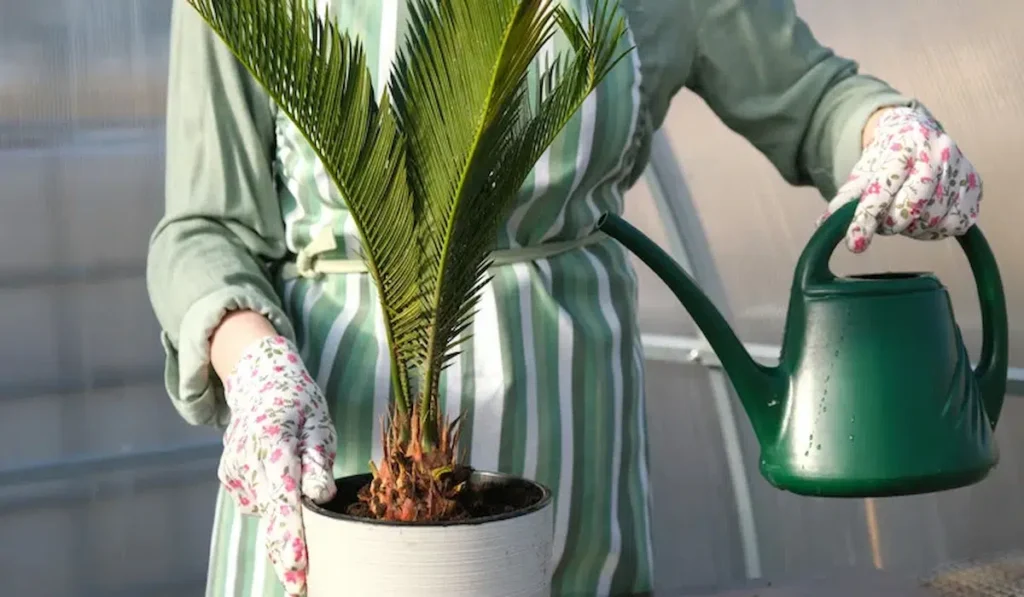
Newly planted king palms need water every day for the first two weeks, then every other day for the next two months. After that, taper to two or three deep soakings per week through the first year. The goal is consistently moist soil, never soggy.
Established king palms are thirstier than most Florida palms. During May and June — our dry, hot stretch before the summer rains arrive — a mature specimen may need supplemental water twice a week even when the lawn looks fine. Hand watering gets old fast, which is why most of our clients put these palms on a dedicated zone through their irrigation system in Palm Coast rather than relying on turf spray heads that were never aimed at a tree.
Feeding: The Mistake That Kills Most Florida Palms
Generic lawn fertiliser is the single biggest killer of king palms in Florida yards. It is loaded with nitrogen and short on potassium, and that imbalance produces exactly the symptoms homeowners panic about.
Use a controlled-release palm fertiliser with an 8-2-12 analysis plus 4% magnesium, applied four times a year. Broadcast it evenly under the canopy, never in a pile against the trunk. Potassium deficiency shows up first as orange-yellow speckling on the oldest, lowest fronds, then progresses to frizzled, burnt-looking leaf tips. Manganese deficiency does the opposite — it attacks the newest frond emerging from the centre, leaving it stunted and crinkled. Both are correctable if you catch them early, and our garden fertiliser guide walks through reading those symptoms before the damage spreads.
Never cut a yellowing frond off a nutrient-starved palm. The plant is pulling potassium out of that old leaf to feed new growth. Remove it and you speed up the decline.
Pruning King Palms
Barely any is needed, and that is the beauty of this species. The crownshaft drops spent fronds on its own schedule. Your only real jobs are clearing fallen fronds off the lawn and trimming the flower and fruit stalks if the red berries are staining your pavers or attracting wildlife you would rather not host.
Resist the urge to “hurricane cut” a king palm into a narrow plume. That style strips away the fronds the palm needs for photosynthesis and leaves it weaker in a storm, not stronger. Our post on pruning trees and plants explains why over-trimming backfires on palms specifically.
Design Ideas That Work
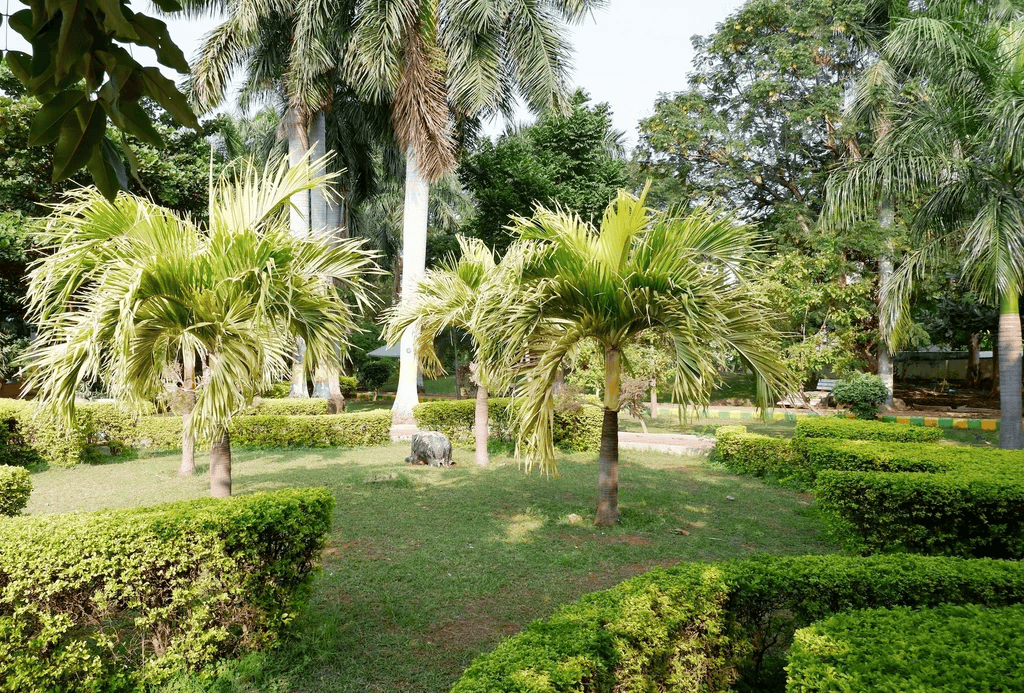
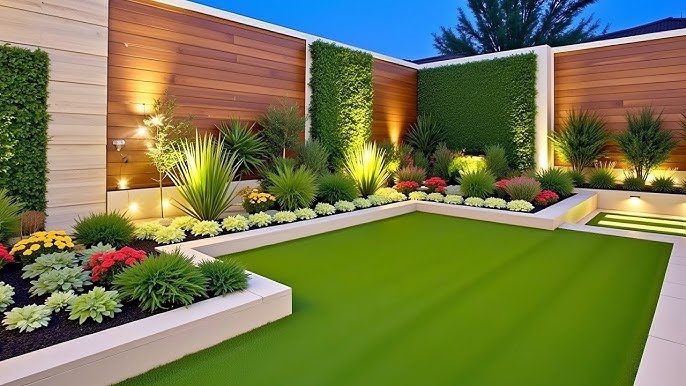
King palms look best planted in odd-numbered clusters — three palms of staggered heights in one bed reads far better than a single specimen stuck in the middle of a lawn. The slim trunks let you underplant with ferns, bromeliads, or liriope without crowding anything.
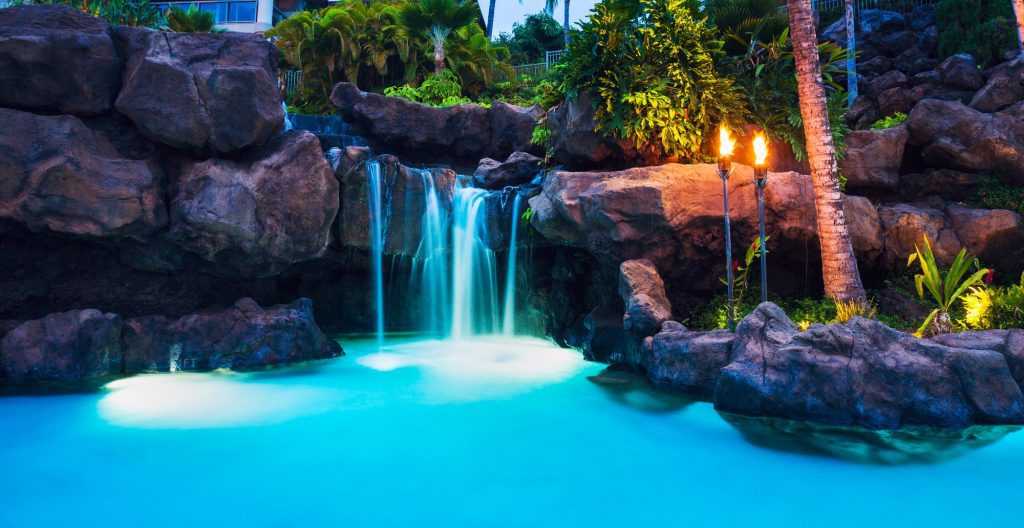
They also frame water beautifully. A pair flanking a screen enclosure or set at the far corners of a deck creates height without dropping heavy litter into the water the way some palms do, an approach we use often in rectangular pool landscape designs. Add uplighting at the base and the ringed trunks throw great shadows after dark.
Ready to Add King Palms to Your Landscape?
King palm plants reward the homeowners who plan for them — right microclimate, amended soil, dedicated irrigation, and the correct palm fertiliser. Skip any one of those and you are gambling with a $400 tree.
Dreamscapes Florida has been installing and maintaining palms across Palm Coast, Bunnell, Flagler Beach, Ormond Beach, and St. Augustine for years, and we know which streets and subdivisions hold enough winter warmth to make king palms a safe bet. Contact our team for a walkthrough of your property and an honest answer about whether this palm belongs in your yard.
Frequently Asked Questions
How fast do king palms grow?
Moderately fast in good conditions — roughly one to two feet of height per year once established, faster during warm, wet summers.
Can I grow a king palm in a container?
Yes, for a few years. They do well in large pots on shaded patios, but they outgrow containers within four to six years and need repotting or transplanting into the ground.
Do king palms have invasive roots?
No. Their root system is fibrous and non-aggressive, so they can be planted within six to eight feet of a foundation, walkway, or pool deck.
When is the best time to plant a king palm in Florida?
Late spring through early summer. Warm soil pushes fast root establishment, giving the palm several months to settle in before the first cold front.
Are king palms toxic to pets?
The foliage is not considered toxic, but the fruit can cause stomach upset if a dog eats it in quantity.