In Palm Coast, you can grow vegetables almost all year. Plant leafy greens, carrots, and broccoli from October through February, then switch to tomatoes, peppers, beans, and squash from March through June. Herbs like basil and cilantro grow in most months.
That long season is the best part of gardening in Northeast Florida. It is also the part that trips up new gardeners. Our summers are hot and wet, our soil is sand, and a crop that thrives in October can fail in July. This guide follows the seasons as they work in Palm Coast, in Zone 9B, so you plant the right crop at the right time.
Why Palm Coast Grows Food Almost All Year
Palm Coast sits in Zone 9B, with mild winters and a long warm season. Frost is rare, and it is usually light when it comes. That gives you two main planting windows instead of one: fall and winter, then spring and early summer.
Think of the year as two gardens. The cool garden grows from October to February. The warm garden grows from March to June. July, August, and September are the hardest months. Heat, humidity, heavy rain, and pests all peak at once, so many gardeners use those months to rest beds, build soil, and plan the fall planting.
Start With Your Frost Dates, Not the Seed Packet
Seed packets are written for the whole country. They are a starting point, not a plan for Flagler County. In Palm Coast, the last frost usually falls near March 1, and the first frost of the cold season usually arrives near December 1. That leaves a long frost-free stretch from spring through late fall.
Check the forecast before you set out tender crops in late winter or early spring. A single cold night can set back tomatoes and peppers by weeks. Keep frost cloth handy from late November through early March.
The UF/IFAS planting calendar is a good cross-check. It breaks Florida into north, central, and south regions, and Palm Coast follows the north Florida timing.
October to February: The Cool Months Do the Heavy Work
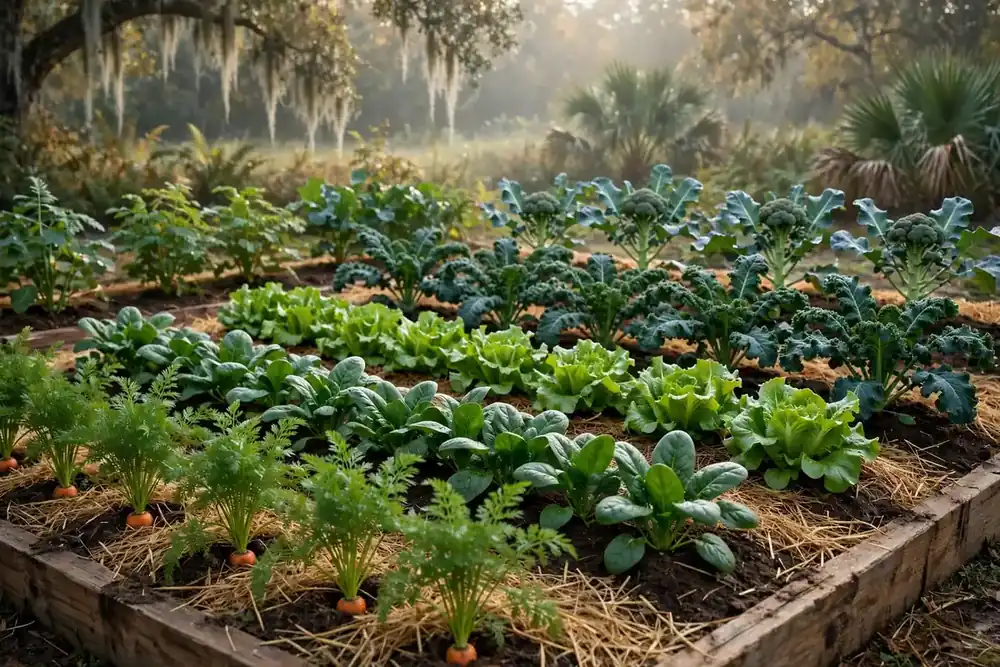
October through February is prime time for annual vegetables in our part of Florida. Cool air, lower humidity, and fewer pests make this the easiest season to grow food. If you only plant one garden a year, plant this one.
Leafy greens lead the list. Lettuce, kale, and spinach grow fast in cool weather and taste best before the heat arrives. Kale and spinach can be picked leaf by leaf, which keeps one planting productive for months. Root crops do well now too. Carrots and beets need loose soil so the roots grow straight, and cool weather keeps them sweet.
Brassicas round out the cool bed. Broccoli and cabbage take 60 to 80 days, so set transplants out in October or November for a winter harvest, and give each plant room to spread. When a row of lettuce is done, pull it and sow radishes or spinach in the same spot the same week.
March to June: Plant for Heat Before Summer Arrives
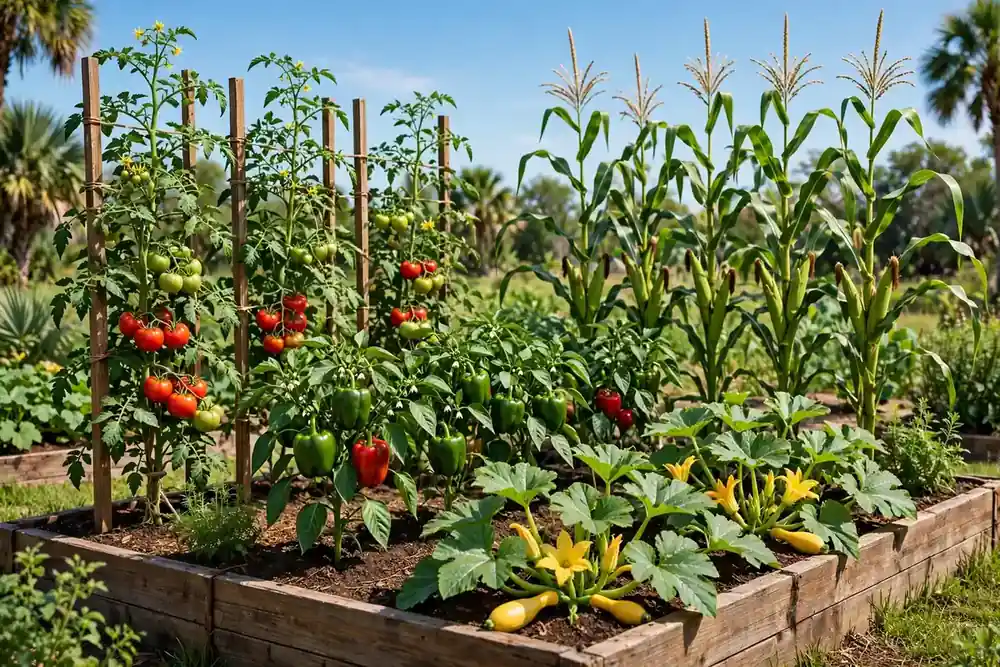
Warm-season crops go in after the last frost, from March through June. Tomatoes, peppers, beans, squash, and sweet corn all need warm soil and full sun. Plant them as soon as the frost risk has passed, because the best harvest window closes when the summer heat and rain arrive in full force.
Tomatoes deserve the sunniest spot in the bed. Choose early maturing varieties and give each plant a sturdy stake or cage on planting day. Beans are one of the fastest crops you can grow, with some bush varieties ready in about 50 days. Squash grows fast too, but one or two plants can fill a whole bed by May, so do not plant a full row unless you plan to share the harvest. Plant sweet corn in a block of short rows, not a single line, so the wind can carry pollen from plant to plant.
Keep a Few Plants Going All Year
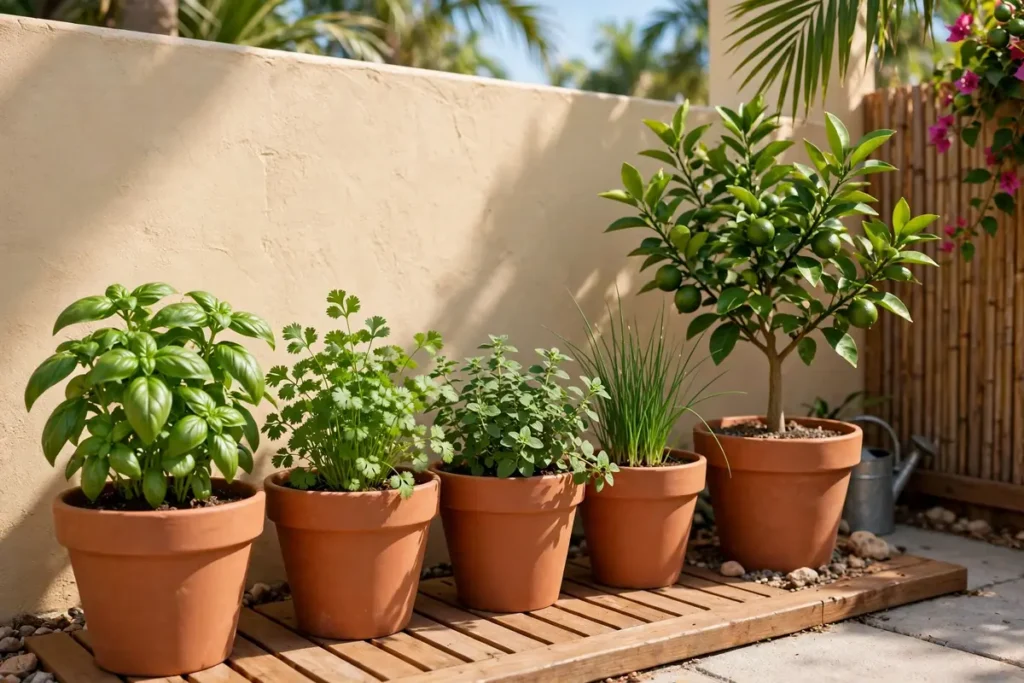
Not every crop follows the two-season pattern. Herbs are the easiest year-round win in a Palm Coast garden. Basil, cilantro, oregano, and chives grow in most months, and a small herb bed by the kitchen door can supply a household all year. Cilantro prefers cool weather and bolts fast in summer heat, so sow it in fall and again in late winter. Basil loves the heat and will thrive through the warm months.
Swiss chard is another steady producer. It handles cool weather and warm weather better than most greens, and you can pick the outer leaves for months while the plant keeps growing from the center.
Small Space? Pots and Raised Beds Still Feed a Family
You do not need a large yard to grow food in Palm Coast. A sunny patio, a balcony, or a small side yard can hold enough pots and raised beds to keep a household in herbs, salad greens, and tomatoes for much of the year.
Containers work best with a good potting mix, not garden soil. Garden soil packs down in a pot and holds too much water after a summer storm. Use pots of five gallons or more with drainage holes.
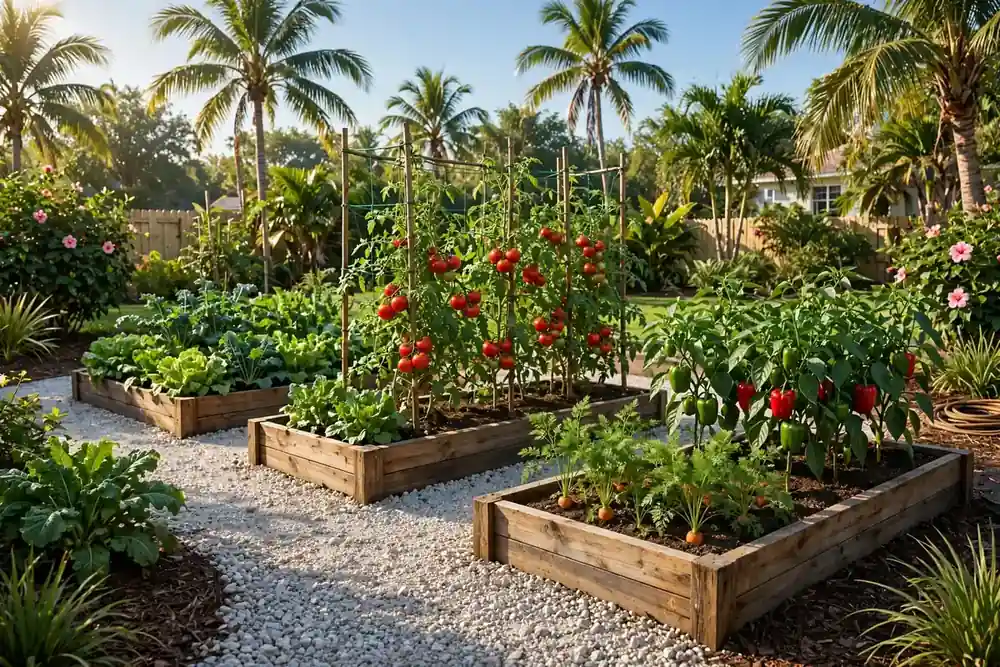
Raised beds solve the two biggest problems with Florida soil: sand and poor drainage. A bed 8 to 12 inches deep, filled with a mix of topsoil and compost, gives roots a far better home than the sand underneath.
Fix Sandy Soil Before You Plant a Single Seed
Florida sand drains fast and holds almost no nutrients. A new garden bed built on bare sand will dry out in a day and starve plants within weeks. The fix is organic matter, added in large amounts before you plant and topped up every season.
Mix several inches of compost into the top 8 to 12 inches of soil before planting. Compost holds water, feeds soil life, and slowly releases nutrients as it breaks down. Test your soil pH before you add lime or fertilizer. Most vegetables prefer a pH between 6.0 and 6.5, and a simple soil test from the Flagler County extension office will tell you what your soil actually needs.
Mulch is the second half of soil care. A 2 to 3 inch layer of straw or shredded leaves around plants keeps soil cool, holds moisture, and feeds the soil as it breaks down. To see how mulch holds up through a Florida season, read our guide on how long mulch lasts in Florida before you buy.
Water, Mulch, and Feed the Florida Way
Water deeply and less often, not a little every day. Deep watering trains roots to grow down, where soil stays moist longer. Water in the morning so leaves dry before night, which helps prevent fungal problems in humid weather. Most beds need about one inch of water a week from rain and watering combined.
Feed lightly and often rather than in one heavy dose. A balanced organic fertilizer at planting, followed by a light side dressing as plants start to fruit, is enough for most crops.
Think about where rainwater goes in your yard. A bed at the bottom of a slope can drown in a summer storm, while a bed on high ground dries out fast. If runoff is a problem, a rain garden can catch and slow storm water before it reaches your beds. Around the beds, you can choose between stone and mulch for paths and edging. Our comparison of rock or mulch will help you pick the ground cover that fits your yard and your budget.
Keep Pests in Check Without Harsh Sprays
Florida gardens attract pests, and warm, wet weather brings them in waves. You can manage most of them with simple habits and organic methods, without reaching for harsh sprays that also kill the helpful insects.
Walk the garden every few days and pick off caterpillars and beetles by hand when numbers are low. A small problem caught early is easy to fix. The same problem left for two weeks in July can strip a bed bare. Row cover helps too. A light fabric cover over young greens keeps moths from laying eggs on the leaves, which means fewer caterpillars later.
Invite the good insects in. Marigolds and other flowers near the beds attract pollinators and predatory insects that eat aphids and caterpillars. A garden with flowers mixed in will have fewer pest outbreaks than a bare bed of one crop.
Mix Food Plants Into a Yard That Still Looks Good
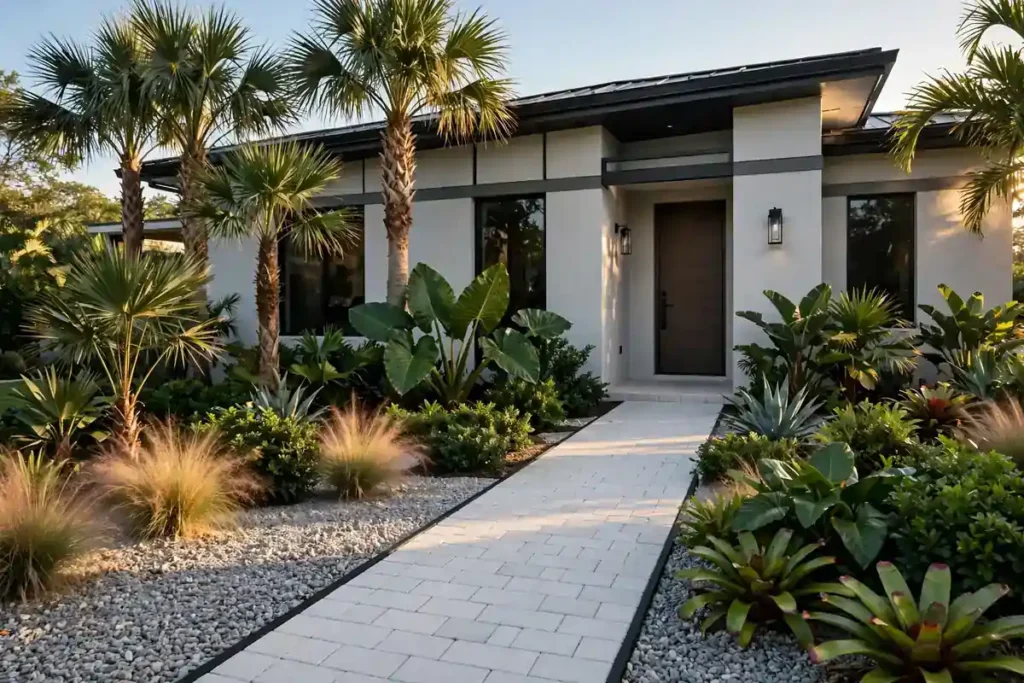
A vegetable garden does not have to sit behind a fence. Edible plants can be part of a landscape that looks good all year. Fruit trees, berry bushes, and herbs can fill the same roles as ornamental plants: shade, screening, color, and texture.
A citrus tree or a fig tree gives shade and fruit from the same branches. Blueberry bushes, which like the acidic soil common in Florida, can stand in for ornamental shrubs along a walk. The yard still reads as a designed landscape. It just feeds you too.
Plan for the mature size of every tree you plant. A fruit tree planted three feet from a fence will crowd the fence within a few years and shade the beds behind it. Palms and fruit trees often share a Palm Coast yard, so plan the layout before you dig. If a palm is part of your plan, read our guide on how to plant a palm tree first. Our notes on landscaping around trees cover mulching, watering, and keeping the root zone healthy for both fruit trees and ornamentals.
Your First Season, Step by Step
If this is your first vegetable garden in Palm Coast, start small and start in fall. A single raised bed, four feet wide and eight feet long, is enough to learn on and still gives a real harvest.
First, pick the sunniest spot in your yard and count the hours of direct sun. You need at least six. Second, build or buy a raised bed and fill it with a mix of topsoil and compost. Third, test the soil pH and adjust it if the test says so. Fourth, plant cool-season crops in October: lettuce, kale, carrots, and broccoli are a strong first bed. Fifth, mulch the bed, water it deeply, and walk it every few days to catch problems early.
Keep a notebook of what you planted, when, and how it did. It becomes your personal planting calendar for next season.
If you want garden beds built into a wider landscape design, we can help with that part. We design beds, paths, and planting plans that fit the rest of your yard, and we build them to suit Palm Coast soil and sun. Call Dreamscapes Florida at (386) 237-2983 to talk about your yard. We work in Palm Coast, Flagler Beach, Bunnell, Ormond Beach, and St. Augustine, and we have been serving Northeast Florida since 2015.
Frequently Asked Questions
The cool season from October through February is best for leafy greens, root crops, and brassicas like broccoli and cabbage. Warm-season crops like tomatoes, peppers, beans, and squash go in from March through June, after the last frost.
Yes, fall tomatoes can do well in North Florida when planted in October, because mild fall weather extends the harvest. Choose early maturing varieties, mulch the bed, and keep frost cloth handy for a cold night.
Herbs like basil, oregano, and chives, along with Swiss chard, can be planted in more than one season and often grow through most of the year. In Palm Coast, you can grow something in the garden in nearly every month if you match the crop to the season.
Mix plenty of compost or aged organic matter into the top 8 to 12 inches of sandy soil to improve water and nutrient retention. Test the pH, aim for 6.0 to 6.5 for most vegetables, and mulch the bed with 2 to 3 inches of straw or shredded leaves.
UF/IFAS vegetable gardening publications, including the Florida Vegetable Gardening Guide, and the Flagler County extension office give zone-specific planting dates and soil testing. The UF/IFAS planting calendar breaks the state into north, central, and south regions, and Palm Coast follows the north Florida timing.
Okra, sweet potatoes, southern peas, eggplant, and cherry tomatoes handle heat and humidity far better than lettuce or broccoli. Even these heat lovers need steady water and mulch, and most gardeners use the hottest months to rest beds, build soil, and plan the fall planting.