Good landscaping ideas for neighborhood entrances start with a clear sign, layered plants, and safe sightlines. They frame the entry, guide drivers and walkers, and use Florida plants that can handle sun, salt, and sandy soil. This guide shows how each idea works, so a board can plan an entrance that looks welcoming and stays easy to care for.
An entrance does more than mark a boundary. It is the first thing visitors see, and it tells them where to go. A good entrance works as a gateway and a wayfinding point. It shows the community name, points drivers to the right lane, and gives walkers a clear path. When the design ignores that job, even pretty planting can cause confusion.
What Makes a Neighborhood Entrance Welcoming and Functional?
A welcoming entrance feels open, not crowded. Drivers should read the sign from the road, see where to turn, and spot walkers in time to slow down. Walkers should find a clear sidewalk that does not cross fast traffic. Plants should frame the view, not block it.
Function comes first, and beauty follows it. Start with the sign location, the lanes, the sidewalk, and the sightlines. Then add planting that supports those features. A plan that starts with plants and fits the road around them often ends with trimmed shrubs and hidden signs.
We design entrances this way at Dreamscapes Florida. Since 2015, we have worked with communities across Flagler County on design that fits the site, the soil, and the way people actually move through the entry.
Frame the Monument Sign Without Hiding It
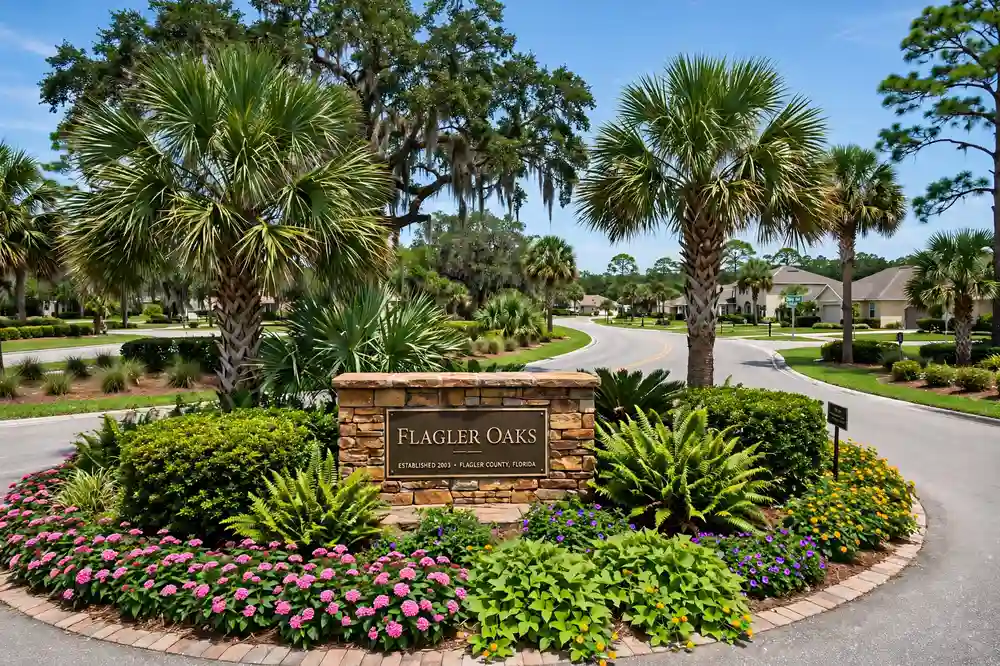
The monument sign carries the community name, and sometimes the address. It must stay easy to read from a moving car. Low groundcover and low shrubs work well at the base of a sign. Tall shrubs in front of the sign hide the name and force drivers to slow down or stop to read it.

Keep the sides of the sign clear too. Plants that grow over the edges will cover letters as they grow. Leave room for the full mature size of each plant, not just the size it is on planting day. That one step saves years of hard pruning.
Check the sign at night as well as in the day. A sign that reads well at noon can fade into shadow after dark. Lighting, covered later in this guide, should wash the sign face evenly, so the name stays clear for evening visitors.
Use Layered Planting to Create a Strong First Impression
Layered planting builds depth without blocking views. Groundcover sits at the front and holds the soil. Low shrubs form the next layer and give the bed shape. Medium accents add height and color. One or two carefully placed canopy or specimen trees can anchor the whole entry.
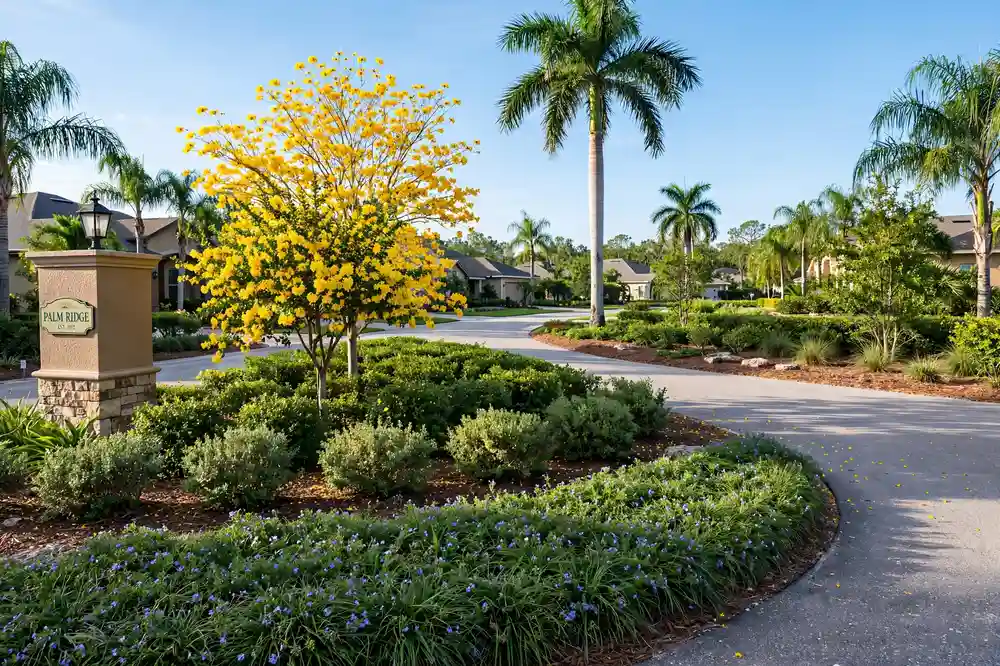
Repeat the same plant groups on both sides of the entry when the site allows it. Repeated groups look planned, and they help drivers read the entry as one gateway, not two separate beds. Change the mix a little between the two sides if the sun or soil differs, but keep the same overall rhythm.
Watch the mature size of every layer. A medium shrub that grows into a tree will block the sign or crowd the sidewalk. A groundcover that spreads too fast will cover the edging and spill onto the pavement. Ask for the mature height and spread of each plant before you approve the plan.
Choose Florida-Friendly Trees, Palms and Shrubs
Florida entrances face salt spray, strong wind, hot sun, and sandy soil that drains fast. Plants that love rich, moist soil often fail here. Pick plants that suit the site, not just the look you want. Sun, shade, salt exposure, and drainage all shape the choice.
Examples that often suit Florida entries include sabal palm, crape myrtle, southern magnolia, creeping lantana, saw palmetto, yaupon holly, and muhly grass. Treat these as examples only. Each one must be checked for the actual site, since soil, salt, and shade change from one entrance to the next. Our guide to salt-tolerant plants explains how coastal conditions shape plant choice.
Mix evergreen plants with seasonal color. Evergreens hold the structure of the entry all year. Seasonal color adds life at the times visitors notice it most. A bed that is all seasonal color looks bare in the off season, and a bed that is all green can look flat.
Design Entrance Medians and Roundabouts Carefully
Medians and roundabouts give an entry a grand feel, but they also sit in the path of traffic. Keep median plants low near the ends, so drivers can see across the road. Taller plants belong in the middle of a long median, where they do not block a turn or a crosswalk.
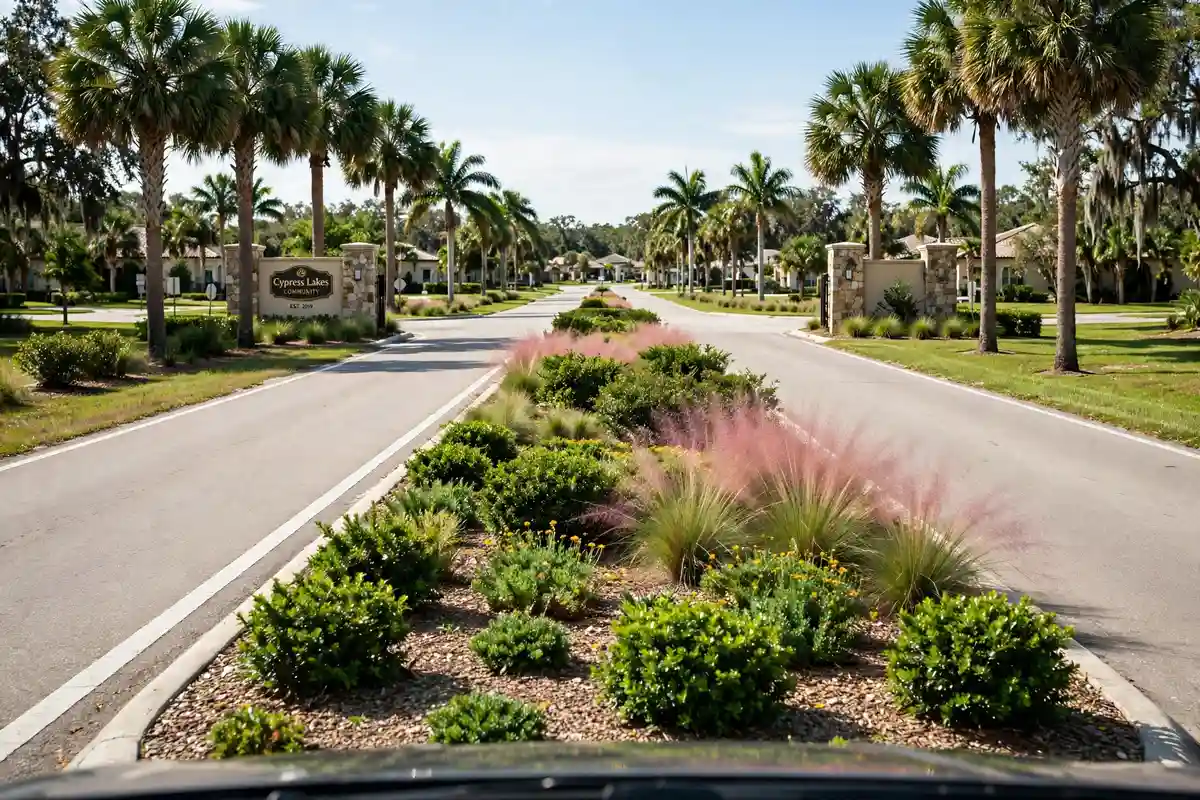
Think about how a median gets watered and trimmed. A crew must reach it without stopping traffic. Wide medians are easier to work in than narrow strips. Narrow strips dry out fast, and mowers and trimmers can damage plants at the edges.
Roundabouts need the same care. Keep the center planting low enough that drivers can see cars coming around the circle. A tall tree in the center can look grand, but it can also hide a car until it is too close. Safety must shape the height of the center planting.
Work Around Gates, Call Boxes and Sightlines
Gates, call boxes, and security cameras all need clear space around them. Drivers must reach a call box from the car window without climbing out or blocking the lane. Cameras need a clear view of plates and faces. Plants that grow over a camera or a call box will cause daily problems.
Map the turning radius for cars, delivery trucks, and emergency vehicles before you plant. A bed that looks fine on paper can force a large truck onto the curb. A pedestrian route must stay clear too, with a path that does not force walkers into the drive lane.
Check utilities before you dig. Mark water lines, electric lines, and irrigation lines that run through the entry. A tree planted over a line will cost far more to move later than it costs to shift the planting plan now.
Add Lighting for Signage and After-Dark Visibility
Good lighting makes an entrance work after dark. It lights the sign face, the walkway, and the edges of the drive. It also helps drivers spot walkers and helps walkers feel safe. Lights that point at the sky or into drivers eyes do the opposite, so aim each fixture at the feature it should light.
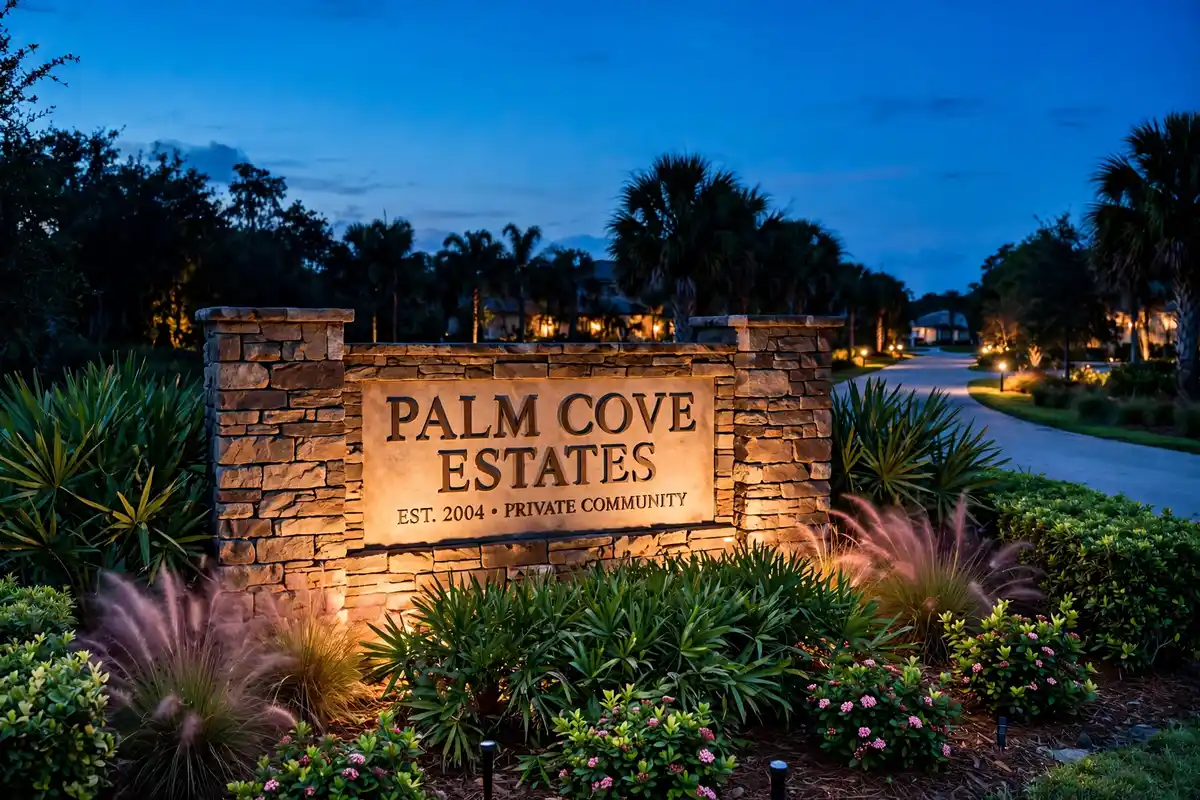
Use a mix of light types. Wash lights spread an even glow across a sign or a wall. Small path lights mark the walkway. Uplights can lift a palm or a specimen tree at night. Keep the light warm and soft, so the entry feels welcoming, not harsh.
Pick fixtures that can handle Florida rain, humidity, and salt air. Ask about corrosion resistance and how easy it is to change a bulb or clean a lens. A fixture that fails in a year will leave a dark gap in the entry. Our landscape lighting service covers sign, path, and accent lighting for community entries.
Plan Irrigation, Drainage and Storm Resilience
New entrance plants need steady water while their roots grow. Plan irrigation zones by plant type, so turf, shrubs, and trees each get the water they need. Aim spray heads away from the sign face, the call box, and the camera lens. Water on a sign leaves stains, and water on a camera blurs the view.
Drainage matters just as much. Pavement sends rainwater fast toward beds and signs. A bed that holds water after a storm will rot roots and wash mulch onto the drive. Grade the beds so water drains away from the sign base and the walkway, and toward a drain or a swale.
Storms will test the entry. Trees with weak limbs can drop branches on the sign or the road. Plants that need constant staking will fail in high wind. Pick plants and stakes that can stand up to Flagler County storm season, and plan a quick cleanup route for debris after a storm.
Keep Long-Term HOA Maintenance Practical
A beautiful entry that no crew can maintain will soon look tired. Before you approve a design, ask who will trim, water, mulch, and replace plants, and how often. A design with ten plant types needs more skill and time than a design with four well-chosen types.
Group plants with similar water and trimming needs together. That way one visit can serve a whole bed, and no plant gets too much or too little care. Leave room for a mower and a trimmer to reach each bed without driving over plants or curbs.
For the care that follows the build, see our guide to HOA landscape maintenance. It covers contracts, scopes, and visit schedules for shared areas like entrances and medians. A clear maintenance plan protects the design long after planting day.
HOA Approval and Project Planning Checklist
Most entrance projects need board approval before work starts. Use this checklist to keep the project on track:
- Read the governing documents to see what the board can change and what needs a member vote.
- Confirm who owns the common area where the entry sits, and who holds the right to alter it.
- Get written approval for the design, the plant list, and the lighting plan before you sign a contract.
- Set a clear budget that covers plants, soil, irrigation changes, lighting, and the first year of care.
- Agree on who maintains the entry after the build, and what that care includes.
- Confirm contractor access, work hours, and where trucks and materials can park during the build.
- Walk the finished entry with the board, and note any fixes in writing before final payment.
A checklist like this may feel formal, but it stops the most common entrance disputes. Everyone agrees on the plan, the cost, and the care before a single plant goes in the ground.
Entrance Design in Palm Coast
We have designed landscapes across Palm Coast since 2015, and entrances are one of the most rewarding projects we take on. A good entry lifts the whole community. It welcomes residents home, guides visitors with ease, and sets the tone for every street behind it.
If your board is planning an entrance refresh or a new entry, explore our landscape design services, or reach out for a free estimate. We serve Palm Coast, Flagler Beach, Bunnell, Ormond Beach, and St. Augustine. Call us at (386) 237-2983 and we will help you plan an entrance your community will be proud of.
Frequently Asked Questions
Pick plants that suit sun, salt, wind, and sandy soil at the actual entry site. Good examples include sabal palm, crape myrtle, southern magnolia, creeping lantana, saw palmetto, yaupon holly, and muhly grass. Check each one for mature size and salt exposure before you plant. Mix evergreens for year-round shape with seasonal color for life.
Keep the sign face clear from the road. Use low groundcover and low shrubs at the base, and leave room for each plant to reach full size without covering letters. Keep the sides of the sign clear too. Check the sign at night, and add even lighting so the name stays easy to read after dark.
Start with the sign, lanes, sidewalk, and sightlines, then add planting that supports them. Frame the sign without hiding it, layer plants for depth, and pick Florida plants that suit the site. Add lighting for night use, and agree on a care plan. A board that plans function first gets an entry that looks good and stays easy to keep.
Pick a small set of plants that suit the site, and group plants with similar water and trimming needs together. Leave room for crews to reach each bed, and avoid plants that outgrow their space fast. Use mulch to hold moisture and cut weeds. A simple plant list with a care plan costs less time and money over the years.
Keep plants low near gates, call boxes, cameras, and turns, so drivers can see plates, faces, and oncoming cars. Leave clear space around each device, and keep sightlines open at every turn. Aim lights at the sign and the drive, not into the eyes of drivers. Clear views help cars move through the gate with less risk and less delay.
In most cases, yes. Read the governing documents first to see what the board can change and what needs a member vote. Confirm who owns the common area, and get written approval for the design, plant list, and lighting plan before work starts. A written approval stops disputes and keeps the project, cost, and care plan clear for all.