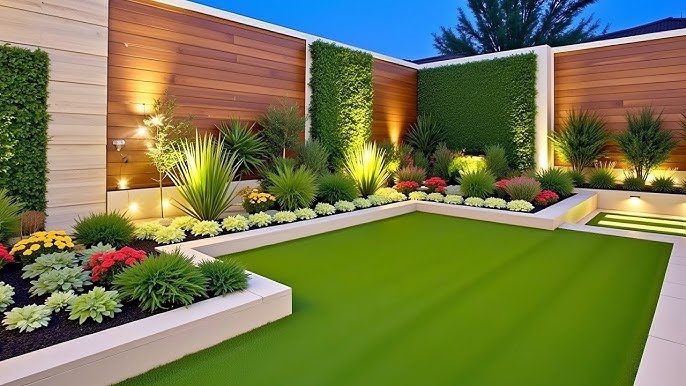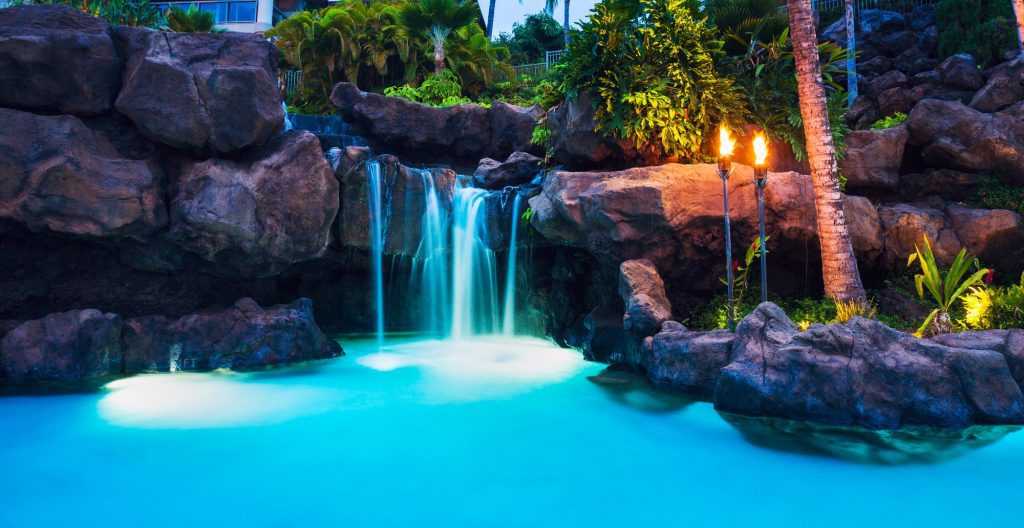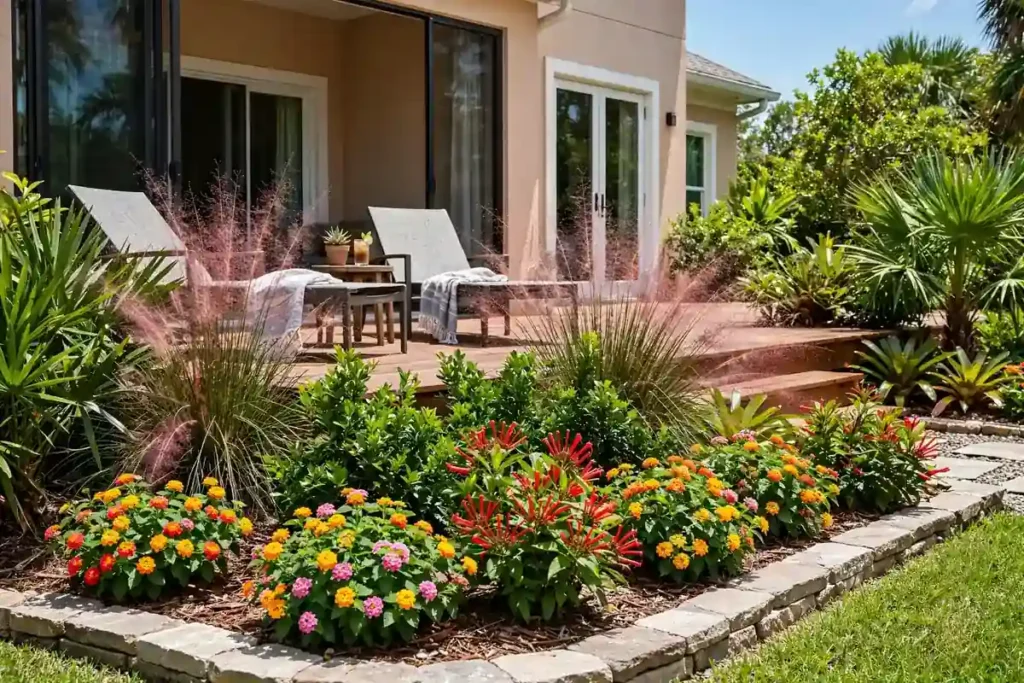
A deck without landscaping looks unfinished — like a picture without a frame. The boards are beautiful, the railings are straight, but the ground around it is bare dirt, patchy grass, or a weedy strip nobody looks at twice. The right landscaping changes everything: it softens the deck’s hard edges, adds color and privacy, and turns the whole backyard into a place you actually want to spend time. Here are ten Florida-tested ideas for landscaping around your deck, plus the mistakes to avoid.
10 Landscaping Ideas Around Your Deck
These ideas work for ground-level and raised decks alike. Mix and match based on your sun exposure, maintenance appetite, and budget — or use them as a starting point when talking to a designer.
1. Layered Foundation Plantings
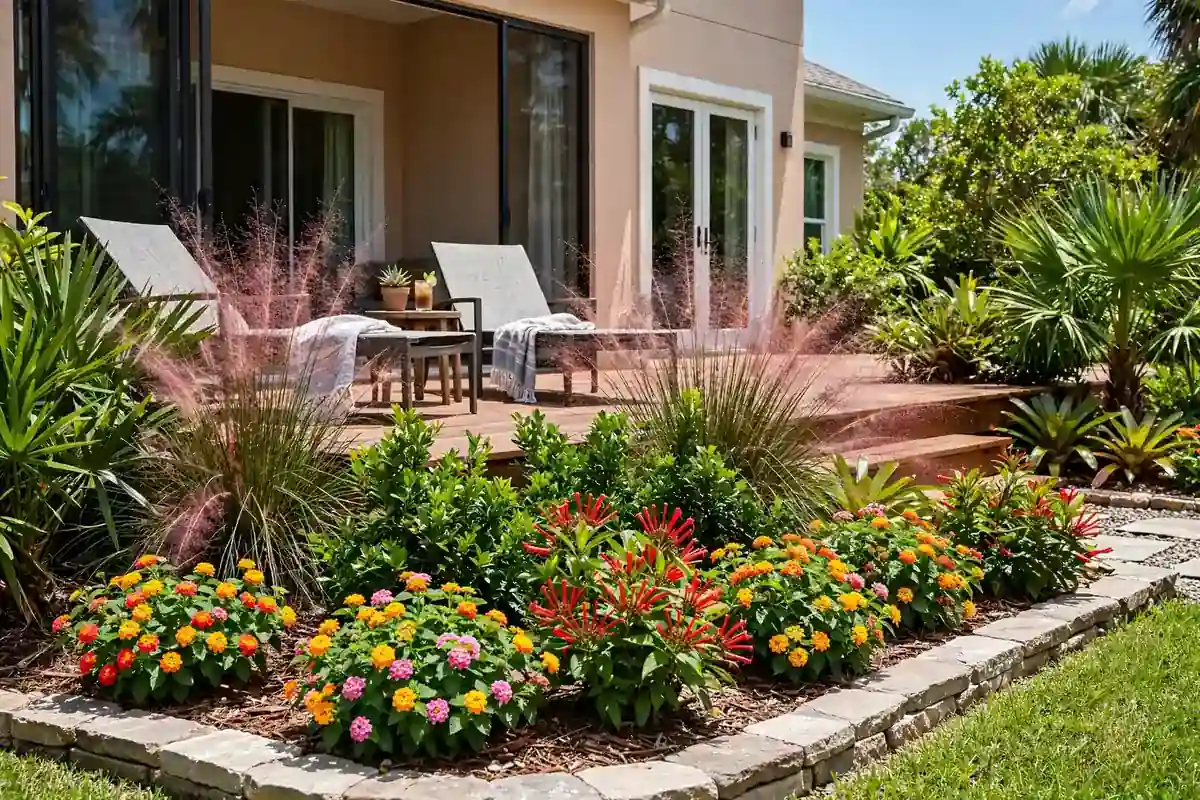
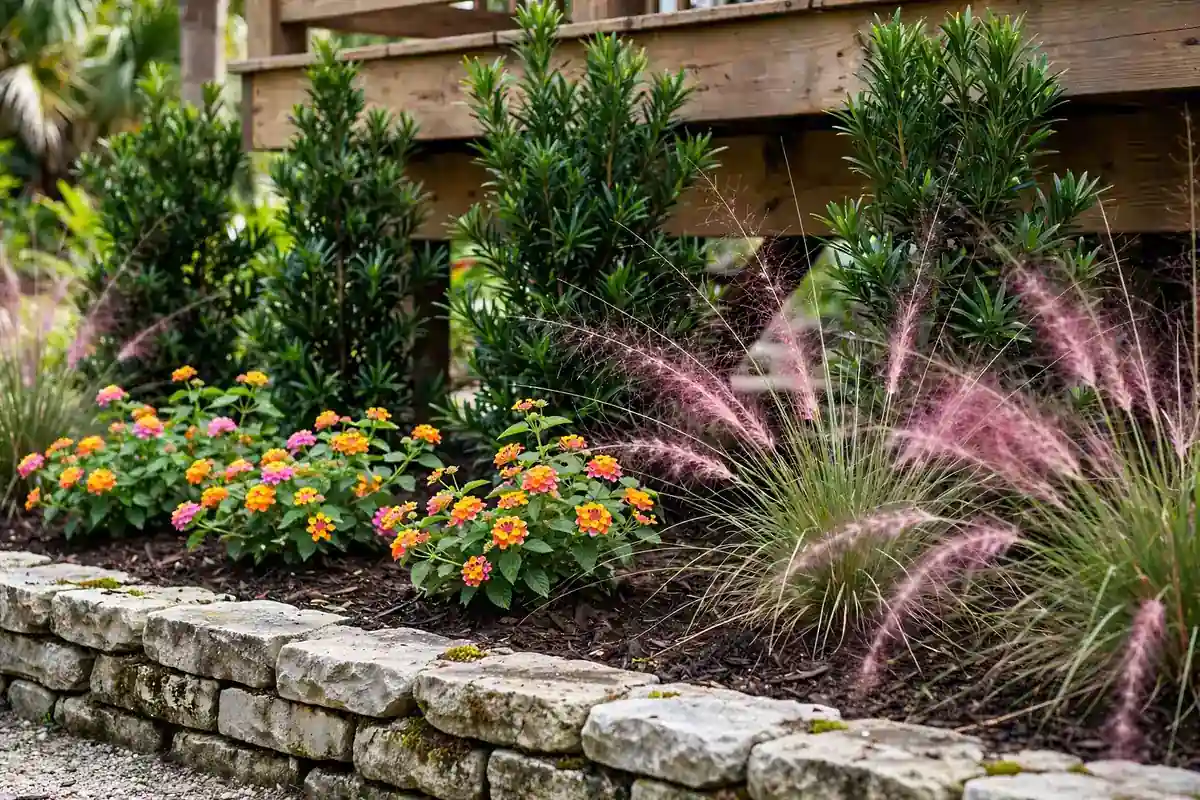
The single most effective trick: plant in layers. Tall shrubs or ornamental grasses at the back (against the deck), medium perennials in the middle, and low groundcover or annuals at the front edge. This creates depth and makes even a simple deck look professionally designed. In Florida, try podocarpus or viburnum at the back, lantana or salvia in the middle, and mondo grass or beach sunflower up front.
2. Go Native With Florida Plants
Native plants handle Florida heat, humidity, and sandy soil without babying — and they support local pollinators. Around decks, the standouts are coontie (evergreen cycad, great foundation plant), muhly grass (spectacular pink plumes in fall), firebush (hummingbird magnet), and lantana (blooms nearly year-round). Natives also need less water once established, which matters with Florida’s watering restrictions and sandy soils.
3. Define Beds With Clean Edges
Nothing says “finished” like a crisp bed edge. Use natural stone, pavers, or steel edging to separate planting beds from lawn — it keeps mulch in, grass out, and gives the whole area a designed look. For decks, a 3–4 foot wide bed along the base is the sweet spot: wide enough for layered plantings, narrow enough to maintain easily.
4. Add Landscape Lighting
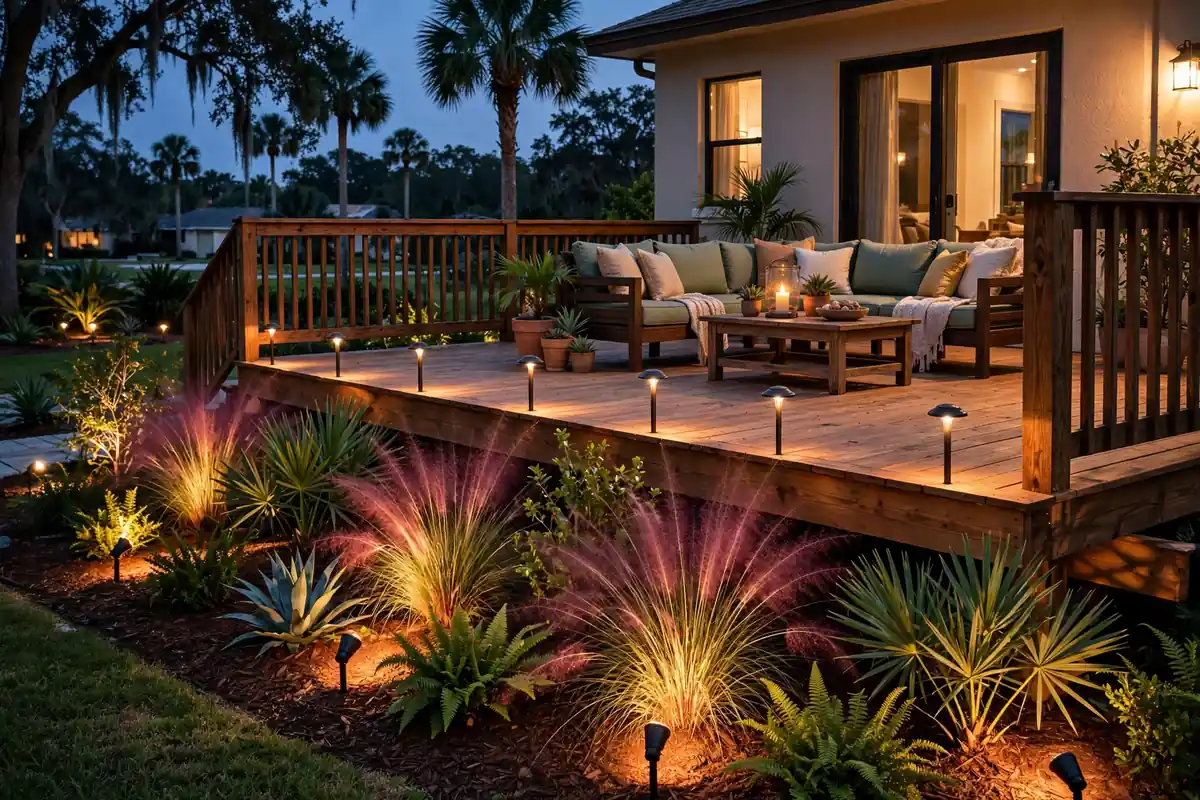
Deck landscaping you can’t see after dark is half wasted. Low-voltage path lights along bed edges, uplights washing key shrubs, and step lights on deck stairs extend the space into the evening and add serious curb appeal. Solar lights are tempting but underperform in shaded deck areas — wired low-voltage is the pro choice. See our landscape lighting ideas guide for fixture types and placement rules.
5. Create Privacy With Strategic Planting
If neighbors can see straight onto your deck, plants beat fences for softness. Clumping bamboo (never running bamboo — it escapes), podocarpus hedges, or areca palms create living screens in one to two growing seasons. Plant them 3–4 feet from the deck edge so mature growth doesn’t crowd the boards, and stagger heights for a natural look rather than a green wall.
6. Bring Plants Onto the Deck
Landscaping doesn’t stop at the deck edge. Large containers with small trees (meyer lemon, dwarf olive), railing planters with cascading sweet potato vine, and corner groupings of pots soften the deck surface itself. Use pots with drainage and saucers — standing water stains composite decking and rots wood. Self-watering planters are worth it in Florida’s summer heat.
7. Use Gravel and Mulch Beds for Low Maintenance
Don’t want weekly garden chores? A 3-inch layer of pine bark mulch or decorative gravel over landscape fabric gives you the finished look with a fraction of the upkeep. Mulch feeds the soil as it breaks down (top it up yearly); gravel never needs replacing but radiates heat — keep it away from heat-sensitive plants. Either way, you get weed suppression and a clean backdrop for a few anchor shrubs.
8. Add a Small Tree for Shade
One well-placed tree changes a deck’s usability in Florida. A crepe myrtle or loquat planted 10–12 feet from the deck casts afternoon shade without dropping messy fruit on the boards. Avoid trees with aggressive roots (ficus, live oak too close) or heavy litter (magnolia leaves, palm fronds) directly overhanging the deck — you’ll spend more time sweeping than relaxing.
9. Train Vines on Pergolas and Posts
If your deck has a pergola, posts, or lattice skirting, climbing vines add vertical interest fast. Confederate jasmine (intensely fragrant spring blooms), coral honeysuckle (native, hummingbirds love it), or bougainvillea (dramatic color, thorny — plant away from traffic) all thrive in Florida. Give vines a trellis or wire to climb; never let them attach directly to wood posts, where trapped moisture causes rot.
10. Plan Drainage Before You Plant
The unglamorous idea that saves the most money: water must flow away from deck posts and footings. Grade soil to slope away from the structure, keep gutter downspouts extended past planting beds, and never pile mulch against posts (it holds moisture and invites termites). If your yard holds water near the deck, fix grading first — plants can’t thrive in a swamp, and neither can your deck’s foundation. Our drainage guide covers the techniques in detail.
Plants to Avoid Near Decks
Not every pretty plant belongs next to a deck. Skip anything with invasive roots near footings (ficus, bamboo runners, willows), heavy droppers that stain decking (mulberry, loquat fruit over the boards, large palms shedding fronds), and thorny plants along walkways (bougainvillea, crown of thorns where people brush past). Also keep wood mulch pulled back 6 inches from any wood post — constant moisture contact is a termite invitation in Florida.
DIY vs Hiring a Landscaper for Deck Landscaping
Planting a few shrubs is a fine weekend project. But the projects that transform a backyard — regrading for drainage, designing layered beds that look good in every season, sourcing mature plants, installing lighting and irrigation for the new beds — benefit from a professional eye. A designer sees the sightlines, sun patterns, and mature plant sizes that are hard to judge from a nursery tag. If your deck landscaping is part of a bigger backyard vision, a professional landscape design pays for itself in avoided mistakes (and dead plants).
Frequently Asked Questions
What is the best plant to put around a deck in Florida?
Coontie, muhly grass, lantana, and firebush are top picks — all Florida natives that handle heat, sandy soil, and humidity with minimal care once established.
How far should plants be from deck posts?
Keep plants at least 2 feet from posts for airflow, and pull mulch back 6 inches from any wood post to prevent moisture damage and termites.
How do I landscape around a raised deck?
Use tall shrubs or ornamental grasses to fill the visual gap under the deck edge and hide the underside. Lattice skirting with climbing vines is another classic solution.
What is low-maintenance landscaping around a deck?
Gravel or mulch beds with a few anchor shrubs, native plants, and drip irrigation. Avoid high-maintenance annuals unless you enjoy replanting seasonally.
Should I put landscape lighting around my deck?
Yes — it’s the highest-impact upgrade per dollar. Path lights, uplights on key plants, and step lights make the space usable and beautiful after dark.
How much does professional deck landscaping cost?
Simple foundation plantings run a few hundred dollars in plants; full designs with beds, lighting, and grading typically range $1,500–$5,000+ depending on size and materials. Get a local quote for your specific yard.
Turn Your Deck Into an Outdoor Retreat
A deck is only half the project — the landscaping around it is what makes the backyard feel complete. Whether you want a low-maintenance native border, dramatic evening lighting, or a full privacy planting, the right design makes all the difference.
DreamScapes designs and installs deck landscaping across Palm Coast and Flagler County — from simple foundation plantings to complete outdoor living spaces. Call (386) 237-2983 or visit dreamscapesflorida.com for a free consultation. And if you’re sprucing up the whole yard, see our curb appeal guide for more Florida-friendly ideas.