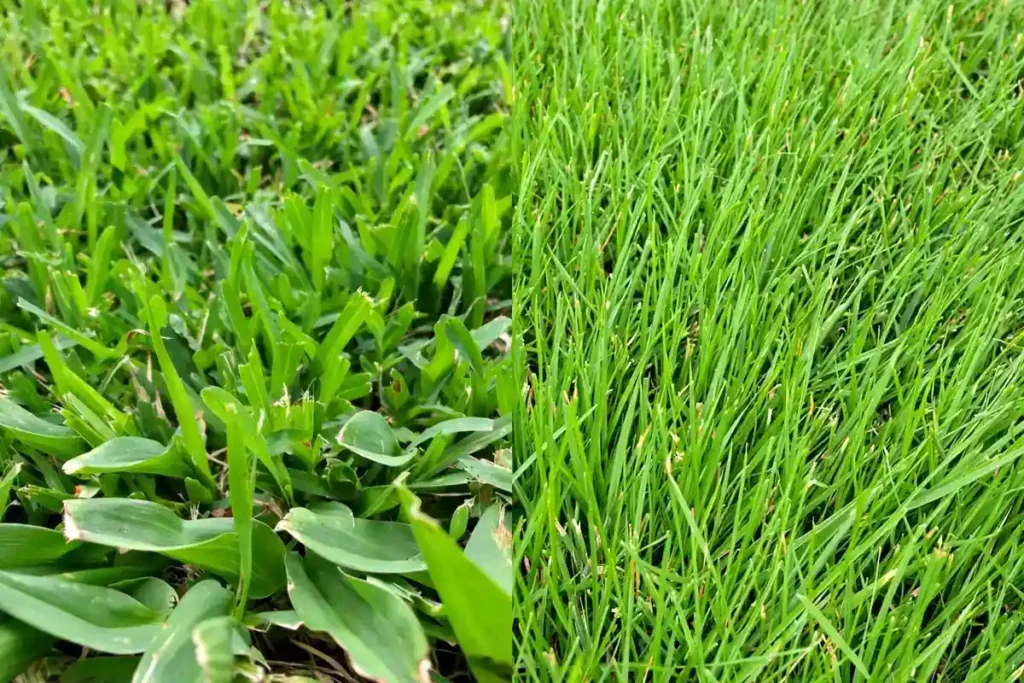
Cool season vs warm season grasses differ mainly in the temperatures they like. Warm-season grasses grow best at 80 to 95°F and go dormant in cold weather. Cool-season grasses grow best at 65 to 75°F and struggle in summer heat. In Florida, only warm-season grasses work as year-round lawns.
St. Augustine, Zoysia, Bahia, and Bermuda are the types you will see across Palm Coast and Flagler County. That matters before you buy sod. If you plant the wrong type, you pay for a lawn that cannot survive a Florida summer.
We have installed lawns across Flagler County since 2015, and the pattern never changes. Warm-season sod takes root and thrives, while cool-season seed fades before the first summer ends. The rest of this guide explains the difference in plain terms, then helps you pick the right warm-season grass for your yard.
Cool Season vs Warm Season Grass at a Glance
The table below sums up the main differences, based on the University of Georgia’s turfgrass guide. Temperature drives almost everything else, from when the grass grows to how you plant it.
| Feature | Cool-Season Grass | Warm-Season Grass |
|---|---|---|
| Best growing temperature | 65 to 75°F | 80 to 95°F |
| Active season | Spring and fall | Late spring through summer |
| Dormancy | Goes dormant in summer heat | Goes dormant in winter cold |
| Common examples | Tall fescue, Kentucky bluegrass, perennial ryegrass, annual ryegrass | St. Augustine, Zoysia, Bahia, Bermuda, centipede |
| How they spread | Mostly by seed, and many types grow in clumps | By runners above and below the ground |
| Where they grow | Northern states and cool climates | Southern states and warm climates |
| How planted | Usually from seed | Sod, plugs, sprigs, or seed, depending on the type |
The table shows why the choice is simple in Florida. Our summers sit far above the range cool-season grass likes, and our winters are too short and mild to suit it either.
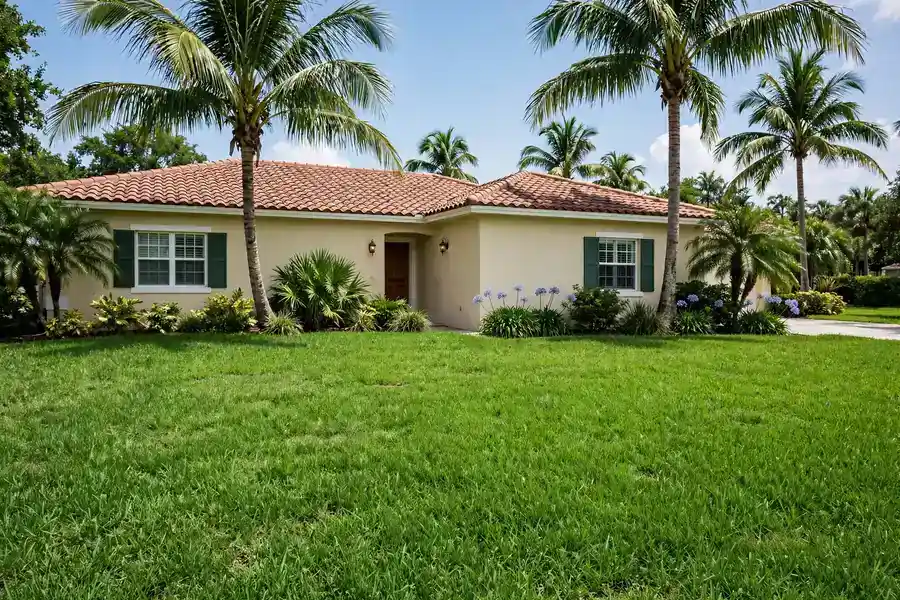
What Are Warm-Season Grasses?
Warm-season grasses are built for heat. They grow strongest in late spring and summer, when the sun is high and the days are long. When cold weather arrives, they slow down and go dormant until spring.
These grasses use C4 photosynthesis. In simple terms, that is a form of photosynthesis that works well in strong sun and heat and loses less water than the type cool-season grasses use. That is one reason warm-season grasses handle Florida summers better than any cool-season type.
Warm-season grasses spread by runners. Some runners creep along the surface, and others grow below the soil. Both types of runners fill in bare spots and help the lawn thicken over time. This spreading habit is also why sod works so well with these grasses.
St. Augustine is the most common lawn grass in Northeast Florida, with wide blades and thick cover. Zoysia forms a dense, soft turf that handles some shade and foot traffic. Bahia is a tough, low-input grass for large sunny lots. Bermuda has fine blades, loves full sun, and stands up to heavy traffic. Centipede is a slow-growing, low-input grass for sunny yards that need less mowing.
In winter, warm-season lawns rest. They turn tan or brown and stop growing until the soil warms again. That rest is normal, not a sign the lawn is dead. A healthy warm-season lawn greens up on its own each spring, which is why we never treat winter brown as a reason to replace the lawn.
For a full comparison of these types, see our best grass for Florida lawns guide. Once your warm-season lawn is in, feeding it at the right time keeps it thick. Our Florida lawn fertilizer schedule lays out a month-by-month plan for Northeast Florida.
What Are Cool-Season Grasses?
Cool-season grasses are built for cool weather. They grow strongest in spring and fall, when temperatures sit in the 60s and low 70s. When summer heat arrives, they slow down, go dormant, and often thin out.
These grasses use C3 photosynthesis, the type that works best in mild temperatures and weaker sun. Tall fescue is a clump-forming grass with deep roots that is common across the middle of the country. Kentucky bluegrass has fine blades and spreads by underground runners. Perennial ryegrass establishes fast from seed and is often mixed with other seed. Annual ryegrass is short-lived and is mostly used as a temporary cover.
Between the cool north and the warm south sits the transition zone, where summers are too hot for cool-season grass and winters are too cold for warm-season grass. Homeowners there often fight both problems at once. Florida sits well south of that zone, so we do not face that trade-off. Our problem is heat alone, and warm-season grass solves it.
If you want the full comparison of two popular cool-season types, read Kentucky bluegrass vs tall fescue. For how fescue and ryegrass differ, see fescue vs ryegrass. Neither type is a permanent lawn solution in Florida, as the next section explains.
Why Cool-Season Grass Does Not Last in Florida
Heat is the first problem. Florida summers run far above the 65 to 75°F range that cool-season grass prefers, and they stay there for months. A cool-season lawn stops growing, goes dormant, and waits for cooler weather that never comes in time.
Humidity and summer storms make it worse. Wet leaves and warm nights invite disease, and a stressed lawn has little strength to fight it off. Our sandy soil dries fast and holds few nutrients, so a struggling lawn gets little help from the ground. Near the coast, salt air adds one more stress.
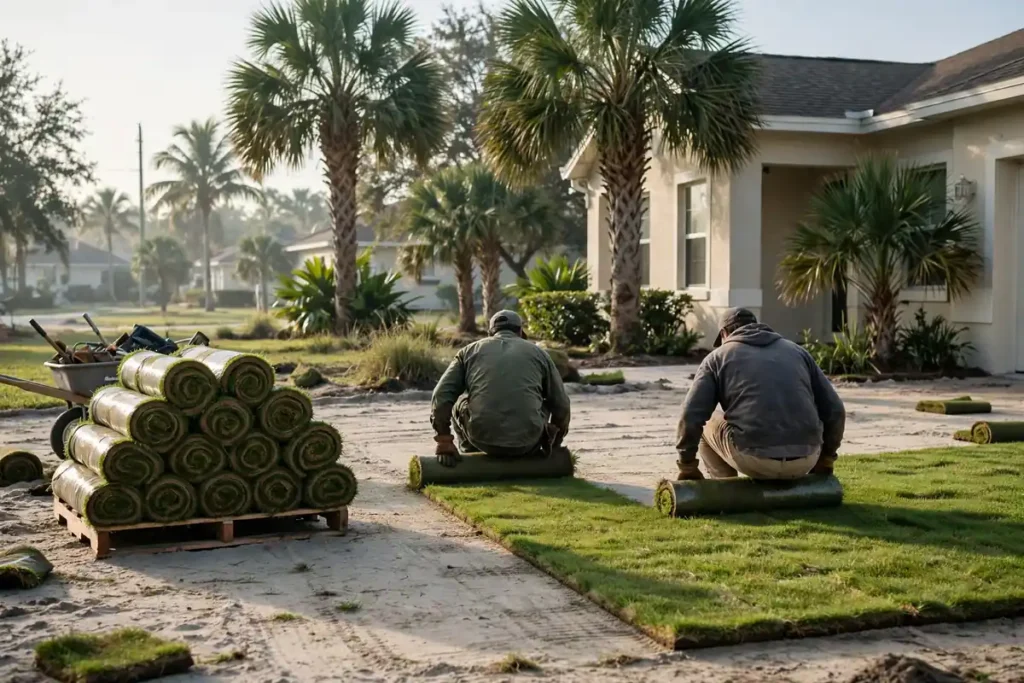
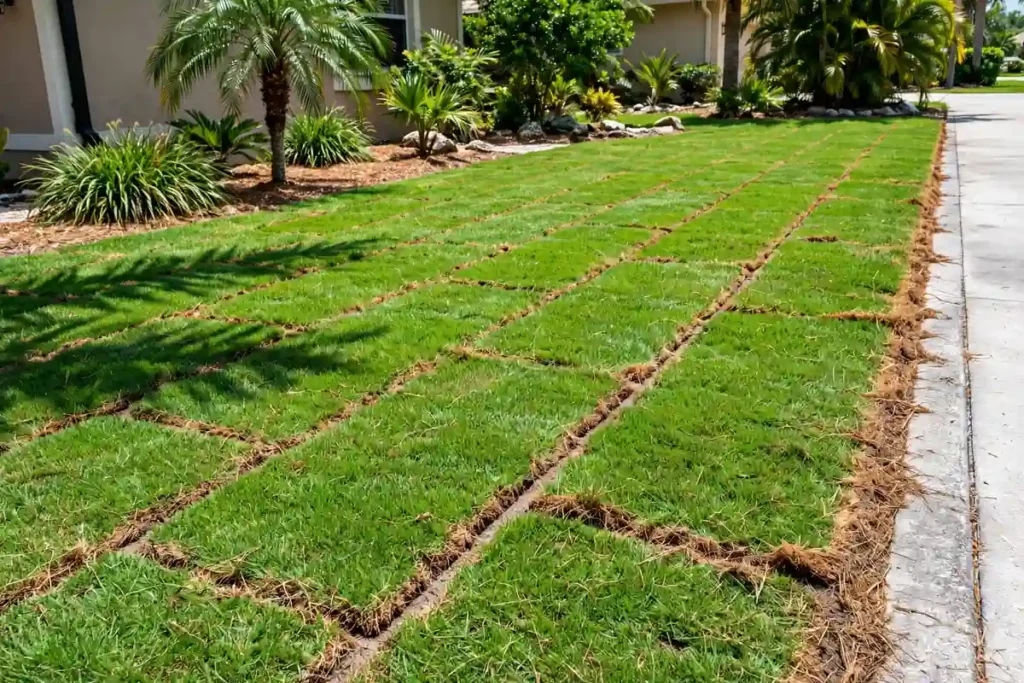
The result is a thin, patchy lawn that never fills back in. Each summer takes more of it, and each fall it has less left to recover with. That is why Florida lawns are sod-based warm-season lawns. Sod gives you instant cover of a grass type that is built for our heat, instead of seed of a type that is fighting it.
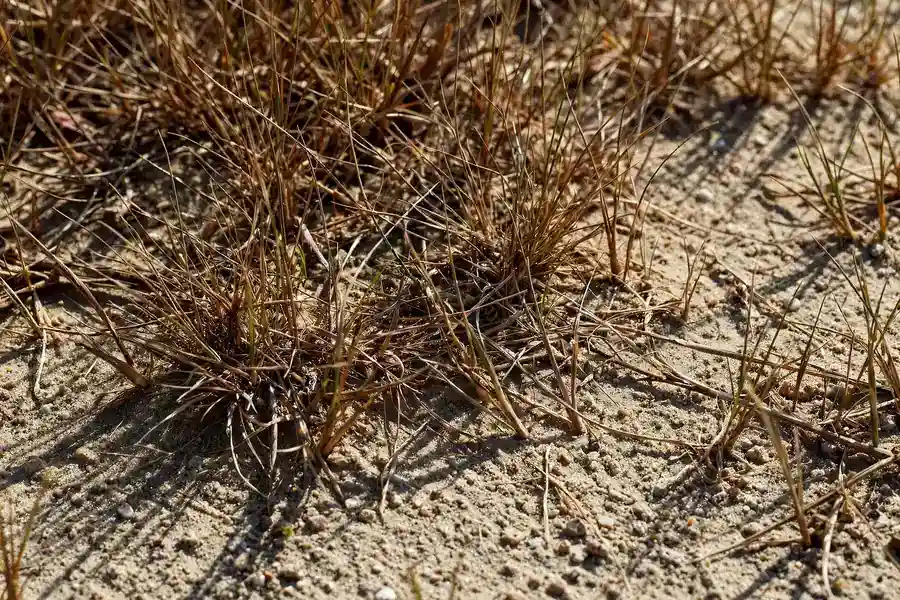
What About Winter? Overseeding With Ryegrass
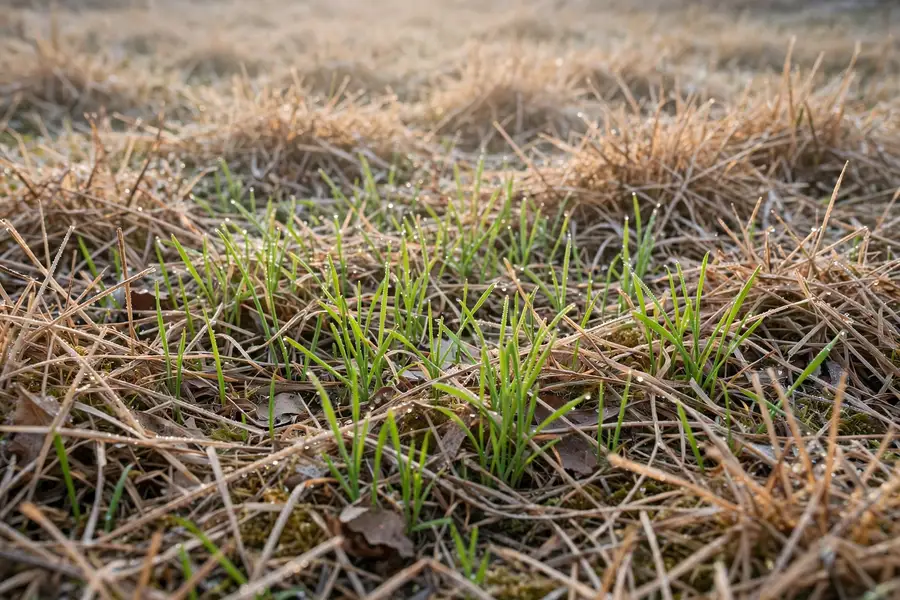
Warm-season lawns go dormant in winter and turn tan or brown. That is normal, and the grass greens up again in spring. Some homeowners want green through winter, and overseeding with annual ryegrass is how they get it.
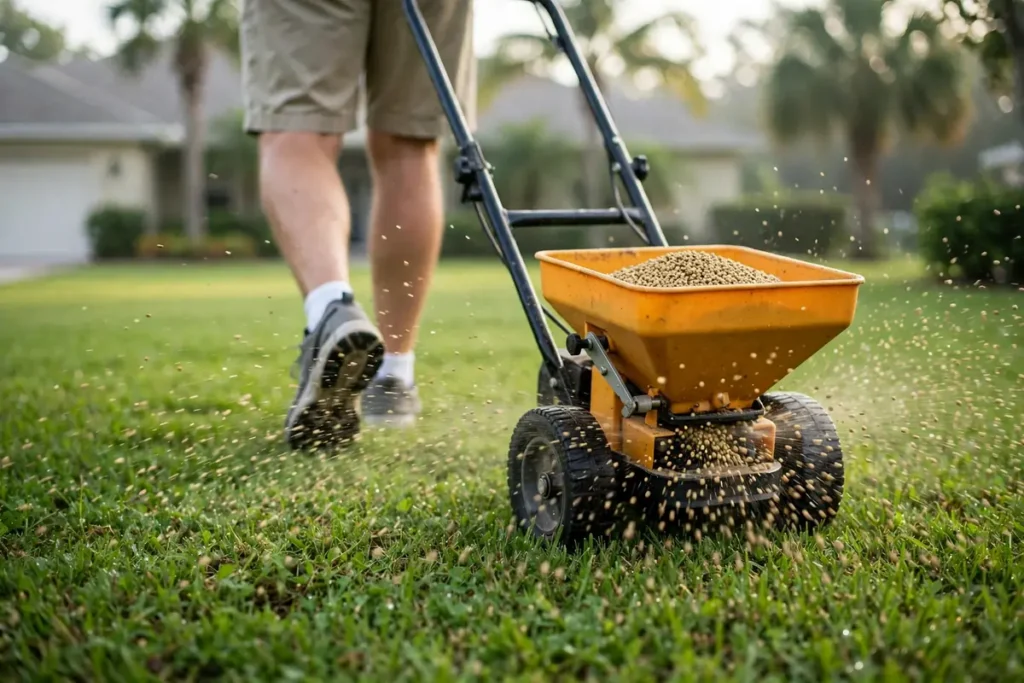
Overseeding means scattering annual ryegrass seed over the dormant lawn. In a North Central Florida example from the UF/IFAS Marion County Extension, the seed goes down in mid to late November at about 7 lbs per 1,000 sq ft. You water about 1/4 inch daily until the seed germinates, which takes about a week. The rye stays green through winter, then dies out once mid-May temperatures pass 90°F, and the warm-season grass takes over again.
There are downsides. Overseeding adds watering and mowing through the months when your lawn would otherwise rest. Overwatering washes seed away and invites disease, so the watering has to stay light and steady. You also pay for seed and extra mowing for a lawn that is only temporary.
Many Palm Coast homeowners skip overseeding and simply accept a duller winter lawn. The warm-season grass underneath is still alive, and it greens up on its own in spring. If you do overseed, treat it as a short-term winter cover, not a fix for a weak lawn.
Which Grass Is Right for Your Florida Yard?
Start with sun. Full sun suits St. Augustine, Bermuda, and Bahia, and Bermuda handles heavy traffic best. Yards with some shade from oaks or the house do better with St. Augustine or Zoysia, which tolerate shade better than Bermuda or Bahia.
Next, think about budget and use. Bahia is a good fit for large lots where you want a tough lawn with less upkeep. Zoysia suits smaller yards where you want a dense, soft lawn and you mow often. For a front yard that takes daily foot traffic from kids and dogs, Bermuda or Zoysia hold up best.
If you are still unsure, walk your yard at midday. The spots that stay shady under oaks need a different grass than the open front lawn. That one walk often answers the question better than any chart.
One rule matters for St. Augustine: it is grown from sod or plugs only, never from seed. If you see a bag of seed labeled St. Augustine, it is not the real thing. Before you order, check the sod installation cost so you know what a full job includes. Timing matters too, so see the best time to install sod in Florida before you book.
Get the Right Sod for Your Yard
Not sure which grass fits your sun and shade? We help homeowners across Palm Coast, Flagler Beach, Bunnell, Ormond Beach, and St. Augustine choose and install the right sod. See our sod installation services or call (386) 237-2983 for a free estimate.
Frequently Asked Questions
Cool-season grasses grow best at 65 to 75°F and stay green in spring and fall, then go dormant in summer heat. Warm-season grasses grow best at 80 to 95°F and stay green through summer, then go dormant in winter cold. In short, each type thrives in the season the other rests through.
Not as a permanent lawn. Cool-season grass cannot survive Florida summers, which run far above its preferred range for months. It can work as a temporary winter cover: annual ryegrass overseeded in November stays green through winter, then dies out once May temperatures pass 90°F.
It depends on your sun and use. St. Augustine is the most common choice in Northeast Florida and handles some shade. Zoysia suits smaller yards that get foot traffic. Bahia fits large sunny lots with less upkeep. Bermuda is best for full sun and heavy traffic.
Overseeding is optional, not required. It gives you a green lawn through winter, but it adds watering and mowing in months when your lawn would otherwise rest. Overwatering can wash seed away and invite disease. Many Palm Coast homeowners skip it and accept a duller winter lawn instead.
As the soil warms in spring. In Northeast Florida, warm-season grasses usually green up in March to April, once steady warm weather returns. A late cold snap can slow them down, but they fill back in fast once temperatures stay warm.
No. St. Augustine grass is established by vegetative propagation only, which means sod, plugs, or sprigs. It does not produce viable seed for lawn planting. If you want a St. Augustine lawn, you must buy sod or plugs and plant those.