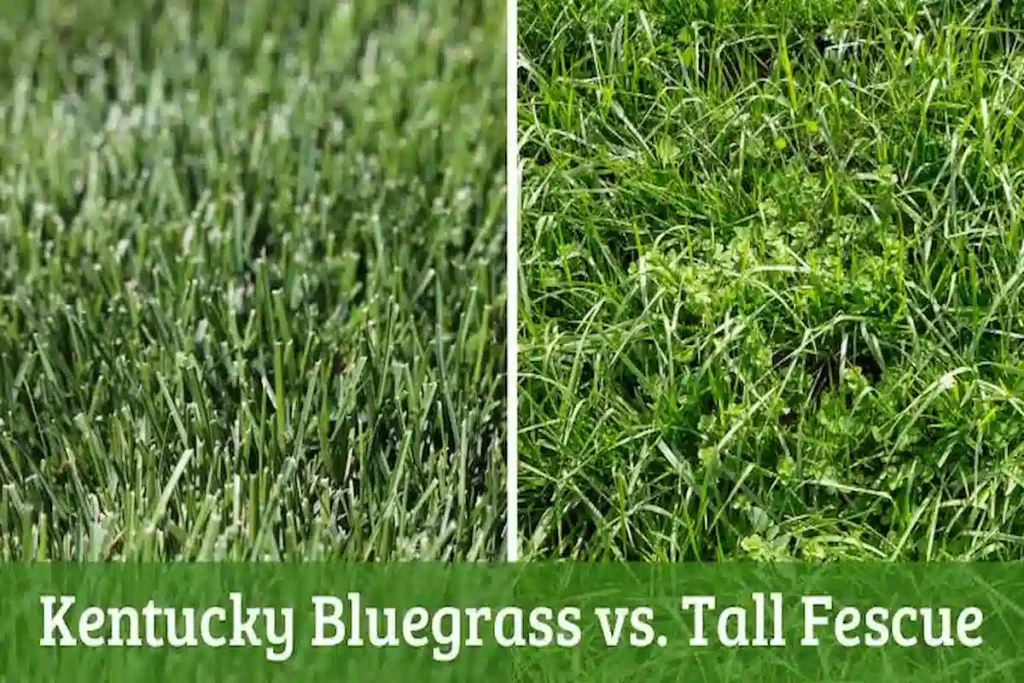
If you’ve been searching “Kentucky bluegrass vs tall fescue,” you’re probably trying to figure out which one will hold up better under your specific conditions. Here’s the short version: Kentucky bluegrass gives you that dense, carpet-like lawn everyone associates with a classic front yard, but it needs a lot of sun and water to stay that way. Tall fescue is the tougher, more forgiving option, with deep roots that shrug off heat and drought and handle shade far better than bluegrass ever will. Both are cool-season grasses built for northern and transitional climates, which matters a lot if you’re reading this from Central Florida. We’ll get to that.
Kentucky Bluegrass vs Tall Fescue at a Glance
| Feature | Kentucky Bluegrass | Tall Fescue |
|---|---|---|
| Texture | Fine, soft blades | Coarser, broader blades |
| Growth habit | Spreads via rhizomes, self-repairing | Grows in clumps, doesn’t spread |
| Sun needs | Full sun, struggles in shade | Tolerates partial shade well |
| Drought tolerance | Low to moderate, goes dormant in heat | High, deep roots find water |
| Water needs | 1.5 to 2 inches per week | Less frequent, deeper watering |
| Cold hardiness | Excellent, built for cold winters | Good, but less cold-hardy than bluegrass |
| Best climate zones | Northern and transitional | Transitional, some southern edge |
| Maintenance level | Higher | Lower to moderate |
What Is Kentucky Bluegrass?
Kentucky bluegrass (Poa pratensis) is a popular perennial cool-season turfgrass known for its rich green color, fine texture, and ability to form a dense, durable sod. It has fine blades, and it spreads through underground stems called rhizomes. That spreading habit is its biggest selling point. If a section gets worn down from foot traffic or a dog running the same path every day, bluegrass fills the gap in on its own instead of leaving a bare patch behind.
The catch is that bluegrass is fairly demanding. It wants full sun for most of the day, consistent watering, and regular fertilizing to keep that dense, uniform look. In hot, humid summers it tends to slow down or go dormant, and it doesn’t recover from long dry spells as gracefully as some other grasses.
What Is Tall Fescue?
Tall fescue is a tough, cool-season perennial bunchgrass known for its deep root system and high tolerance to heat, drought, and heavy foot traffic. It has a coarser blade than bluegrass, grows in individual clumps rather than spreading by rhizomes, and puts most of its energy into building a deep root system, sometimes reaching two to three feet down. Those roots are the whole reason people plant it. They pull moisture from far below the surface, which means tall fescue keeps its color through hot spells and dry stretches that would send bluegrass into dormancy.
Tall fescue also handles shade noticeably better than bluegrass, making it a go-to for yards with mature trees. The tradeoff is that since it doesn’t spread, thin or damaged spots need to be overseeded rather than filling in on their own.
Kentucky Bluegrass vs Tall Fescue: 6 Key Differences
Texture and Appearance
Bluegrass has the finer, softer blade and the deeper blue-green tone that reads as “manicured.” Tall fescue is coarser underfoot and has a slightly duller green, though newer turf-type tall fescue varieties have narrowed that gap quite a bit over the past couple of decades.
Sun and Shade Tolerance
This is one of the clearest splits between the two. Bluegrass wants six or more hours of direct sun and thins out fast under trees or near structures that cast shade. Tall fescue tolerates four hours of sun and still performs reasonably well, which is why it’s the more common pick for yards with heavy tree cover.
Drought and Heat Tolerance
Tall fescue‘s deep root system gives it a real advantage here. It can go longer between waterings and bounce back from heat stress more reliably. Bluegrass has shallower roots, so it depends on more frequent irrigation and tends to go dormant, turning brown, once soil moisture drops for an extended period.
Water and Maintenance Needs
Bluegrass generally needs closer to two inches of water a week during active growth and benefits from more frequent mowing and fertilizing to keep its density. Tall fescue gets by on less frequent, deeper watering and slightly less mowing overall, which adds up to lower long-term maintenance.
Root System and Self-Repair
Bluegrass spreads through rhizomes, so it heals itself after minor damage from pets, kids, or foot traffic. Tall fescue grows in bunches and stays put, so any bare or thinning areas need to be reseeded rather than growing back naturally.
Cold Hardiness
Both grasses handle cold winters fine, but bluegrass edges out fescue slightly in the coldest northern zones, which is part of why it’s such a staple in states like Minnesota and Wisconsin.
Why Neither Grass Thrives in Palm Coast, Ormond Beach, or Flagler Beach Yards
Here’s the part that matters most if you’re reading this from Flagler County. Kentucky bluegrass and tall fescue are both cool-season grasses. They’re built for climates with cold winters and mild summers, and they generally go dormant or decline once temperatures stay in the 80s and 90s for months at a time. Florida’s long, humid growing season is close to the opposite of what these grasses want. Homeowners who plant bluegrass or fescue here usually end up fighting fungus, heat stress, and thinning turf no matter how carefully they water and fertilize.
If your lawn already has bare or struggling patches and you’re weighing whether to reseed with one of these grasses or start over, it’s worth reading our breakdown of sod versus seed before you commit to either approach, since the right starting method matters as much as the grass type itself.
The Grass Types That Actually Work in Central Florida
For lawns in Palm Coast, Flagler Beach, Ormond Beach, Bunnell, and St. Augustine, warm-season grasses are the better long-term investment. St. Augustine grass is the most common choice in this region because it handles humidity, salt-adjacent air, and partial shade better than most alternatives. Bahia grass is a low-maintenance, drought-tough option often used on larger properties where a manicured look matters less than durability. Zoysia sits in between, offering a denser, finer texture with solid heat and drought tolerance once it’s established.
If you’re planning a fresh lawn install rather than a patch job, our sod page walks through the warm-season options we install locally and what each one costs to get down.
And if you’d rather start from seed for a specific area of the yard, our guide on how to grow grass from seed covers timing and prep for Florida’s climate specifically, which is very different from seeding a cool-season lawn up north.
So Which Should You Choose?
If you live somewhere with real winters, cold summers stay mild, and you want that dense, self-healing look, Kentucky bluegrass is worth the extra water and upkeep. If you’re in a transitional climate, deal with more shade, or want a lower-maintenance lawn that shrugs off dry spells, tall fescue is the safer bet.
If you’re in Central Florida, the honest answer is neither. Your soil, humidity, and summer heat call for a warm-season grass instead. Watering habits matter just as much as species selection here, so it’s worth checking our guide on how much water a lawn really needs before you set up an irrigation schedule for whatever you plant.
If you’d rather have someone assess your specific yard and recommend the right grass for your sun exposure, soil, and traffic patterns, our team handles lawn maintenance in Palm Coast and can walk the property with you before you spend money on the wrong turf. Getting the water timing right matters just as much as picking the right grass, and our irrigation services in Palm Coast team can set up a system that matches whatever species ends up going in the ground.
Frequently Asked Questions
It depends on your climate and yard conditions. Tall fescue is better for heat tolerance, drought resistance, and shade, while Kentucky bluegrass is better for cold climates and self-repairing after damage. Neither is universally “better.”
Not well. Both are cool-season grasses that struggle with Florida’s heat and humidity. Warm-season grasses like St. Augustine, Bahia, or Zoysia are much better suited to Central Florida lawns.
Tall fescue generally needs less frequent watering because its deep root system reaches moisture further underground. Kentucky bluegrass has shallower roots and needs more consistent irrigation to stay green.
No. Tall fescue grows in clumps rather than spreading through rhizomes, so bare or damaged spots need to be reseeded. Bluegrass spreads on its own and fills in minor damage over time.
St. Augustine, Bahia, and Zoysia are the top choices for this area. They tolerate Florida’s heat, humidity, and sandy soil far better than any cool-season grass.