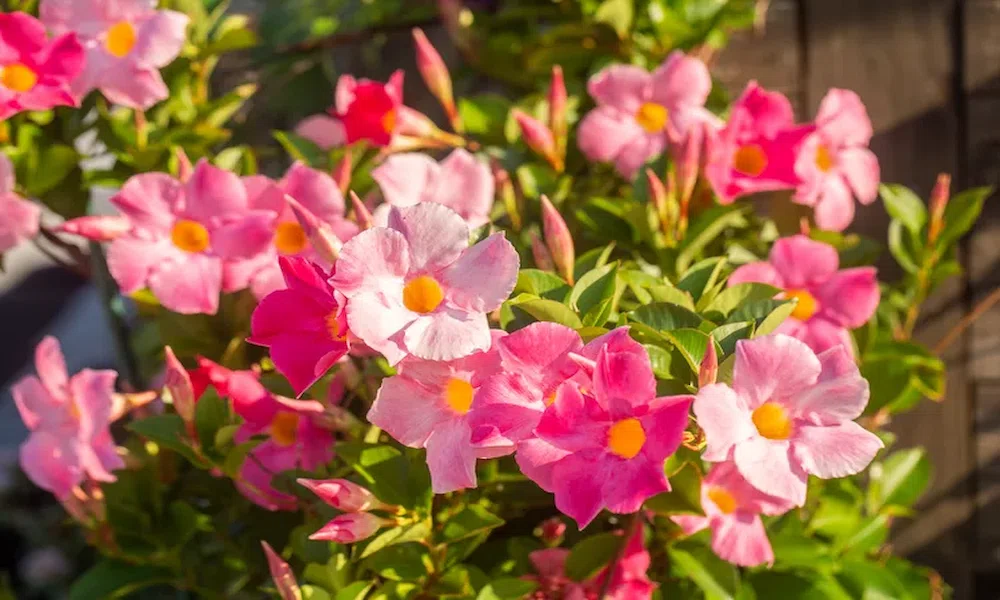
Walk into any garden centre around Palm Coast in April, and you’ll see racks of dipladenia in full bloom — mounds of glossy green leaves covered in trumpet-shaped flowers in red, pink, and white. They look perfect on the shelf. The trouble usually starts about three weeks after you get one home, when the blooms stop coming & the lower leaves turn yellow.
That’s almost never bad luck. It’s watering, drainage, or one cold night nobody planned for. Dipladenia is an easy plant once you know what it actually wants, and our climate here in Flagler County gives it nearly everything it needs for nine or ten months out of the year. Here’s how to get it right the first time.
What Is a Dipladenia Plant?
Dipladenia is a tropical flowering shrub native to Brazil and neighbouring parts of South America. Almost every dipladenia plant sold in the U.S. is Mandevilla sanderi or a hybrid of it. Botanists merged the old Dipladenia genus into Mandevilla in the 1990s, but growers kept using the name because it still describes something useful: the compact, bushy types people buy for pots and bed edges rather than for climbing.
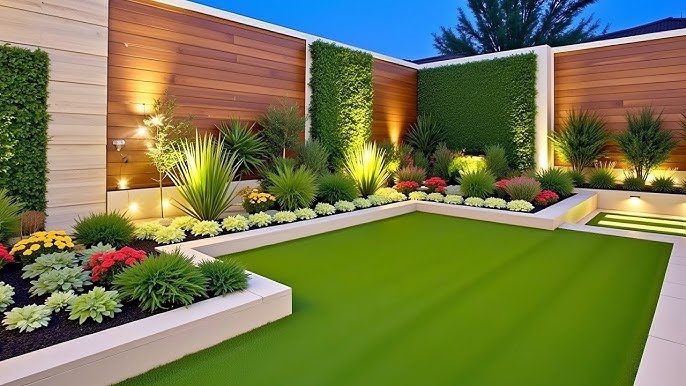
The dipladenia flower is a five-petal trumpet, usually 2 to 3 inches wide, with a pale yellow or cream throat. Blooms come in waves from March through November, and in a mild Palm Coast winter you’ll often catch a few in December. The leaves are small, pointed, and shiny, which gives you a clean contrast against softer plants like coleus or begonia. A mature dipladenia bush stays around 2 to 3 feet tall and roughly as wide, so it fits places a full vine would swallow. If you’re building out a planting plan and want that kind of controlled size, our landscape design team works with these constantly along walkways and pool decks.
Dipladenia vs Mandevilla: The Difference That Matters
People treat dipladenia and mandevilla as the same plant, and tags at big-box stores are often wrong. Genetically, they’re close cousins. Practically, the difference is growth habit, and that’s the part that decides whether you’re happy in July.
Mandevilla is a true climber. It sends out long twining stems that want a trellis, a mailbox post, or a fence, and it can run 10 to 15 feet in a season. Dipladenia mounds and trails instead. Its stems are shorter and stiffer, so it fills a container or a bed without needing support. Flowers on a mandevilla are typically larger; dipladenia produces more of them at a smaller size.
Pick a mandevilla plant when you want height and vertical cover — a freestanding garden trellis or an arbour gives it something to grab. Pick dipladenia when you want a tidy shrub for a pot, a border, or the front edge of a bed. Buying by flower colour instead of growth habit is the mistake that costs people a season.
Where to Plant Dipladenia in Palm Coast
Dipladenia wants six or more hours of direct sun. Morning sun with a little afternoon shade is close to ideal here, because our July and August afternoons can scorch leaves on a plant that’s already stressed for water. Full shade gives you a green plant with almost no flowers.
Drainage matters more than anything else. Our sandy Flagler County soil actually works in your favor — dipladenia hates sitting in wet feet, and heavy clay is what kills it in other parts of the country. What causes problems locally is low spots in the yard where summer rain pools, or beds against a downspout. If you’re planting in one of those areas, raise the bed a few inches or fix the water problem first; our irrigation and drainage solutions crew deals with this on almost every property along the canals.
One more local note: if you’re east of A1A, salt spray will burn dipladenia foliage. It’s not a coastal plant. Set it on a protected patio or behind a hedge, and use genuinely salt-tolerant plants for anything facing the ocean.
How to Plant Dipladenia
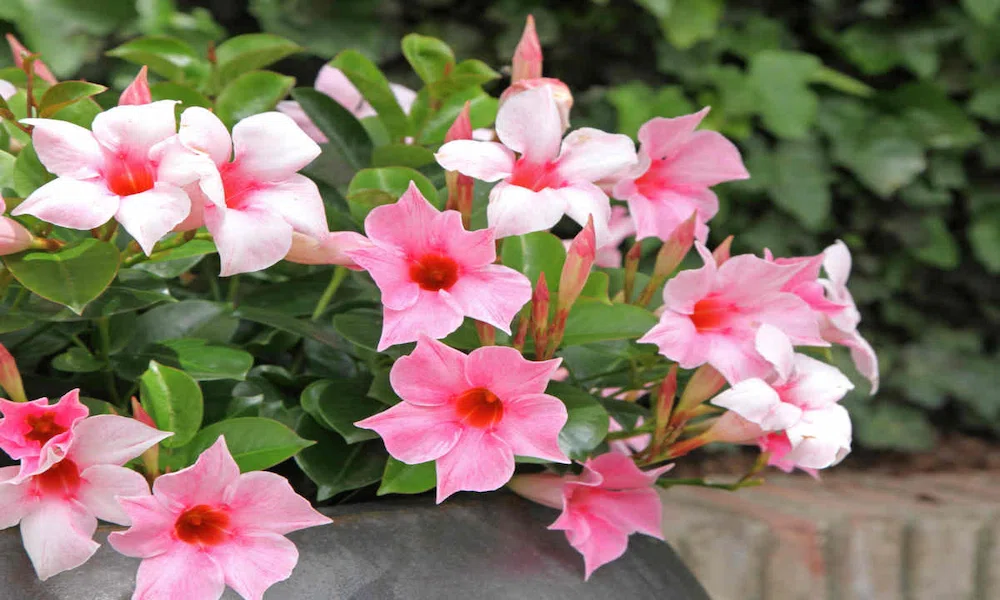
Dipladenia planting is straightforward, but the timing and the soil mix both matter.
Wait for warm nights. Plant after nighttime lows consistently stay above 55°F. In Palm Coast, that’s usually mid-March. Planting in February and hoping for the best is how people lose a healthy plant to one bad week.
Dig wide, not deep. Make the hole twice as wide as the root ball and the same depth. Set the plant so the top of its root ball sits slightly above grade — an inch proud is fine. Buried crowns rot.
Amend lightly. Mix a few handfuls of compost into the backfill. Don’t build a rich pocket in sandy soil, because roots will circle inside it instead of spreading. For container planting, use a fast-draining mix; if you’re not sure what to buy, our potting soil mix guide covers what works for tropicals in this climate.
Space them properly. Give each plant about 2 feet if you’re running a row. They fill in faster than people expect.
Mulch, but keep it off the stems. Two inches of pine bark holds moisture and keeps sand from splashing onto the leaves. Pull it back an inch from the base.
Dipladenia Care Through the Year
Watering
This is where most plants die. Dipladenia care means deep, infrequent water — not a daily splash. Push a finger into the soil; when the top inch or two is dry, water thoroughly until it runs out the bottom of the pot or soaks well past the root ball in the ground. Then leave it alone until it’s dry again.
In a Palm Coast summer, that’s often every two or three days for containers and once or twice a week for in-ground plants. During our rainy season, cut back and let the sky do the work. Yellow lower leaves plus soggy soil means you’re overwatering. Yellow leaves plus bone-dry soil means the opposite. The plant tells you which.
Feeding
Dipladenia flowers on new growth, so steady feeding through the warm months keeps blooms coming. Use a balanced liquid fertiliser every two weeks from March through September, or a slow-release granular in spring and again in midsummer. A formula slightly higher in phosphorus helps flowering. Stop feeding in October — pushing tender growth right before our first cold snap is asking for damage. Our garden fertiliser guide breaks down the numbers if you want to match a product to this schedule.
Pruning
Trim lightly through the season to keep the shape you want, and pinch stem tips to encourage branching and more flowers. The real cut comes in late February or early March: take the plant back by about a third before new growth starts. That’s what keeps a dipladenia bush full instead of leggy and bare at the bottom. Wear gloves — the milky sap irritates skin. Regular trimming is the single biggest difference between a plant that looks good for one season and one that looks good for five.
Winter Protection
Here’s the local truth nobody at the register tells you: dipladenia is rated for USDA zones 10 and 11. Palm Coast is 9a to 9b. UF/IFAS notes that mandevilla and dipladenia show cold damage when temperatures drop below about 45°F, and a real freeze will kill unprotected plants outright.
That doesn’t mean you can’t grow it here. It means you plan for winter. Keep your best plants in containers so you can move them into a garage or against a warm south wall when a cold front comes through. For in-ground plants, choose a protected spot near the house, and cover them with frost cloth on nights forecast below 40°F. Many Flagler County gardeners simply treat dipladenia as a strong nine-month performer and replace it every spring — which is a fair trade for the amount of colour it gives.
Growing Dipladenia in Containers
Containers are honestly the best way to grow this plant in our area. You control the soil, you control the drainage, and you can move the pot when the weather turns. Choose a pot with real drainage holes and go one size up from the nursery container — oversized pots hold too much water.
Pair dipladenia with a trailing sweet potato vine or a spike for height and you’ve got a patio pot that carries from March to Thanksgiving. It also handles part shade better than most flowering tropicals, which makes it useful on covered lanais where other bloomers sulk. For more combinations that hold up in Florida heat, see our roundup of outdoor plants for patios. The Spruce also has a helpful guide to growing dipladenia and mandevilla in containers if you want a second opinion on pot sizing.
Common Problems and Quick Fixes
Yellow leaves. Usually overwatering. Check drainage before you reach for fertiliser.
No flowers. Not enough sun, or too much nitrogen. Move it to brighter light and switch to a bloom formula.
Fine webbing under leaves. Spider mites, common in dry heat. Spray the undersides with water, then treat with insecticidal soap or horticultural oil.
White cottony clumps at leaf joints. Mealybugs. Dab with rubbing alcohol on a cotton swab; repeat weekly.
Sudden collapse after a cold night. Freeze damage. Don’t prune immediately — wait until spring growth starts so you can see what survived.
Bring the Colour Home
Dipladenia rewards the basics: sun, drainage, steady feeding, and a plan for January. Get those four right and you’ll have flowers from early spring until the first real cold front.
If you’d rather have it designed, planted, and maintained for you, Dreamscapes Florida has been building landscapes across Palm Coast, Bunnell, Flagler Beach, Ormond Beach, and St. Augustine for years. Get in touch and we’ll put together a planting plan that actually fits your yard and your soil.
Frequently Asked Questions
Is dipladenia a perennial in Florida?
In zones 10 and 11 it’s a true perennial. In Palm Coast (9a/9b) it comes back reliably only in protected spots or containers you move indoors. Many people here grow it as a warm-season plant and replace it each spring.
Is dipladenia the same as mandevilla?
They’re in the same genus. Dipladenia is the bushy, compact type; mandevilla is the climbing type. Nursery tags mix them up regularly, so judge by growth habit rather than the label.
Is dipladenia toxic to pets?
The milky sap is mildly toxic and can irritate skin and stomachs. Keep it away from dogs that chew plants, and wear gloves when pruning.
Does dipladenia attract pollinators?
Yes — hummingbirds and butterflies work the trumpet flowers all season. It fits well into a pollinator-friendly garden alongside salvia and pentas.
How fast does dipladenia grow?
Fast. A 6-inch nursery plant typically fills a 12-inch pot by midsummer with regular feeding.