You’re standing in the garden aisle holding two bags. One says topsoil. One says garden soil. They cost different amounts, they weigh about the same, and nobody at the store seems sure what the difference is either. Meanwhile, the bare patch in your front yard isn’t getting any smaller.
Here in Flagler County, this choice matters more than it does in most parts of the country. Our native ground is sand — fast-draining, low in nutrients, and not very forgiving when you put the wrong material on top of it. Pick the wrong bag and you’ll either waste money or create a drainage problem that shows up six months later.
Let’s clear it up.
The Short Answer
Topsoil is bulk material. Use it to fill low spots, level a yard, build up grade, or prep a large area before sod goes down.
Garden soil is enriched planting material. Use it in flower beds, vegetable gardens, and raised beds where plants need nutrients and moisture retention.
Topsoil is the foundation. Garden soil is the meal. You wouldn’t fill a 200-square-foot bed with bagged garden soil, and you wouldn’t plant tomatoes in straight topsoil and expect much.
What Is Topsoil?
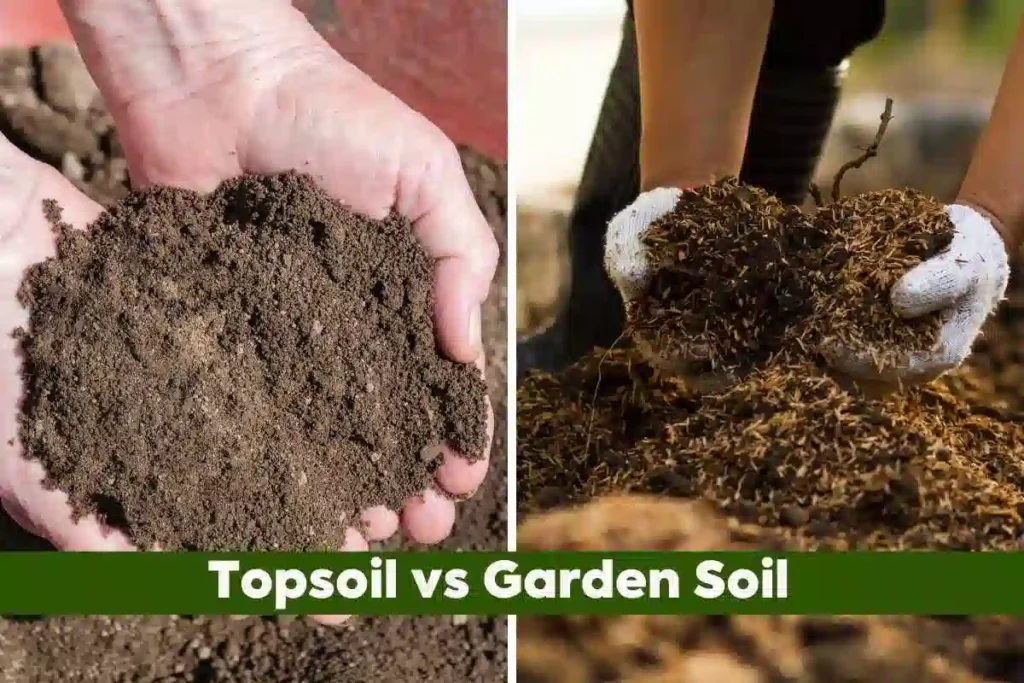
Topsoil is the upper layer of natural ground — usually the top 5 to 10 inches, where most root activity and organic matter live. When you buy it in bulk or in bags, you’re getting screened soil that’s been sifted to pull out rocks, roots, and clumps.
Here’s the part most articles skip: topsoil isn’t a regulated product. There’s no national standard for what has to be in the bag. Quality swings widely from one supplier to the next, and “screened topsoil” from a Central Florida yard can be very different from what the same phrase means in Georgia. If you’re buying by the truckload, ask to see it before it’s dumped. Good topsoil is dark, crumbly, slightly damp, and smells earthy. If it’s pale, gritty, and pours like beach sand, it’s mostly fill.
What Topsoil Really Looks Like in Palm Coast
Most of Flagler County sits on sandy soils, with very little clay and low organic content. Water runs straight through, and so do nutrients. On top of that, a lot of homes here were built on graded fill, so the original topsoil was scraped off long before you moved in. If your yard came with the house, there’s a fair chance you’re gardening on builder’s sand. Knowing what you’re starting with makes every other decision easier, and our guide on what loam soil is and why it matters explains the texture you’re actually aiming for.
What Is Garden Soil?
Garden soil is topsoil that’s been blended with amendments — compost, aged bark, peat, worm castings, sometimes a starter dose of fertilizer. It’s made to go into the ground where plants will live, not to be used as bulk fill.
Because of those additions, garden soil holds water longer, feeds plants for a few months, and has a looser structure that roots can push through. It also costs two to four times what plain topsoil costs per cubic foot, which is exactly why using it as fill material is a fast way to burn through a budget.
What’s Usually Mixed In
- Compost — adds nutrients and helps the soil hold water and minerals
- Aged bark or forest products — creates air pockets so roots don’t suffocate
- Peat or coconut coir — holds moisture between waterings
- Slow-release fertilizer — feeds new plants for roughly the first two to three months
Some bags are labeled for specific plants: vegetable garden soil, rose soil, acid-loving plant soil. Those are mostly small adjustments to pH and nutrient ratios. They’re not wrong, but a good all-purpose blend plus the right feeding schedule usually gets you to the same place. Our garden fertilizer guide covers how to keep beds fed once that starter charge runs out, which happens faster in Florida than most labels admit.
Topsoil vs Garden Soil: Side by Side
| Feature | Topsoil | Garden Soil |
|---|---|---|
| Main purpose | Filling, leveling, base layer | Planting beds and gardens |
| Nutrients | Low to moderate | High, with added compost |
| Water retention | Depends on the source | Good |
| Cost | Low, sold by the yard | Higher, usually bagged |
| Good for large areas | Yes | No, too expensive |
| Use in containers | No | No, use potting mix |
When to Use Topsoil
Reach for topsoil when you need volume:
- Filling settled areas or low spots that hold water after a storm
- Building up grade so water moves away from your foundation
- Prepping a lawn area before sod or seed goes down
- Topdressing an established lawn to smooth an uneven surface
- Backfilling around a new patio, walkway, or retaining wall
Lawn prep is the big one around here. Sod needs steady contact with soil that holds a little moisture, and laying it straight onto graded construction sand is asking for dry spots by week two. A few inches of decent topsoil worked into the existing ground makes a real difference in how the lawn roots in. If new turf is on your list, our sod installation services page walks through how we handle site prep before a single roll goes down.
When to Use Garden Soil
Garden soil belongs anywhere you’re putting plants in the ground and want them to thrive without constant babysitting:
- New flower beds and shrub borders
- Raised vegetable beds
- Replanting a tired bed that’s stopped producing
- Mixing into planting holes for perennials and small shrubs
For raised beds, most people do better with a blend than with straight bagged garden soil — roughly half quality topsoil, half compost and garden soil. Straight bagged product can settle and hold too much water over time, especially through our summer rains. If you’re building beds from scratch, our post on setting up a garden planting bed covers depth, drainage, and layout.
The Florida Mistake Nobody Warns You About
This is the part that separates a bed that works from one that drowns.
When you dump a thick layer of rich, fine-textured garden soil directly on top of coarse sand, water doesn’t move smoothly between the two. It hangs up where the textures change, then saturates the bottom of your new layer. Roots sitting in that wet zone rot. Gardeners call the result a perched water table, and it shows up constantly in Florida yards where someone spread six inches of bagged soil over sand and called it done.
The fix is simple: blend, don’t stack. Work your amendment into the top 6 to 8 inches of existing ground so there’s a gradual change in texture instead of a hard line. It’s more shovel work, but it’s the difference between plants that establish and plants you replace next spring.
The second Florida-specific issue is watering. Amended soil holds moisture far longer than the sand around it, so if your sprinkler zones are set for straight sand, you’ll drown your new beds without realizing it. Beds and turf usually need separate zones or separate schedules, something our team sorts out regularly through irrigation system design and repair across Palm Coast and Flagler Beach.
How Much Do You Need?
Bulk soil is sold by the cubic yard, and the math is easier than it sounds. One cubic yard covers about 100 square feet at 3 inches deep, or about 160 square feet at 2 inches.
To figure your own number: multiply length by width in feet, multiply by the depth in inches, then divide by 324. That gives you cubic yards. A 20-by-25-foot area at 3 inches deep works out to about 4.6 cubic yards.
Bagged soil comes in 1 or 1.5 cubic foot bags, so it takes roughly 18 to 27 bags to equal one cubic yard. Anything bigger than a small bed is cheaper delivered in bulk, and it saves you a truckload of plastic.
What About Potting Soil?
Potting soil is the third bag in that aisle, and it’s not interchangeable with either of the others. It usually contains no actual soil at all — it’s peat, bark, perlite, and coir, built to drain fast and stay light inside a container.
Put potting soil in the ground and it breaks down quickly and disappears. Put garden soil in a pot and it compacts, holds water, and suffocates roots. Containers get potting mix, beds get garden soil, and the yard gets topsoil.
A Simple Rule of Thumb for Flagler County Yards
If you’re covering a big area, moving dirt, or prepping for grass, buy topsoil in bulk. If you’re planting into a bed, buy garden soil or make your own blend with compost. And whatever you add, mix it into what’s already there instead of layering it on top.
That one habit — blending instead of stacking — solves more problems in our sandy soil than any product on the shelf.
Need Help Getting Your Soil Right?
Dreamscapes Florida has been building and maintaining yards across Palm Coast, Flagler Beach, Bunnell, Ormond Beach, Daytona Beach, and St. Augustine since 2015. We know what’s under these yards because we dig in it every day. If you’d rather not guess at soil depth, grading, and drainage, get in touch for a free estimate or call us at (386) 237-2983.
Frequently Asked Questions
Topsoil is plain screened soil used for filling, leveling, and lawn prep. Garden soil is topsoil that’s been mixed with compost and other amendments so it can feed plants and hold moisture in planting beds. Topsoil is the base layer; garden soil is what plants actually grow in.
You can, but you’ll need to amend it. Straight topsoil is low in nutrients and organic matter, so plants tend to sit still. Mixing in compost at roughly a 50/50 ratio turns basic topsoil into a solid planting mix for a fraction of the cost of bagged garden soil.
Quality topsoil is the right choice for lawns. Spread 2 to 3 inches and till it into the existing sand before laying sod or seed. Garden soil holds too much moisture under turf and costs far more than it’s worth over a full yard.
Most likely you layered fine garden soil on top of sand without mixing the two. Water stalls where the textures meet, which keeps the bottom of the bed wet. Turning the amendment into the top 6 to 8 inches of native ground fixes it.
About 6 cubic yards at 2 inches deep, or roughly 9 cubic yards at 3 inches. For anything over a couple hundred square feet, bulk delivery costs less than bagged soil.
Sometimes, unfortunately. Topsoil isn’t a regulated product, so quality varies by supplier. Look for material that’s dark, slightly damp, and crumbly. If it’s pale and pours loose like beach sand, it’s fill, not topsoil