Sod gives you a finished lawn the same day it goes down, which matters if you’re dealing with bare patches, erosion, or a tight deadline before a sale or event. Hydroseeding costs less per square foot and works well for large areas where you can wait two to four weeks for grass to fill in. If your yard sits on a slope, near a drainage swale, or gets heavy foot traffic right away, sod is the safer choice. If you’re covering a large lot on a budget and can hold off using the space for a few weeks, hydroseeding often makes more financial sense.
Both methods can give you a healthy, long-lasting Florida lawn. The right one for your property depends on your timeline, budget, and yard shape.
What Is Sod Installation?
Sod is grass that’s already grown at a farm, cut into rolls with a thin layer of soil and root attached, then laid down on your prepared yard like a carpet. The roots are already established, so the grass looks mature the moment it’s installed. In Palm Coast, most sod installers work with St. Augustine, Bahia, or Zoysia, since these varieties tolerate Florida’s sandy soil and summer heat better than cool-season grasses. Our sod installation services cover everything from soil prep to the final watering schedule, so your new lawn has the best possible start.
What Is Hydroseeding?
Hydroseeding is a spray-on method that mixes grass seed, mulch, fertilizer, and a tackifying agent into a slurry, then sprays it evenly across the yard. The mulch layer holds the seed and moisture in place while the grass germinates, usually within seven to fourteen days in Florida’s climate.
It costs less than sod because you’re paying for seed and materials rather than mature turf, but it takes longer to fill in completely. We’ve put together a full hydroseeding cost guide that breaks down pricing by yard size and grass type if you want exact numbers for your property.
Sod vs. Hydroseeding: The Real Differences
Both methods get you to the same destination — a green, healthy lawn — but they get there in very different ways. Here’s how they compare on the factors that actually matter for a Palm Coast yard.
Cost
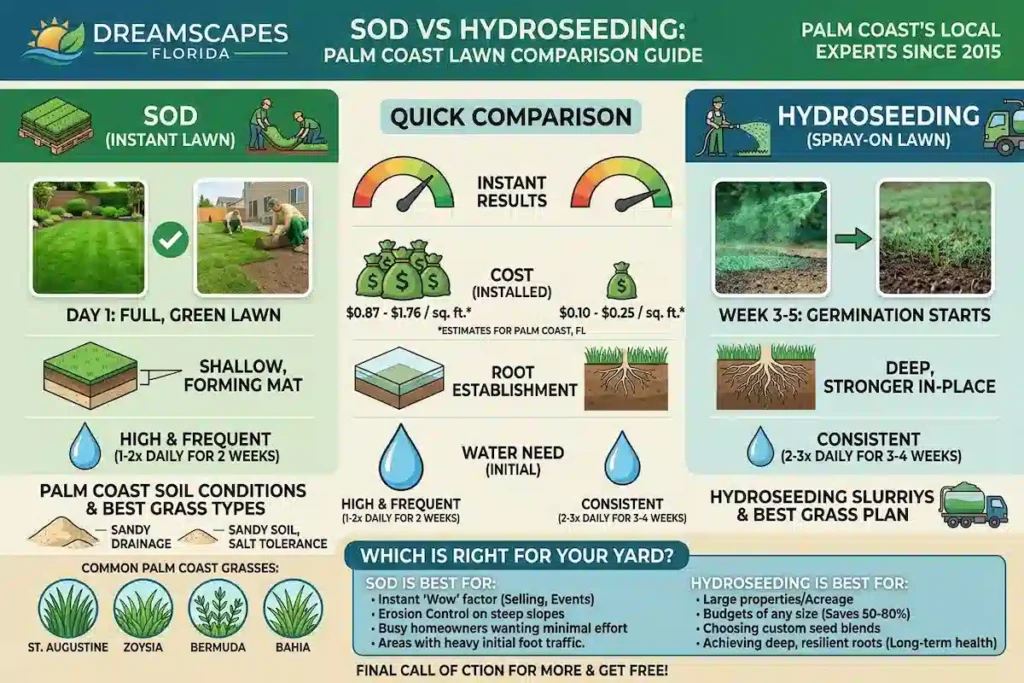
Hydroseeding typically runs 40% to 60% cheaper than sod on a per-square-foot basis, since you’re not paying for the labor and transportation involved in growing and shipping mature turf. For a standard quarter-acre Palm Coast lot, that difference can add up to a few thousand dollars. If your budget is the deciding factor, hydroseeding usually wins. We’ve written a detailed breakdown comparing sod vs. seed costs side by side if you want to run the numbers for your own property before deciding.
Installation Timeline
Sod is ready to walk on within a few days of installation, and it looks finished from day one. Hydroseeding needs several weeks of careful watering before the grass fills in enough to handle regular use, and full establishment can take a full growing season. Timing also affects results — spring and early fall tend to give both methods the strongest head start in North Florida. We cover this in more depth in our guide on the best time to lay sod in Florida.
Root Establishment and Long-Term Durability
Sod arrives with an existing root system, so it anchors into your soil faster and handles foot traffic sooner. Hydroseeded grass builds its root system from scratch, which actually gives it an advantage over time — seed-grown roots often grow deeper and adapt more closely to your yard’s specific soil than sod, which was grown somewhere else entirely.
This matters more in Palm Coast than in most places, since our sandy soil drains fast and rewards a root system that develops in place. Over a five-year span, well-maintained hydroseeded lawns and sod lawns tend to perform about the same, though sod keeps its head start through most of the first year.
Erosion Control
If your property has a slope, sits near a drainage area, or floods during Florida’s summer storms, sod is the more reliable choice. The mature root mat holds soil in place immediately, while hydroseeded areas stay vulnerable to washout until the seed germinates and roots take hold. Homeowners in low-lying Flagler County neighborhoods, especially those near canals or retention ponds, usually do better with sod for this reason alone.
Watering Needs During Establishment
Both methods need consistent watering early on, but hydroseeding is far less forgiving. Missing a watering cycle in the first two weeks can kill the seed before it even germinates, while sod can handle a missed day or two without lasting damage. A properly zoned irrigation system makes a real difference here – our irrigation services team can set up or adjust your sprinkler zones to match whichever method you choose, so the new lawn gets exactly the water it needs without waste.
Grass Type Considerations
Not every grass variety works equally well with both methods. St. Augustine, the most common lawn grass in Palm Coast, doesn’t produce viable seed commercially, so it’s only available as sod. If you want that thick, carpet-like St. Augustine lawn, sod is your only real option. Bahia, Bermuda, and some Zoysia varieties, on the other hand, germinate well from seed and are common choices for hydroseeding projects. This alone settles the decision for a lot of homeowners before cost or timeline even enters the conversation.
Which One Fits Your Palm Coast Yard?
Small to mid-size residential lots, front yards with curb appeal on the line, and any area with slope or drainage issues generally do better with sod. A homeowner replacing a dying front lawn before putting a house on the market, for example, doesn’t have weeks to spare for seed to fill in.
Larger properties, new construction lots, and homeowners working with a tighter budget often get more value from hydroseeding, as long as they can commit to the watering schedule and wait out the germination period. Commercial properties with large open areas also tend to lean toward hydroseeding, since the cost savings scale up significantly across bigger square footage.
Our Recommendation
For most Palm Coast homeowners, the decision comes down to timeline and budget. If you need a lawn that looks complete right away — before a listing photo, a family event, or simply because you’re tired of looking at dirt patches — sod is worth the extra cost.
If you have a larger area to cover and some flexibility on when the lawn needs to be usable, hydroseeding will save you money without sacrificing long-term quality. Either way, pairing the new lawn with a solid care routine matters more than which method you pick. Our lawn maintenance program is built around exactly that first-year window, when new grass needs the most attention to establish well.
Frequently Asked Questions
Both work well in Florida’s climate. Sod gives faster results and better erosion control, while hydroseeding costs less and can produce a comparably durable lawn once it’s fully established.
Most hydroseeded lawns show visible grass within seven to fourteen days, with full coverage taking six to eight weeks depending on weather and watering consistency.
No. Hydroseeded areas need to stay untouched for at least three to four weeks while the root system develops. Sod can typically handle light foot traffic within a few days of installation.
Hydroseeding usually costs 40% to 60% less than sod for the same square footage, mainly because it doesn’t require growing and transporting mature turf.
It can, but sod is generally safer for slopes and erosion-prone areas, since the root mat holds soil in place immediately instead of after several weeks of germination.