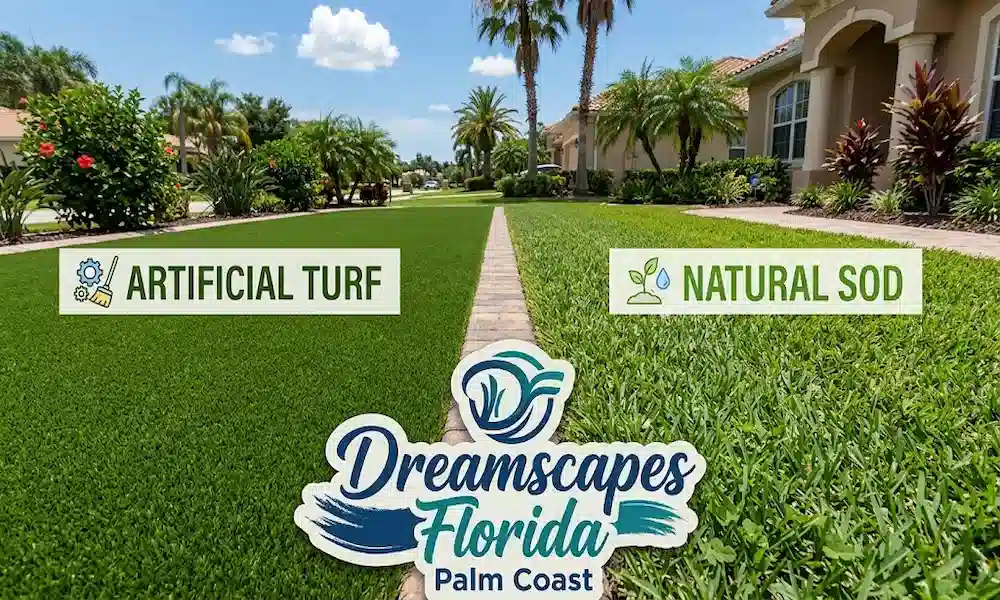
Choosing between artificial turf and sod is one of the biggest lawn decisions a Palm Coast homeowner will make, and it’s not a choice you want to get wrong. One option costs more upfront but feels and behaves like a real lawn. The other costs less to install but comes with watering schedules, mowing, and the occasional patch of brown grass after a dry August.
If you’ve been going back and forth between synthetic turf and natural sod, here’s what actually separates the two once you account for Florida’s heat, humidity, and sandy soil.
What Is Sod?
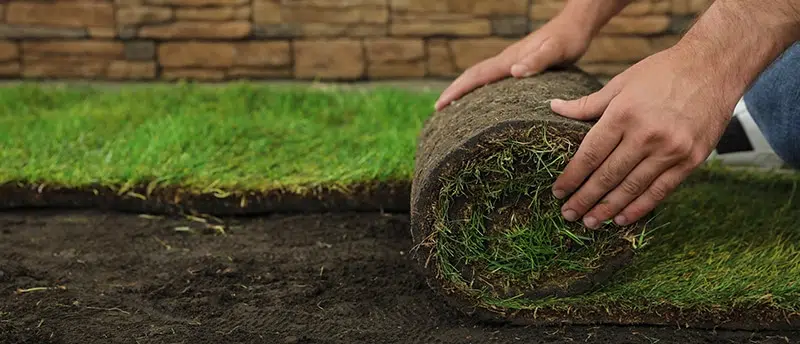
Sod is mature grass that’s grown on a farm, cut into rolls or squares along with a thin layer of soil, and then transplanted into your yard. Instead of waiting weeks for grass seed to sprout and fill in, sod gives you a full, green lawn within days of installation. In Central Florida, the most common choices are St. Augustine, Zoysia, and Bahia grass, each suited to different amounts of sun, foot traffic, and irrigation.
Sod is a living groundcover, which means it grows roots into your existing soil, helps manage stormwater runoff, and keeps your yard several degrees cooler than a hardscaped or synthetic surface. If you’re weighing your options, our sod installation services cover site prep, grading, and grass selection suited to your specific lot in Flagler County.
What Is Artificial Turf?
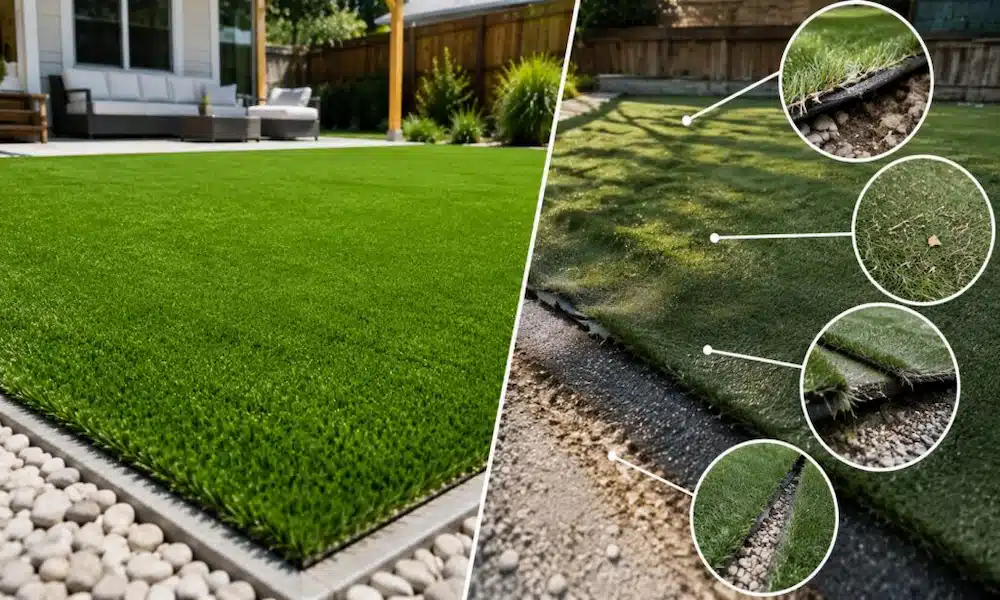
Artificial turf is a manufactured surface made from synthetic fibers, usually polyethylene or polypropylene, backed by a permeable base that allows water to drain through. Modern turf has come a long way from the flat, plastic-looking grass of decades past. Today’s synthetic lawns include multiple blade heights, thatch layers for a more natural look, and infill materials that help the blades stand upright and stay cool underfoot.
Because it doesn’t grow, turf never needs mowing, seeding, or fertilizing, and it holds its color regardless of drought conditions or watering restrictions. For homeowners curious about how synthetic lawns perform in Florida’s climate specifically, we’ve broken down the full picture in our guide to the benefits of installing synthetic turf, including how it handles heavy rain and intense sun exposure.
Cost Comparison: Sod vs Artificial Turf
Sod is almost always the cheaper option at installation. You’re paying for grass, soil prep, and labor, and the price scales with square footage and grass type. Artificial turf costs significantly more upfront because you’re paying for the synthetic material, a compacted base layer, infill, and professional installation to get proper drainage and seam work. Where the math shifts is over time.
Sod requires ongoing spending on water, fertilizer, mowing equipment or lawn service, pest control, and occasional reseeding or repair. Turf has close to zero recurring costs once it’s installed correctly, aside from occasional rinsing and infill top-offs every several years. For homeowners planning a full yard renovation, it’s worth reviewing current pricing before deciding which route fits your budget and timeline.
Water Usage and Irrigation Needs
This is where the two options diverge the most, especially in Florida. Sod needs consistent watering to establish new roots, typically daily for the first couple of weeks and then two to three times a week afterward depending on the season and grass variety. During Flagler County’s dry stretches, this adds up fast on a water bill and puts real pressure on well systems or municipal water restrictions.
If you’re installing or maintaining sod, a properly designed system through our irrigation services makes a measurable difference in how much water you actually use versus how much runs off or evaporates. Artificial turf, by contrast, needs no irrigation at all once it’s down, which is a major selling point for homeowners trying to cut water bills or comply with local watering restrictions during drought advisories.
For a more detailed breakdown of how much water a typical Florida lawn actually consumes across the seasons, our article on how much water a lawn really needs walks through the numbers by grass type, which makes the comparison against a zero-water turf lawn much easier to picture.
Maintenance: What Ongoing Care Actually Looks Like
Sod requires regular upkeep: mowing on a schedule, fertilizing a few times a year, watching for chinch bugs and fungus, and occasionally dealing with weeds or thin patches. It’s a living system, so it responds to weather, soil health, and how well it’s cared for season to season.
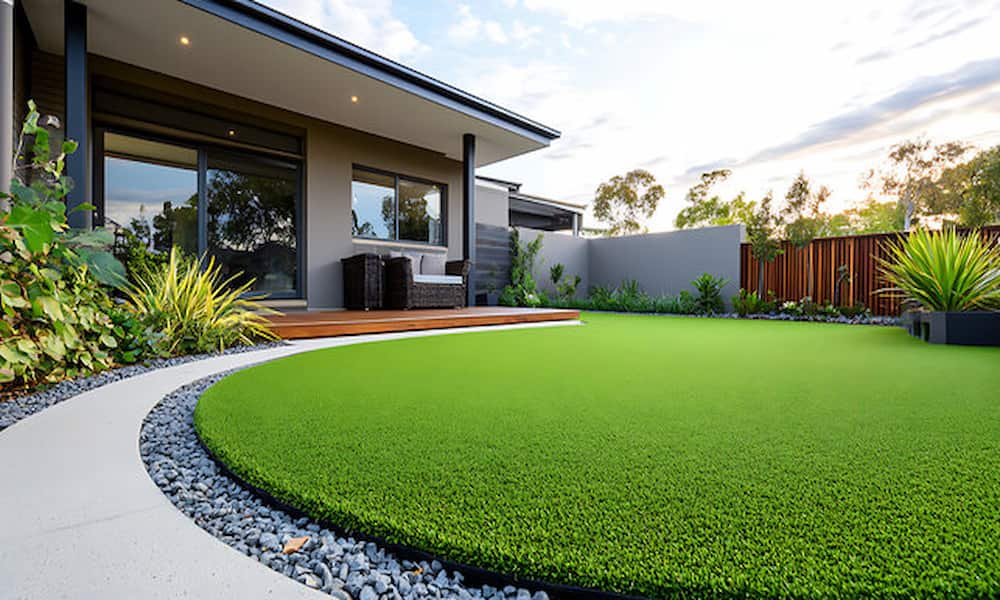
Artificial turf, on the other hand, mostly needs rinsing to clear debris and pet waste, an occasional brushing to keep the fibers upright, and infill replenishment roughly every few years. There’s no mowing, no fertilizing, and no seasonal dormancy where the lawn goes brown. If you’re still deciding between a natural lawn approach altogether, our comparison of sod vs seed for your lawn is a useful next read before you commit to either a living or synthetic surface.
Appearance, Feel, and Durability
Sod has the texture, smell, and natural variation that only living grass provides. It responds to light differently throughout the day and blends seamlessly with garden beds, trees, and existing landscaping. Artificial turf has improved dramatically, and higher-end products can be difficult to distinguish from real grass at a glance, but it can still feel warmer underfoot during peak summer heat since synthetic fibers absorb and hold sunlight.
In terms of durability, turf holds up extremely well to heavy foot traffic, pets, and kids without wearing thin or forming bare patches, which is a common issue with high-traffic areas of a natural lawn. Sod, when properly maintained, has a longer functional lifespan overall, since it can self-repair through growth, while turf eventually needs full replacement once the fibers wear down or the base settles unevenly.
Which One Is Better for Florida Lawns?
There isn’t a single right answer here, since it depends on your priorities. If you want a lower upfront cost, a naturally cooling surface, and don’t mind a regular mowing and watering routine, sod remains the better fit for most Palm Coast, Ormond Beach, and Flagler Beach homeowners. If you’re dealing with a shaded backyard where grass struggles to grow, want to eliminate water bills tied to irrigation, or you’re covering a smaller, high-traffic area like a dog run or side yard, artificial turf can solve problems that sod simply can’t.
Many homeowners in this area actually use both, keeping sod for the main front and back yard while using turf in problem spots. If you want a professional assessment of what will actually work best on your property, our team offering lawn maintenance in Palm Coast can walk your yard and give you a straight answer based on your soil, drainage, and sun exposure.
Frequently Asked Questions
Sod costs less upfront, but artificial turf often becomes more cost-effective over five to ten years once you factor in water, fertilizer, and mowing expenses that sod requires and turf doesn’t.
Turf can get warmer than natural grass on direct, full-sun afternoons, but rinsing it with water or choosing turf with heat-reflective technology reduces this significantly.
Yes, but it requires full removal of the existing surface first. Turf needs its base layer excavated before sod can be laid, and sod needs to be stripped along with its root system before turf installation.
Most sod varieties take two to four weeks to root firmly, though it can take a full growing season to reach its final density and color depending on the grass type and season installed.
Properly installed turf includes a permeable backing and base layer designed for drainage, so it handles heavy rain without pooling as long as it’s installed correctly.