North Florida irrigation calls for a different approach than systems built for South Florida or other parts of the Southeast. Between sandy, fast-draining soil, hot and humid summers, and cool, dry winters, a system that isn’t dialed in correctly will either drown your lawn or leave it stressed and thirsty. The short answer: most North Florida yards do best with a zoned sprinkler system running two to three times a week in summer, scaled back to once a week or less in the cooler months, paired with drip irrigation for flower beds, shrubs, and foundation plantings.
If you live in Palm Coast, Flagler Beach, Ormond Beach, Daytona Beach, or anywhere along the First Coast, the climate and soil in this part of the state bring their own set of challenges. Here’s what actually matters when you’re setting up or fixing irrigation in North Florida.
Why North Florida Irrigation Is Different From the Rest of the State
South Florida gets more consistent rainfall and warmer winters, which changes how often a lawn needs supplemental water. North Florida, on the other hand, sees real seasonal swings. Summers bring daily afternoon storms that can dump an inch of rain in twenty minutes, while winters can go weeks without a drop. That inconsistency is exactly why a “set it and forget it” irrigation timer causes so many problems here. A system dialed in for July will overwater in January, and one set for winter will scorch the lawn by June.
Soil plays a role too. Much of North Florida sits on sandy soil that drains quickly and holds very little moisture. That means shorter, more frequent watering cycles usually work better than one long soak, since sandy soil simply can’t hold a big volume of water before it filters straight through the root zone and beyond. Homeowners in this region who set up a full irrigation and drainage system in Palm Coast often see the biggest improvement not from watering more, but from watering smarter.
How Much Water Does a North Florida Lawn Actually Need?
Most North Florida lawns need about three-quarters of an inch to one inch of water per week, including rainfall, to stay healthy. St. Augustine grass, the most common lawn type in this region, tends to need slightly more than Bahia or Zoysia because of its shallower root system. During peak summer heat, that number can climb closer to 1.5 inches a week. In winter, when grass goes semi-dormant, cutting back to once every ten to fourteen days is usually enough.
The easiest way to check if you’re watering correctly is the screwdriver test. Push a long screwdriver into the lawn after a watering cycle. If it slides in easily to six or eight inches, the moisture is reaching the root zone. If it stops short, you’re likely running your zones for too little time, even if you’re running them too often.
Choosing the Right Irrigation System for a North Florida Yard
Most properties here benefit from a two-part setup: a zoned sprinkler system for turf areas and drip irrigation for planting beds. Running both off the same schedule almost always wastes water, since grass and ornamental plants have completely different watering needs.
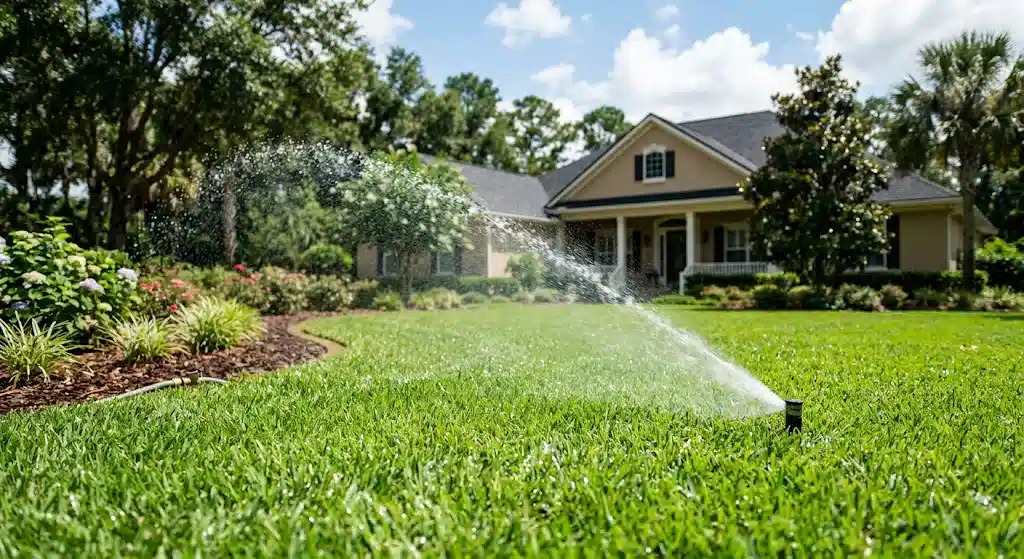
Sprinkler and rotor systems work well for open lawn areas because they cover ground quickly and evenly, especially with rotor heads that throw water in a controlled arc rather than a fixed spray. These are the systems most homeowners picture when they think about a whole-yard setup, and they form the backbone of most professional irrigation services offered across this part of Florida.
Drip irrigation delivers water directly to the base of plants through low-pressure tubing and emitters, which cuts down on evaporation and keeps water off leaves, where it can encourage fungus. It’s a smart addition for garden beds, shrub lines, and anywhere with mixed plantings that don’t share the same watering needs as turf. Anyone considering adding drip lines to an existing setup can walk through the process in this guide on how to install a drip irrigation system.
Smart controllers round out a well-built system. These connect to local weather data and automatically skip a cycle when rain is already on the way, which matters a lot in a region where summer storms are nearly a daily event. A smart controller alone can cut water use by 20 to 30 percent compared to a basic timer running on a fixed schedule.
Setting an Irrigation Schedule by Season
A schedule that works in April won’t work in August, and one built for August is way too much for December. Here’s a general framework that fits most North Florida yards:
- Spring (March–May): Water two to three times a week as temperatures climb and rainfall stays inconsistent.
- Summer (June–September): Cut back to one to two times a week where possible, since daily thunderstorms often supply enough moisture on their own. Overwatering in summer is one of the most common mistakes homeowners make.
- Fall (October–November): Ease back to twice a week as rainfall drops off and temperatures start to cool.
- Winter (December–February): Once a week or even every other week is usually plenty, since grass growth slows down and evaporation rates drop.
Watering early in the morning, ideally between 4 and 8 a.m., gives water time to soak in before the sun evaporates it and before overnight humidity can encourage fungus on wet grass blades.
Florida Watering Restrictions and How They Affect Your Schedule
Most North Florida counties, including Flagler and Volusia, follow water management district rules that limit irrigation to specific days of the week based on address, along with a citywide time-of-day restriction. These rules exist because of how much pressure sandy soil and a growing population put on the aquifer that supplies the region’s drinking water. A smart controller makes it much easier to stay inside these limits automatically, rather than relying on someone remembering to shut a system off manually. Homeowners along the coast can find guidance built around these exact restrictions through irrigation services in Flagler Beach.
Common North Florida Irrigation Problems

Dry patches usually point to a clogged or misaligned sprinkler head, a low-pressure zone, or root competition from a nearby tree. Runoff onto driveways or sidewalks almost always means a zone is running longer than the soil can absorb, which is especially common on the sandy soil found across this region. Fungus and disease often trace back to evening watering, since wet grass sitting overnight is exactly the environment fungus needs to spread.
Sloped yards bring their own set of issues, since water tends to run downhill before it has a chance to soak in. Cutting run times shorter but running a zone twice with a gap in between usually lets sloped ground absorb water instead of shedding it straight into the storm drain.
DIY vs. Professional Irrigation Installation
A basic drip line for a few garden beds is a reasonable weekend project for most homeowners. A full sprinkler system covering an entire yard is a different story. Proper zoning, head placement, and pipe sizing all affect water pressure and coverage, and mistakes here get expensive to fix later since they usually mean digging up buried lines. Anyone weighing the decision can get a clearer picture from these irrigation tips for Palm Coast landscapes, which walk through what a professional setup actually involves versus a DIY patch job.
What Irrigation Systems Cost in North Florida
A new irrigation system for an average North Florida yard typically runs between $2,500 and $6,000, depending on lot size, the number of zones, and whether drip lines are included for beds. Adding a smart controller usually adds a few hundred dollars to the upfront cost but pays for itself over time through lower water bills. Given how much water restrictions and sandy soil affect long-term costs here, homeowners around the area can compare real setup options through irrigation services in Palm Coast before deciding what fits their yard and budget.
Frequently Asked Questions
Two to three times a week in summer and once a week or less in winter, adjusted for rainfall and soil type.
A zoned sprinkler system for turf combined with drip irrigation for beds works best, since sandy soil drains fast and needs shorter, more frequent cycles rather than one long soak.
Early morning, between 4 and 8 a.m., before the sun causes evaporation and before overnight moisture can encourage fungus.
Most full-yard systems run between $2,500 and $6,000, depending on yard size, zone count, and whether drip irrigation is included.
Many North Florida counties require a permit for new irrigation systems, especially those pulling from a well or connected to a backflow preventer. Local codes vary, so it’s worth checking with the county before you begin installation.