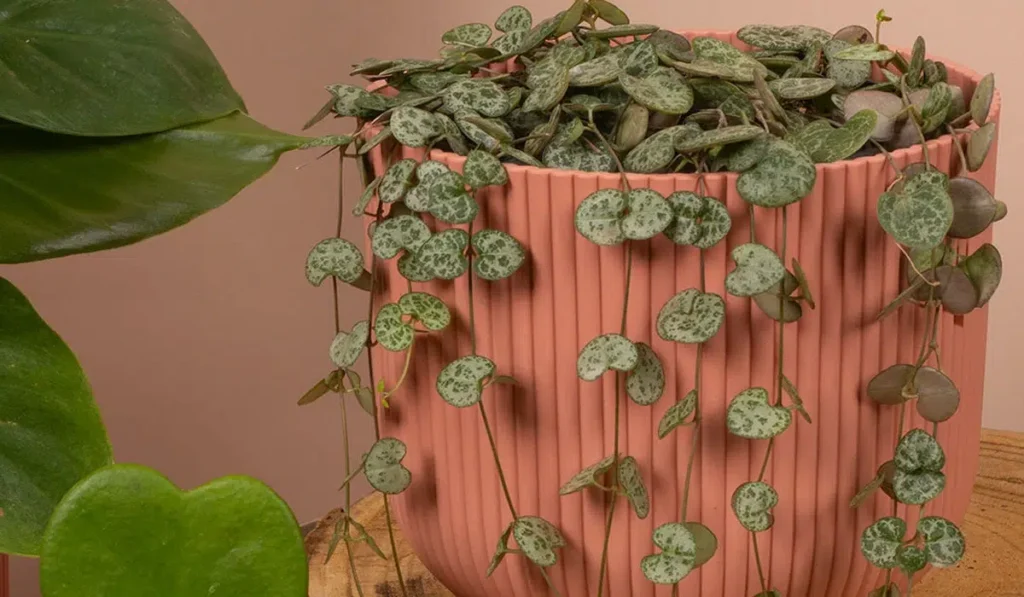
I still remember the first time I saw a string of hearts plant. It was hanging in a client’s Palm Coast sunroom, its thin, wiry vines spilling almost three feet over the edge of a woven basket, each one strung with dozens of tiny, heart-shaped leaves marbled in silver and deep green. The homeowner told me she’d almost thrown it out twice, convinced it was dying, before she finally figured out what it actually wanted. That’s the story of this plant in a nutshell — it looks delicate, but once you understand its quirks, it becomes one of the most forgiving, fastest-growing houseplants you’ll ever own.
If you’ve just brought one home, or you’re staring at a droopy one wondering what went wrong, this guide will walk you through everything: light, water, soil, propagation, and the little troubleshooting tricks that separate a thriving vine from a sad, shrivelled one.
What Is a String of Hearts Plant?
The string of hearts plant, botanically known as Ceropegia woodii, is a trailing succulent vine native to South Africa, Zimbabwe, and Swaziland. It’s sometimes called “rosary vine” or “chain of hearts” because its leaves dangle like beads on a necklace. Unlike a typical houseplant, it stores water in its leaves and thin, wiry stems, which means it behaves more like a succulent than a tropical foliage plant. That single fact explains almost every care mistake people make with it — they treat it like a pothos or philodendron and water it far too often.
Small tubers sometimes form along the stem, and mature plants even develop a larger tuber at the soil line that stores energy through dry spells. This is a plant built for survival, not for coddling, and once you lean into that, growing it becomes remarkably easy.
How Much Light Does String of Hearts Need?
This is the single most common question I get, and the honest answer is: more than you probably think. String of hearts thrives in bright, indirect light, and it actually tolerates a few hours of direct morning or late afternoon sun quite well. A south- or west-facing window with a sheer curtain, or an east-facing window with no curtain at all, tends to work beautifully.
If your vine’s leaves are turning pale, losing their silver marbling, or the space between leaves (called internode spacing) is stretching out unusually long, that’s a clear sign it isn’t getting enough light. On the flip side, scorched, crispy brown patches mean the sun is too intense too suddenly, especially through unfiltered glass in the height of a Florida summer. The fix is usually a few feet of distance from the window, not a full relocation to a dim corner.
Watering String of Hearts the Right Way
Here’s where most of the damage happens. Because the leaves look so soft and the vines so fragile, people assume this plant is thirsty. It isn’t. String of hearts is a semi-succulent, and it wants to dry out completely between waterings.
My rule of thumb: stick a finger two inches into the soil, and if it’s even slightly damp, wait. When the whole pot feels light & the soil is bone dry, water thoroughly until it runs from the drainage holes, then don’t touch it again until it’s fully dry. In most homes, that’s every two to three weeks, though it will be faster in summer and much slower in winter.
Overwatering shows up as yellowing, translucent, or mushy leaves and, in bad cases, a soft black stem at the soil line — that’s stem rot, and it’s usually fatal if caught late. Underwatering, by contrast, shows up as leaves that go thin, wrinkled, and slightly deflated, almost like a grape turning into a raisin. The good news is that underwatering is easy to reverse with a good soak, while overwatering often isn’t, so when in doubt, wait a few more days.
Choosing the Right Soil and Pot
Because this plant hates sitting in wet soil, drainage is everything. A gritty, fast-draining mix works best — something like two parts regular potting soil blended with one part perlite or coarse sand, similar to what you’d use for a cactus. If you’d rather not mix your own, a quality cactus-and-succulent blend straight from the bag will do the job. For a deeper look at building the right growing medium for different plant types, our potting soil mix guide walks through balancing drainage, moisture retention, and nutrient levels for houseplants like this one.
Always choose a pot with a drainage hole. Terracotta is a great option because its porous walls draw excess moisture from the soil, which is exactly the kind of insurance this plant benefits from. Hanging baskets or pots on a shelf are ideal since the vines will naturally cascade downward, which is really the whole point of growing this plant in the first place.
Temperature and Humidity Preferences
String of hearts is comfortable in normal household conditions — anywhere from 65°F to 80°F suits it well, and it has no special humidity requirements, which makes it a great low-fuss pick for Florida homes where humidity already swings widely between seasons. It does not like cold drafts or temperatures below 50°F, so keep it away from single-pane windows in winter or air conditioning vents blasting directly on the leaves.
Feeding Your String of Hearts
This plant isn’t a heavy feeder, but a little nutrition during the growing season (spring through early fall) helps it produce fuller, more vibrant vines. A diluted balanced liquid fertiliser, used at half strength once a month, is plenty. Skip feeding entirely in the fall and winter, when growth naturally slows. If you want to get more precise about ratios and timing for different plant types across your yard and indoor collection, our garden fertilizer guide breaks down how to read a fertiliser label and match it to what your plants actually need.
How to Propagate String of Hearts
This is where the plant really shows off, because it is almost absurdly easy to propagate, and it’s the reason you so often see string of hearts passed between friends and neighbors like a garden-world chain letter.
- Stem cuttings in water: Snip a four- to six-inch length of vine just below a node (the little bump where a leaf grows), remove the bottom leaf or two, and set the cutting in a small glass of water so the node is submerged. Roots typically appear within one to two weeks. Once you see roots about an inch long, pot the cutting into well-draining soil.
- Stem cuttings directly in soil: Skip the water step entirely and lay a cutting directly on top of moist, well-draining soil, either coiled into a spiral or laid flat with the nodes touching the surface. Mist lightly every few days. Roots will form at the nodes within a couple of weeks, and the tiny tubers along the stem will often start producing new growth on their own.
- Tuber propagation: If your vine has developed small tubers along its length, you can pin one down into a separate small pot of soil using a bent paperclip or hairpin while it’s still attached to the mother plant. Once it has rooted and established on its own, snip it free.
Whichever method you choose, propagate in spring or summer when the plant is actively growing for the fastest, most reliable results.
Pruning and Shaping Your Vines
Because string of hearts grows quickly and can reach several feet in length, occasional pruning keeps it looking full rather than leggy. Trim back any bare, leafless sections of vine, and use those cuttings to propagate more plants or tuck them back into the same pot to fill in gaps. Regular light pruning throughout the growing season, rather than one dramatic haircut, tends to produce the bushiest, most attractive result. The same principle applies across most trailing and flowering houseplants — a little routine trimming does more for shape and health than waiting until a plant looks overgrown.
Common Problems and How to Fix Them
- Leaves turning yellow or mushy: Almost always overwatering. Let the soil dry out completely, check for root or stem rot, and repot into fresh, dry soil if the roots look brown and soft.
- Leaves shriveling and thin: Underwatering. Give the plant a thorough soak and resume your normal dry-out cycle.
- Loss of leaf marbling or pale color: Not enough light. Move the plant closer to a bright window.
- Long gaps between leaves (leggy growth): Also a light issue, though it can happen naturally in older, mature vines too. Prune and propagate the leggy sections to encourage fuller new growth.
- Pests: String of hearts occasionally attracts mealybugs or spider mites, especially in dry indoor air. Wipe leaves down with a damp cloth periodically and treat any infestation early with insecticidal soap.
Why String of Hearts Deserves a Spot in Your Home
Beyond how easy it is to care for, string of hearts brings a genuinely unique texture to a plant collection. Where most trailing houseplants offer solid green leaves, this one adds delicate marbling, a hint of purple on the underside, and an almost jewellery-like quality as it cascades from a shelf or hanging basket. It pairs beautifully with other easy-care houseplants if you’re building out a kitchen windowsill or a small home jungle — something we cover in more detail in our guide to houseplants for kitchen and garden spaces. And if indoor air quality is part of why you’re building out your plant collection in the first place, it’s worth reading how certain indoor plants help purify the air in your home alongside decorative choices like this one.
If you’re short on floor space but want to layer in more greenery, string of hearts is also a natural fit for a vertical garden built for small spaces, or tucked into a balcony garden where it can spill over a railing in full sun for part of the day. Gardeners who enjoy easy-care succulent-adjacent plants often find themselves drawn to similar low-maintenance options.
Frequently Asked Questions
How often should I water string of hearts?
Water only when the soil is completely dry, which is usually every two to three weeks indoors, less often in winter.
Why is my string of hearts dying?
The most common cause by far is overwatering, which leads to root or stem rot. The second most common cause is insufficient light, which leads to weak, leggy growth.
Does string of hearts need direct sunlight?
It prefers bright indirect light but tolerates a few hours of gentle direct sun, particularly in the morning. Intense, unfiltered afternoon sun can scorch the leaves.
How fast does string of hearts grow?
Under good light and proper watering, vines can grow several feet in a single growing season, making it one of the faster-growing trailing houseplants available.
Can string of hearts grow outdoors in Florida?
Yes, in a hanging basket or container on a covered porch with filtered light, it does very well in Florida’s climate, though it should come indoors or into a sheltered spot during any unusually cold snaps.
Final Thoughts
Growing a healthy, full string-of-hearts plant really comes down to three things: bright light, patient watering, and well-draining soil. Once those three pieces are in place, this plant more or less takes care of itself, rewarding you with vines that seem to grow longer every time you check on them. Whether it’s trailing from a kitchen shelf, a bathroom window, or a covered patio, it’s a small, low-maintenance addition that brings a lot of personality to a home.
If you’re working on a broader indoor or outdoor plant setup and want expert hands to help design a space where plants like this one truly thrive, our team at Dreamscapes Florida is happy to help — feel free to reach out to us or browse our full range of landscaping and garden services.