The best spiky plants for hot, dry landscapes are agave, yucca, aloe, red hot poker, desert spoon, sotol, Madagascar palm, ocotillo, prickly pear cactus, barrel cactus, and pencil cactus. These drought-tolerant, low-maintenance plants thrive in full sun, need minimal water once established, and add bold architectural structure to xeriscapes, rock gardens, and Florida-friendly landscapes.
Landscaping in hot and dry regions — or in sandy, sun-baked Florida yards — can be a challenge. But certain plants don’t just survive these conditions; they thrive in them while adding dramatic, sculptural structure you can’t get from traditional lawns and shrubs.
Among the most captivating options are spiky plants: bold, drought-tolerant succulents and architectural perennials known for their sharp silhouettes and rugged good looks. Their bold form, sharp leaves, and resilient nature make them ideal choices for eye-catching, low-water gardens that withstand intense sun and limited irrigation. These plants bring texture and year-round visual interest, often serving as natural focal points that need very little attention once established – a major advantage for homeowners who want a striking yard without a high-maintenance routine.
Below, we break down 11 of the best drought-tolerant, spiky landscape plants, what makes each one unique, and how to use them in a modern xeriscape or Florida-friendly landscape design.
What Are “Spiky Plants” in Landscaping?
In landscape design, “spiky plants” refers to succulents, cacti, and architectural perennials with pointed, sword-like, or spined foliage that creates strong vertical or radial lines. Common families include agave, yucca, aloe, and cacti. They’re prized in xeriscaping (low-water landscape design) because most are heat-tolerant, drought-resistant, and require minimal fertilizing or pruning.
1. Agave
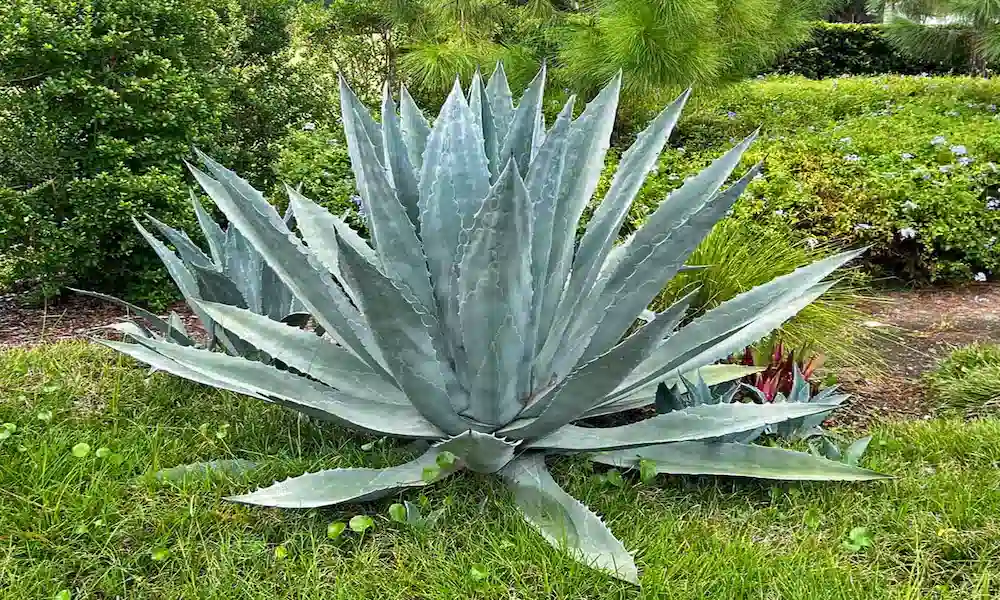
Few plants command attention as boldly as agave. With its thick, sword-like leaves and symmetrical rosette form, agave immediately becomes a centerpiece in any landscape. It thrives in full sun and sandy or well-drained soil, requiring minimal care once established. Its bold form contrasts beautifully with softer ground covers or flowering perennials nearby.
Beyond its striking appearance, agave is incredibly hardy, tolerating extreme heat and extended drought without losing its sculptural quality. Though some varieties take years to bloom, the final flowering display is a dramatic, once-in-a-lifetime spectacle.
Best for: rock gardens, poolside beds, modern minimalist landscapes.
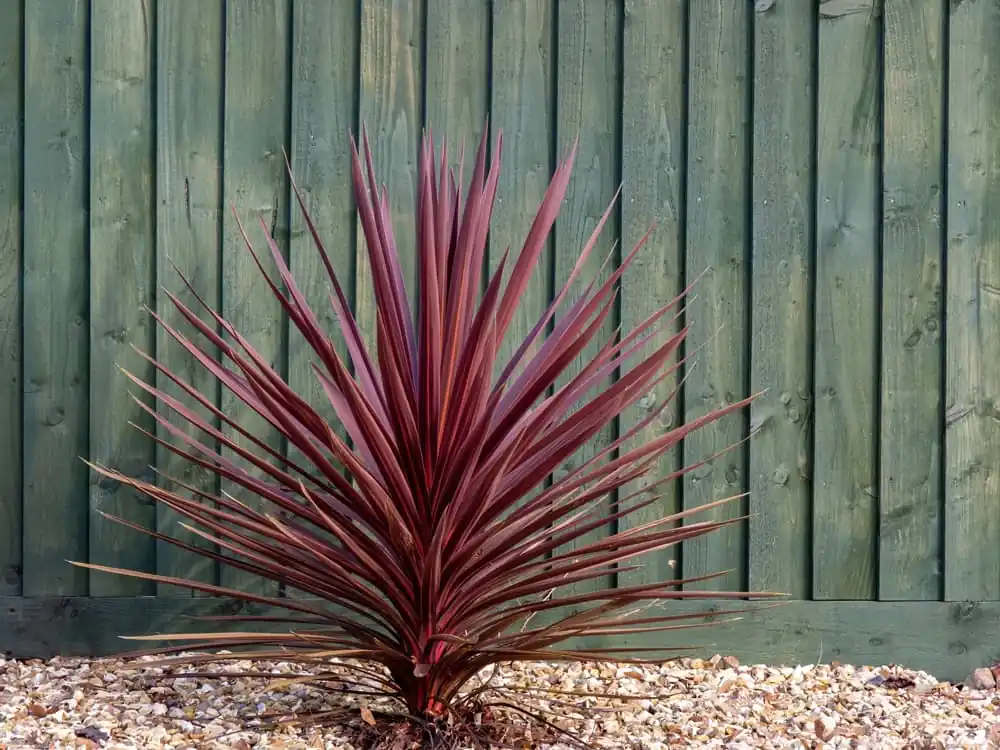
2. Yucca
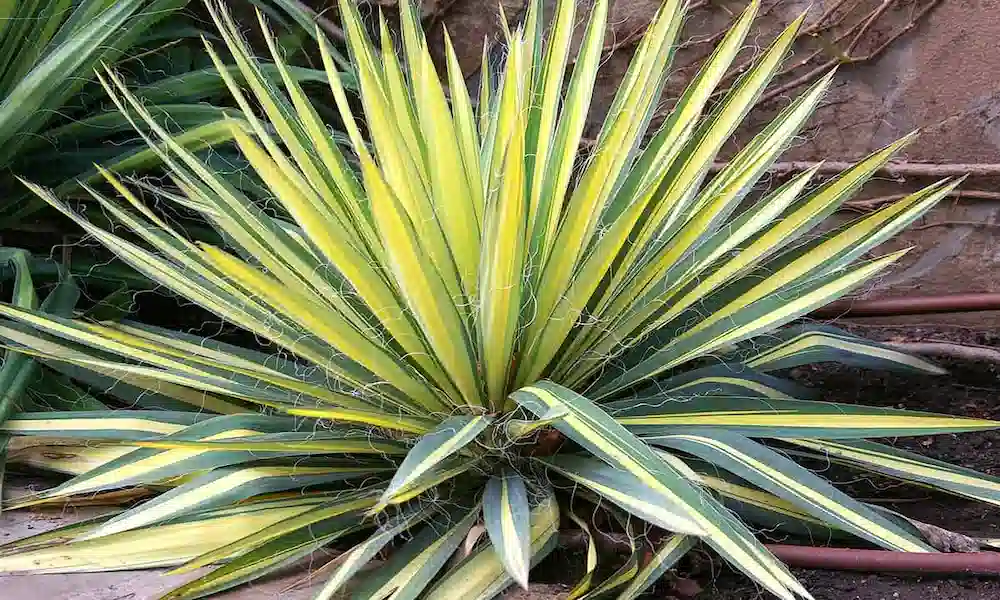
Yucca is a classic spiky plant that brings structure and resilience to hot, arid landscapes. Its narrow, pointed leaves form dramatic clusters that radiate upward like natural fireworks. Yucca species range widely in size, from small ornamental varieties to towering yucca trees with tall flower spikes.
These plants thrive in sunny, dry conditions, and their low water needs make them a reliable staple of xeriscaping. In bloom, yuccas send up tall stalks of creamy white flowers, adding vertical drama to the landscape. Their evergreen foliage ensures year-round impact.
Best for: entryway plantings, mixed borders, coastal and sandy-soil yards.
3. Aloe
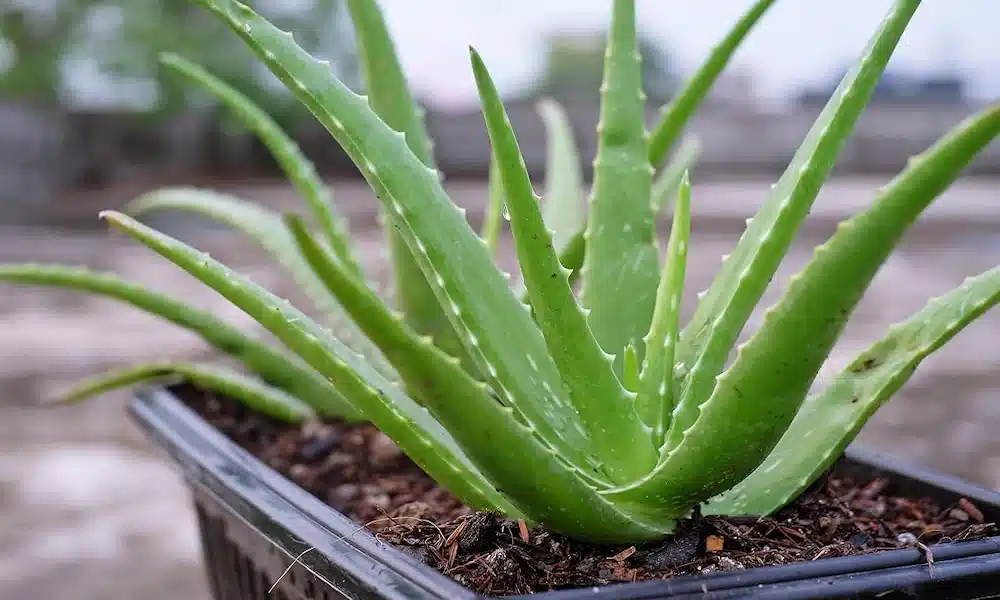
Known primarily for its medicinal gel, aloe is also a stunning ornamental landscape plant. Its fleshy, pointed leaves curve gracefully, often edged with small spines that create a dramatic outline. Aloe thrives in hot climates, where its drought tolerance and water-storing leaves give it a real survival advantage.
Some aloe species also produce vibrant flowers in red, orange, or yellow, rising above the plant in torch-like clusters that attract pollinators like hummingbirds and bees. Its blend of beauty and resilience makes aloe versatile — plant it in clusters or use it as a single focal accent.
Best for: container gardens, pollinator-friendly borders, low-water front yards.
4. Red Hot Poker (Kniphofia)
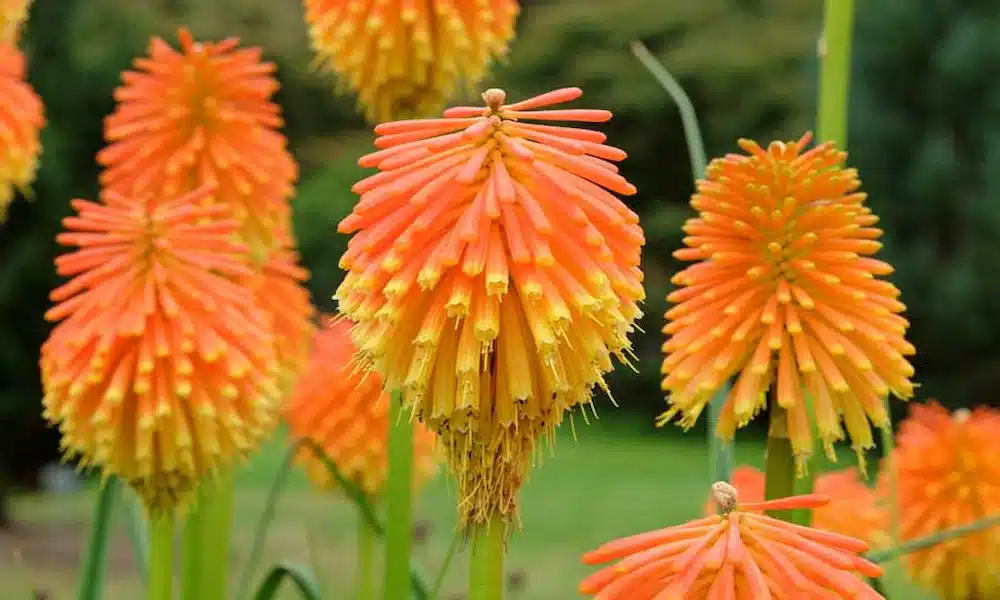
This plant earns its name from striking flower spikes that resemble glowing torches. Red hot poker features spiky, grass-like foliage that forms dense clumps, from which tall stems rise to display vibrant blooms in fiery red, orange, and yellow.
These bold flowers bring vertical energy to the garden and look especially effective planted in groups. Red hot poker thrives in full sun and tolerates dry soil once established, making it ideal for adding color and drama to heat-tolerant landscape designs.
Best for: pollinator gardens, mixed perennial beds, adding seasonal color to xeriscapes.
5. Desert Spoon (Dasylirion)
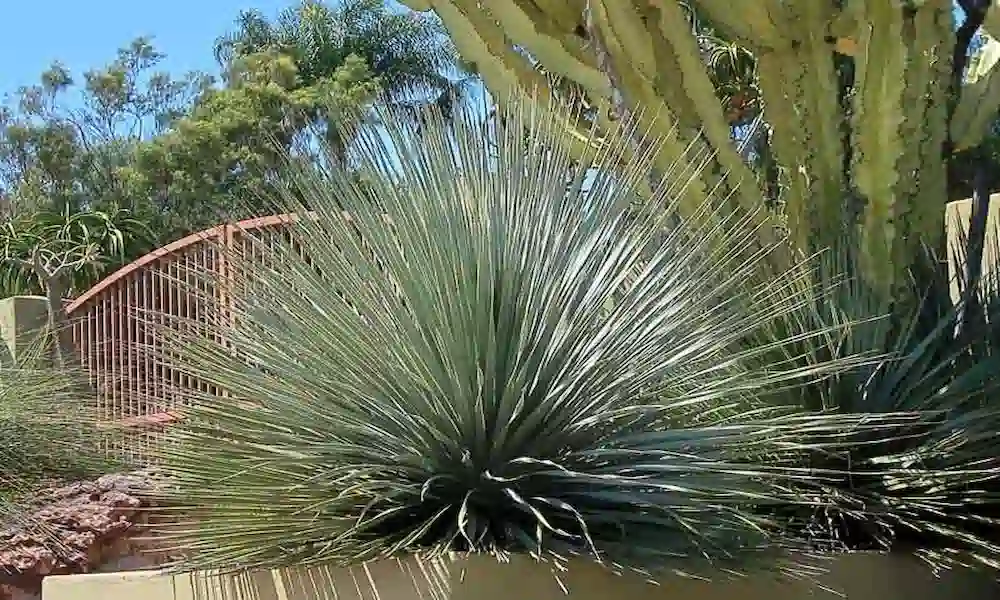
The desert spoon is an architectural standout. Its long, narrow leaves radiate outward in a spherical rosette, giving the plant a spiky, almost globe-like form that resembles a giant pincushion. Each leaf is edged with small teeth that catch the light and add fascinating texture.
In mature plants, tall flower stalks rise high above the foliage, adding another layer of visual interest. This plant is exceptionally hardy, thriving in hot, dry conditions while demanding very little maintenance — a great choice for a dramatic, low-upkeep focal point.
Best for: modern landscape installations, gravel gardens, statement plantings near patios.
6. Sotol
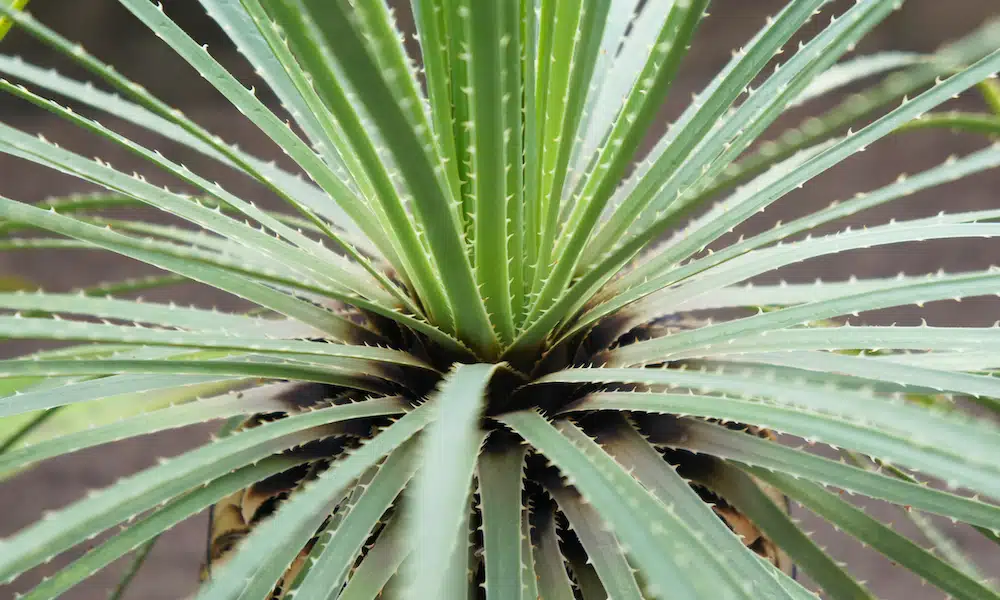
Closely related to the desert spoon, sotol is another plant known for its spiny, radiating foliage. Its long, narrow leaves are often tipped with sharp points, giving it an unmistakably bold presence. Over time, older leaves form a trunk-like base, creating a striking, almost sculptural silhouette.
Sotol produces towering flower stalks that attract birds and pollinators while adding vertical drama to the landscape. Hardy and drought-tolerant, sotol thrives in poor soils and intense sun, making it ideal for low-maintenance landscaping.
Best for: xeric borders, native and pollinator-friendly designs, dry slopes.
7. Madagascar Palm (Pachypodium)
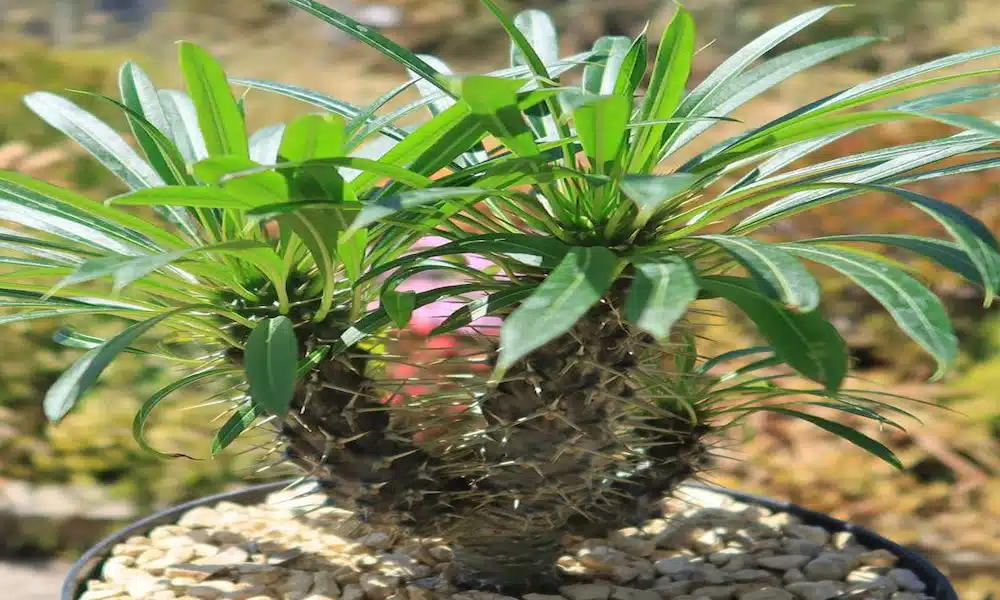
Despite its name, the Madagascar palm isn’t a true palm — it’s a succulent with a thick, spiny trunk. Its unusual form draws immediate attention, with sharp spines covering the trunk and narrow leaves clustered at the top like a tropical crown. In the right conditions, it produces bright white flowers that add to its exotic charm.
This plant is remarkably heat-tolerant, capable of withstanding extremely hot and dry environments. Its unique silhouette makes it a conversation piece in any landscape — perfect for adding a dramatic, slightly unusual focal point.
Best for: container plantings, tropical-meets-desert designs, statement specimens.
8. Ocotillo
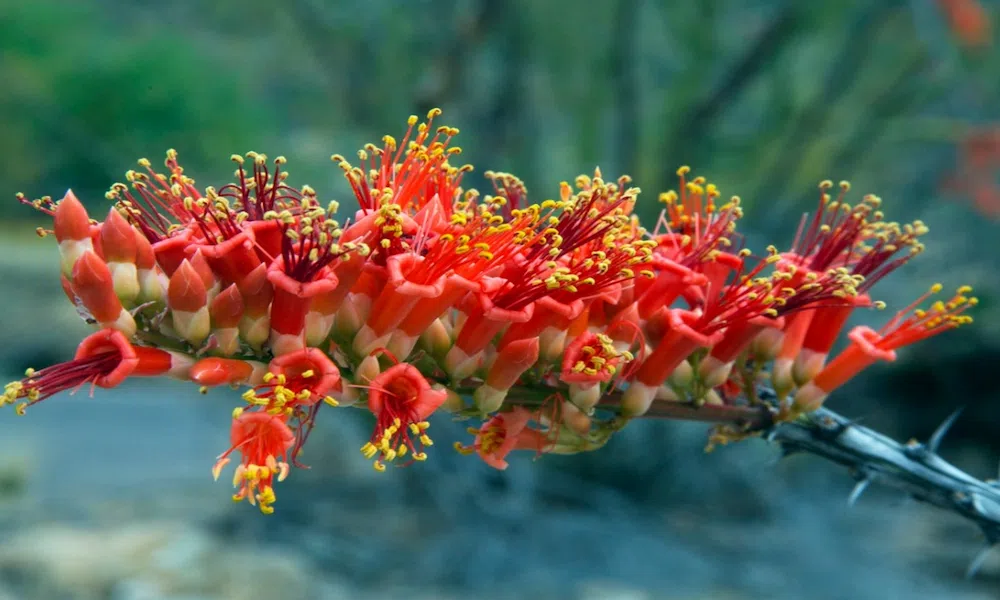
Ocotillo is a plant of stark beauty and dramatic presence. Its tall, slender stems are covered with sharp spines and can appear almost lifeless during dry periods. After rain, however, the stems burst into leaf, transforming the plant into a lush green spectacle.
In spring, bright red tubular flowers bloom at the stem tips, creating a striking contrast against the spiny growth. Ocotillo thrives in arid climates, adding vertical rhythm to the landscape while remaining both functional and visually captivating.
Best for: natural privacy screening, xeric accent plantings, southwestern-style gardens.
9. Prickly Pear Cactus
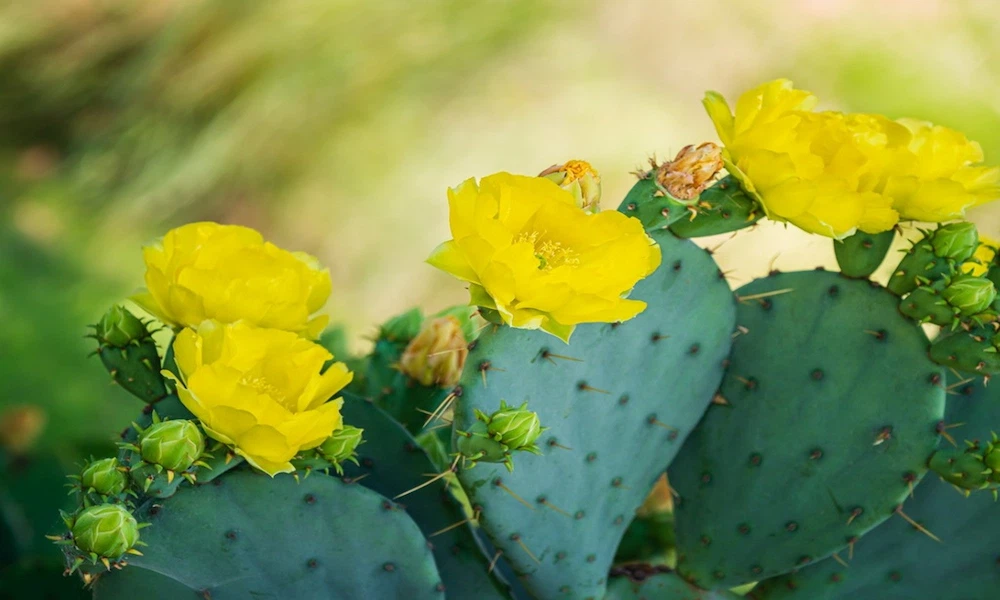
Cacti are the ultimate heat-tolerant landscape plants, and prickly pear is among the most iconic. With its flat, paddle-shaped pads covered in spines, it brings a bold, geometric element to gardens. Prickly pear cacti produce brilliant flowers in yellow, pink, or red, followed by edible fruit that adds both color and utility.
These plants need very little water and flourish in full sun. Their distinctive shape and vibrant blooms make them versatile — use them as ground cover, a natural barrier, or a standalone focal accent.
Best for: natural barriers, edible landscaping, drought-proof ground cover.
10. Barrel Cactus
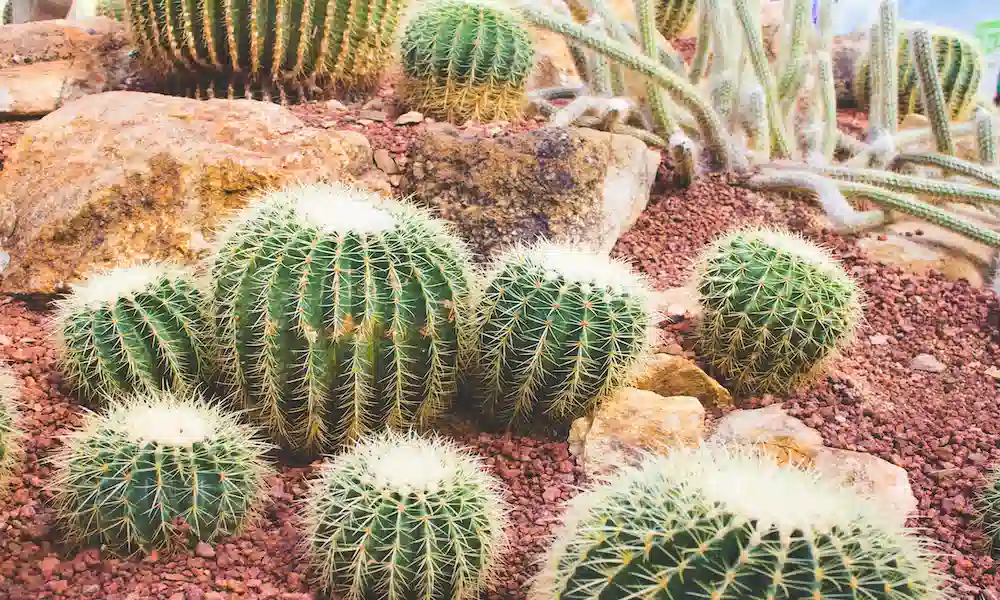
Round and spiny, barrel cactus is often described as a living sculpture. Its spherical shape is covered in rigid spines that give it a fierce yet captivating look. In summer, it typically produces bright yellow or orange flowers, creating a striking crown of color atop its round body.
Barrel cactus thrives in rocky, sun-soaked landscapes where other plants struggle. Its compact form makes it easy to integrate into gardens of any size, providing dramatic texture and an unmistakable desert aesthetic.
Best for: rock gardens, small-space landscaping, low-water front yard accents.
11. Pencil Cactus (Euphorbia tirucalli)
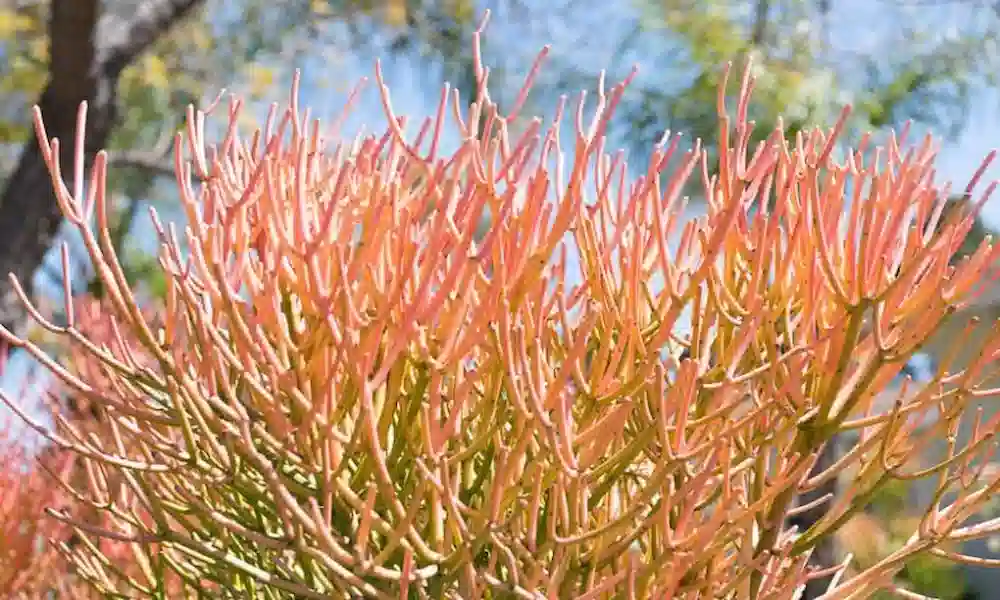
Rounding out the list, pencil cactus is a fast-growing succulent shrub made up of thin, pencil-like stems that form dense, upright clusters. Its smooth, almost minimalist form contrasts nicely with the spinier plants on this list, while still delivering the same drought tolerance and architectural punch.
Pencil cactus tolerates poor soil and intense heat with ease, making it a popular choice for modern, low-water landscape design. Note: its sap can irritate skin, so it’s best planted away from high-traffic areas where pets or kids might brush against it.
Best for: modern hedges, privacy screening, sculptural mass plantings.
Conclusion
Spiky plants are more than just hardy survivors of hot, dry climates — they bring dramatic shape, texture, and character to any landscape. From the bold symmetry of agave to the towering stalks of yucca and the fiery blooms of red hot poker, these plants add movement, color, and striking silhouettes to your garden, all while asking very little in return.
If you want a low-water, low-maintenance landscape that still looks stunning, these 11 plants are an excellent place to start. With the right placement, soil, and irrigation in place, they’ll keep enhancing your property’s beauty through every season of the year.
The team at Dreamscapes Florida can help you bring this kind of design to life — from initial planning through installation and irrigation.
FAQ: Spiky and Drought-Tolerant Landscape Plants
What is the most low-maintenance spiky plant for landscaping?
Agave and barrel cactus are widely considered the lowest-maintenance options. Both tolerate extreme heat and drought, rarely need fertilizing, and require little more than occasional weeding once established.
Are spiky plants safe to use near pools, walkways, or play areas?
Many spiky plants have sharp points or spines, so they’re best placed away from high-traffic zones like pool decks, walkways, and play areas. Softer-leaved varieties of aloe or smaller barrel cacti can work near pathways if planted with adequate setback.
Do spiky, drought-tolerant plants work in Florida landscapes?
Yes. Many spiky plants — including agave, yucca, and certain aloe varieties — handle Florida’s heat and sandy soil well, especially in well-drained beds. A professional landscape design service can help select varieties suited to your specific soil, sun exposure, and local microclimate.
How often do drought-tolerant spiky plants need watering?
Once established, most need watering only during extended dry spells. A properly designed irrigation system can automate this and prevent overwatering, which is a more common cause of decline than underwatering.
Can spiky plants be combined with a traditional lawn?
Yes. Many homeowners use spiky plants as accent beds or focal points within a broader landscape that still includes turf, sod, or lawn areas — a hybrid approach that balances low-water zones with usable green space.