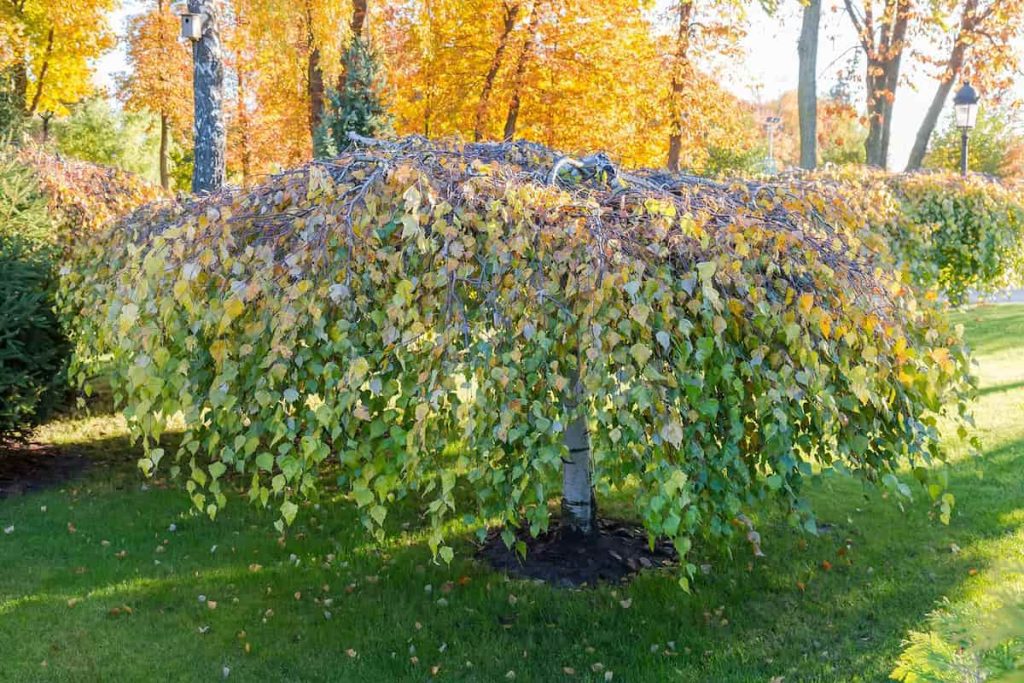
Birch trees are admired for their elegant bark, graceful foliage, and striking seasonal color. Before you plant one, though, it’s worth knowing that most birch varieties are bred for cooler, northern climates – so if you’re gardening in Palm Coast, Flagler Beach, or anywhere along Florida’s coast, climate fit matters as much as looks. This guide breaks down 12 types of birch trees, their bark, size, and growing conditions, and flags which ones actually hold up in Florida heat.
1. Silver Birch
The Silver Birch is one of the most recognizable birch trees, known for its striking white bark that peels in thin layers and delicate, airy foliage. It grows quickly and reaches impressive heights, making it a strong vertical accent in larger northern gardens. It struggles in prolonged heat and humidity, so it’s not a reliable choice for Central Florida landscapes.
2. River Birch
River Birch is the most heat- and humidity-tolerant birch on this list, which makes it the realistic option for Florida yards. It thrives in moist, well-drained soils and is known for textured, peeling bark in cinnamon to reddish-brown hues. If drainage is a concern on your property, pairing it with a properly designed French drain can help manage excess moisture around the root zone.
3. Paper Birch
Native to northern regions, Paper Birch is known for its iconic white, paper-like peeling bark and bright green leaves that turn golden in autumn. It needs cooler climates to thrive and typically struggles south of USDA zone 7 — well outside Florida’s growing range.
4. Yellow Birch
Yellow Birch has golden-bronze bark and a sturdy trunk, with leaves that shift from bright green in spring to yellow in fall. It’s valued for durability in the right climate, but like most birches on this list, it’s not suited to prolonged Florida heat.
5. Dwarf Birch
Dwarf Birch is a compact variety suited to small gardens, container planting, or rock gardens. Its slow growth and small stature make it manageable, though – as with the other cold-climate varieties here – it’s better suited to northern landscapes than Florida yards.
6. Himalayan Birch
Himalayan Birch is prized for pristine white bark and an upright growth habit, often used as a focal point in formal garden designs. It needs cooler conditions and isn’t a practical fit for Florida’s climate.
7. Bog Birch
Bog Birch is a hardy, shrub-like variety that prefers wet, boggy soils. Its dense branching suits naturalistic or water-edge plantings and provides shelter for wildlife — a nice tie-in if you’re also working with native aquatic plants around a pond feature, though it still favors cooler climates overall.
8. Japanese White Birch
Japanese White Birch has striking white bark and slightly more delicate leaf structure than other varieties. It’s a popular ornamental choice in cooler regions but shares the same heat sensitivity as most birches on this list.
9. Gray Birch
Gray Birch tolerates poor soil and urban conditions better than most birches, with white bark accented by dark triangular patches for winter interest. It’s more adaptable than some varieties but still performs best outside hot, humid climates.
10. Cutleaf Birch
A variation of Silver Birch, Cutleaf Birch has deeply cut, lace-like leaves that create a delicate, fern-like look. It’s an ornamental standout in the right climate but carries the same limitations as Silver Birch in Florida heat.
11. Paperbark Birch
Paperbark Birch has thick, peeling bark that provides winter interest and texture, combining the look of Paper Birch with slightly more resilience. It’s still best suited to cooler climates rather than coastal Florida.
12. Sweet Birch
Sweet Birch, or Black Birch, has dark, aromatic bark and rich green foliage that turns vibrant yellow in autumn. It prefers well-drained soils and cooler conditions, making it another variety better suited to northern gardens than Florida yards.
Frequently Asked Questions
Do birch trees grow well in Florida?
Most birch varieties struggle in Florida’s heat and humidity. River Birch is the exception — it’s the most heat-tolerant option and the one most likely to succeed in Palm Coast or Flagler County landscapes.
What is the best birch tree for a small garden?
Dwarf Birch is the best fit for small spaces or container planting, though it’s better suited to cooler climates than Florida.
Which birch tree has the whitest bark?
Silver Birch, Paper Birch, and Himalayan Birch are all known for their bright white, peeling bark.
If birch trees aren’t ideal for Florida, what should I plant instead?
For a similar look with better heat tolerance, it’s worth exploring our guide to the best trees to plant in Palm Coast yards, which covers species built for this climate.
Choosing the Right Tree for Your Landscape
Bark texture and leaf color are only part of the decision — climate fit determines whether a tree thrives or struggles for its entire life. If you’re planning a new landscape and want species that are proven to handle Florida’s heat, humidity, and sandy soil, our guide on the best trees to plant in Palm Coast yards is a better starting point than most generic tree lists.
For larger design decisions — where a tree sits relative to your home, hardscape, and existing beds — the 7 principles of landscape design explain how to plan placement so a mature tree doesn’t crowd your yard later. And if you’re removing an old tree to make room for a new one, our professional stump removal guide covers what that process actually involves.
Final Thoughts
Birch trees bring undeniable elegance to a landscape – but in Florida, that elegance comes with real limitations. River Birch is the one variety worth considering seriously; the rest are better admired in photos than planted in a Palm Coast, Flagler Beach, or Ormond Beach yard. If you want a tree that delivers similar visual impact without the climate risk, our landscape design services can help you choose and place species built for this region.