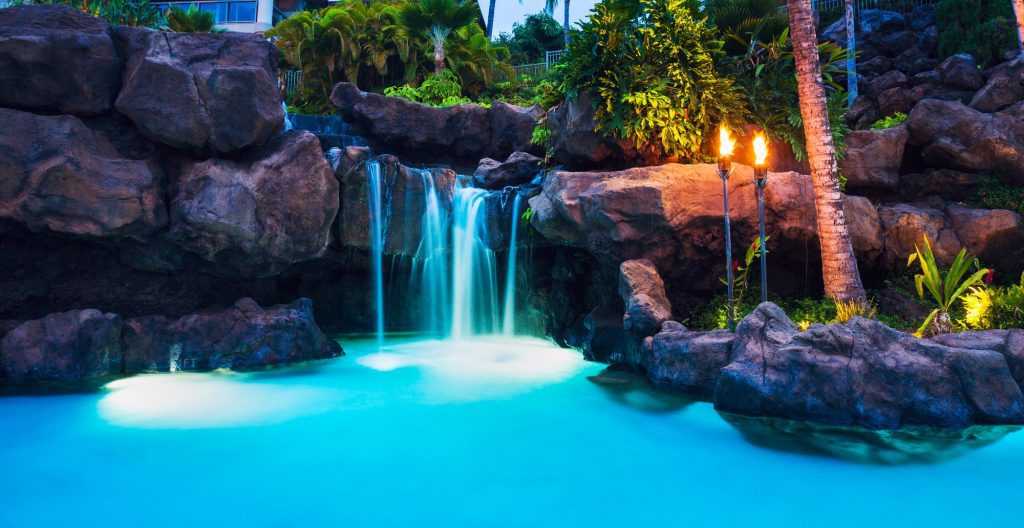
A basic DIY backyard waterfall in Florida typically costs $300–$800 in materials for a small pondless design, or $1,500–$5,000 if you want a larger pond-fed feature. The real Florida-specific challenge isn’t the build — it’s designing for hurricane season, sandy soil, and year-round humidity so your waterfall doesn’t become a maintenance headache by year two.
If you’re searching for how to build an outdoor waterfall in Palm Coast, Flagler Beach, Ormond Beach, Daytona Beach, St. Augustine, or Bunnell, this guide covers the full process, honest cost ranges, and the local conditions most general “how-to” articles never mention.
Why a Waterfall Is One of the Best Backyard Upgrades in Flagler County
A waterfall does more than look good. The sound of moving water measurably lowers stress and masks road or neighbor noise — a real perk on the tighter lots common in Palm Coast subdivisions. It also adds a natural focal point to a landscape design without requiring a full yard renovation, and it pairs well with existing hardscape like paver patios, fire pits, or pool decks.
Pondless vs. Pond Waterfall: Which Should You Build?
- Pondless waterfall — Water recirculates through a hidden underground reservoir instead of a visible pool. No standing water means fewer mosquito concerns (a real issue in Florida’s climate), easier hurricane prep, and lower maintenance. Best for small or narrow Palm Coast yards.
- Pond waterfall — Water collects in a visible basin, which supports fish and aquatic plants but requires more cleaning, algae control, and storm-season attention.
For most Flagler County homeowners, a pondless waterfall is the more practical choice — it delivers the same sound and visual impact with a fraction of the upkeep.
What You’ll Need
| Material | Purpose | Typical Cost Range |
|---|---|---|
| Rocks and boulders | Cascade surface and structure | Free (local sourcing) – $300+ |
| Submersible pump (500–800 GPH) | Circulates water continuously | $60–$180 |
| EPDM rubber pond liner | Holds water, prevents seepage into sandy soil | $80–$250 |
| Vinyl tubing | Connects pump to the top spillway | $15–$40 |
| Spillway or basin | Where water cascades and collects | DIY with rock, or $50–$150 pre-formed |
| Underlayment / landscape fabric | Weed and root barrier under the liner | $20–$50 |
Florida’s sandy, well-draining soil means underlayment isn’t optional — skip it and you risk sharp debris puncturing your liner within a season.
Step-by-Step: Building Your Waterfall
1. Plan around Florida’s climate, not just the design. Before you dig, decide how the feature will be secured or partially disassembled ahead of a hurricane. Loose rock and lightweight spillways can become storm debris; heavier, mortared rockwork or a design with removable decorative elements holds up better through hurricane season.
2. Prepare the site. Mark the layout and dig your basin or reservoir. Add landscape fabric to block weeds and protect the liner from Florida’s rocky or root-heavy subsoil.
3. Install the liner. Lay the EPDM liner without folds or wrinkles, overlapping the edges and securing them under stone. Wrinkles restrict flow and create weak points over time.
4. Set the pump. Place the pump at the lowest point, fully submerged, connected to tubing running to the top spillway. Test it before you build anything on top of it.
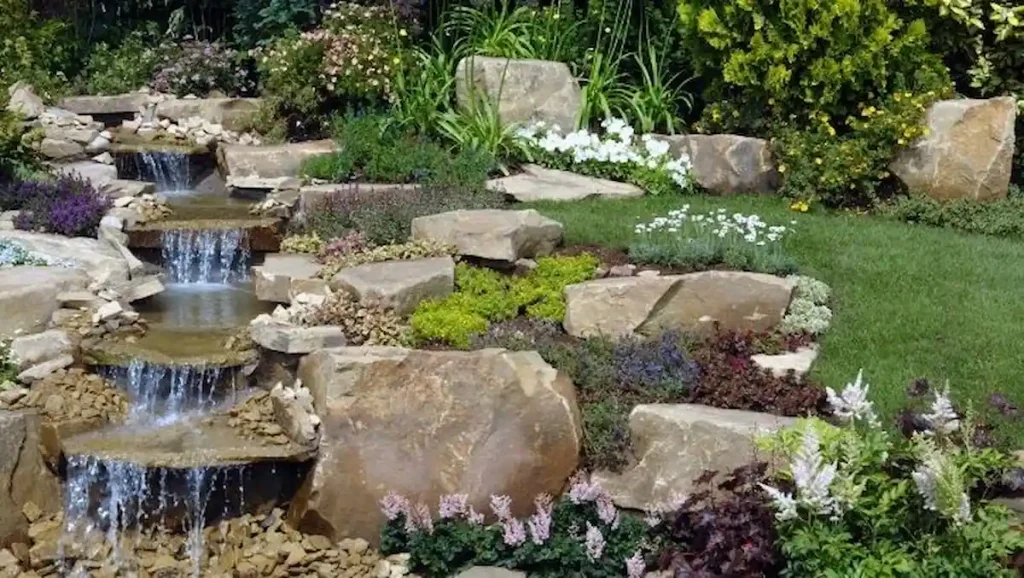
5. Build the cascade. Stack larger rocks at the base first, working upward, angling each stone slightly forward so water sheets naturally instead of splashing outside the basin — a common issue during Florida’s heavy summer rain.
6. Test and adjust flow. Run the pump and fine-tune rock placement until the water flows smoothly with no leaks. A flow rate of 500–800 GPH suits most small-to-medium residential waterfalls.
7. Finish the landscape. Frame the waterfall with Florida-friendly plantings — muhly grass, firebush, or dwarf fakahatchee grass hold up to heat and humidity far better than non-native ornamentals — plus low-voltage landscape lighting for evening ambiance.
5 Ways to Keep Costs Down
1. Source rock locally from quarries or landscape supply yards near Palm Coast rather than big-box retailers.
2. Start small. A modest pondless design under $500 can always be expanded later.
3. Buy pump and liner during off-season sales (fall/winter, before spring landscaping demand spikes).
4. Skip pre-fab kits — natural stone from a local supplier usually costs less and looks better long-term.
5. Repurpose materials from an existing landscaping or hardscape project.
Florida-Specific Maintenance: What Generic Guides Miss
- Algae control: Florida’s heat and humidity accelerate algae growth faster than in cooler climates — plan on more frequent rock and liner cleaning than a national guide will tell you.
- Hurricane prep: Know how you’ll secure, drain, or partially break down the feature before a storm.
- Pump upkeep: Check for leaf and debris blockage more often during rainy season (June–October).
- Mosquito prevention: Keep water moving; standing water anywhere in the system is a breeding risk in our climate.
When to Call a Professional
A DIY waterfall is a great weekend project for a simple, small pondless feature. It’s worth calling a licensed hardscape team when you want:
- A larger, multi-tier design with structural rockwork
- Integration with an existing paver patio, pool, or irrigation system
- Electrical work for pumps or landscape lighting
- A design engineered to survive Florida storm seasons without annual rebuilding
Frequently Asked Questions
How much does a DIY outdoor waterfall cost in Florida?
A small pondless waterfall typically runs $300–$800 in materials. Larger pond-fed features with more rockwork and plantings run $1,500–$5,000 DIY, or more if professionally installed with custom stonework.
Do backyard waterfalls attract mosquitoes in Florida?
Standing, non-moving water is the main mosquito risk. A properly running pondless waterfall keeps water continuously circulating, which significantly reduces breeding conditions compared to a still pond.
What size pump do I need for a small backyard waterfall?
Most residential waterfalls run well on a submersible pump rated 500–800 gallons per hour (GPH). Larger or multi-tier waterfalls need a higher flow rate.
Should I remove my waterfall before a hurricane?
Loose rock, lightweight spillways, and decorative elements should be secured or removed ahead of a storm. Heavier mortared rockwork is more storm-resistant but should still be inspected after high winds.
Can Dreamscapes Florida build a waterfall for me instead of DIY?
Yes. Our hardscape services team designs and installs custom water features, patios, and outdoor living spaces across Palm Coast and Flagler County, built to hold up to Florida’s climate.
Ready for a Waterfall Built to Last Through Florida Weather?
DIY is a great way to get started, but a waterfall engineered for hurricane season, sandy soil, and year-round humidity takes local expertise. Dreamscapes Florida has completed 886+ landscaping and hardscape projects for homeowners across Palm Coast, Flagler Beach, Bunnell, St. Augustine, Ormond Beach, and Daytona Beach since 2015.
Get a free hardscape quote → or explore our landscape design and irrigation services to plan a water feature that fits your whole yard.