

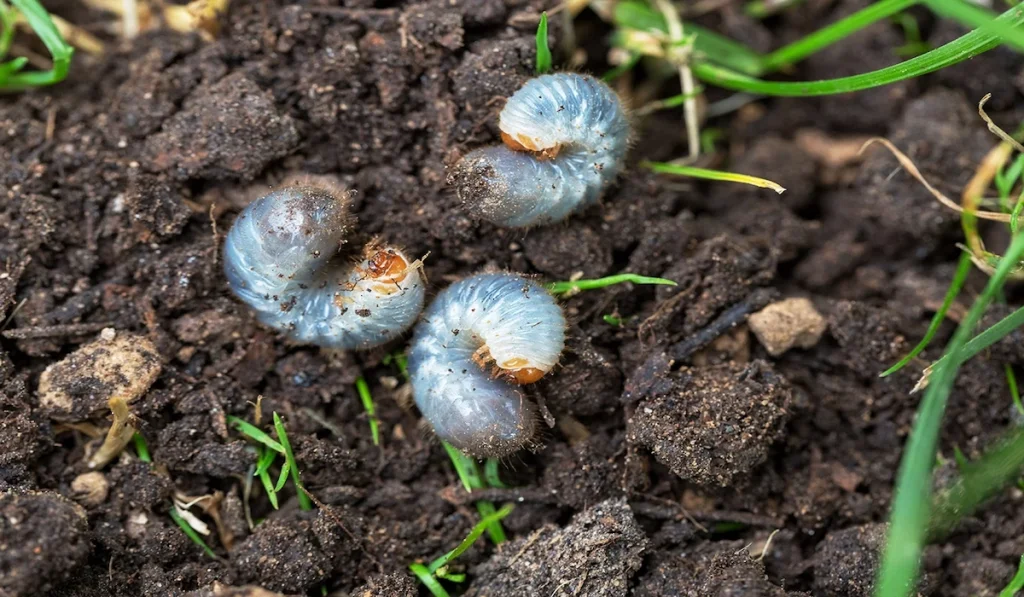
If you’ve noticed patches of brown, dying grass, or an unusual number of birds pecking around your lawn, you might be dealing with a grub infestation. These tiny, C-shaped larvae can cause extensive damage to your lawn, often without you realising it until it’s too late. Let’s dive into how grubs damage your lawn and what you can do to protect your greenery.
What Are Grubs?
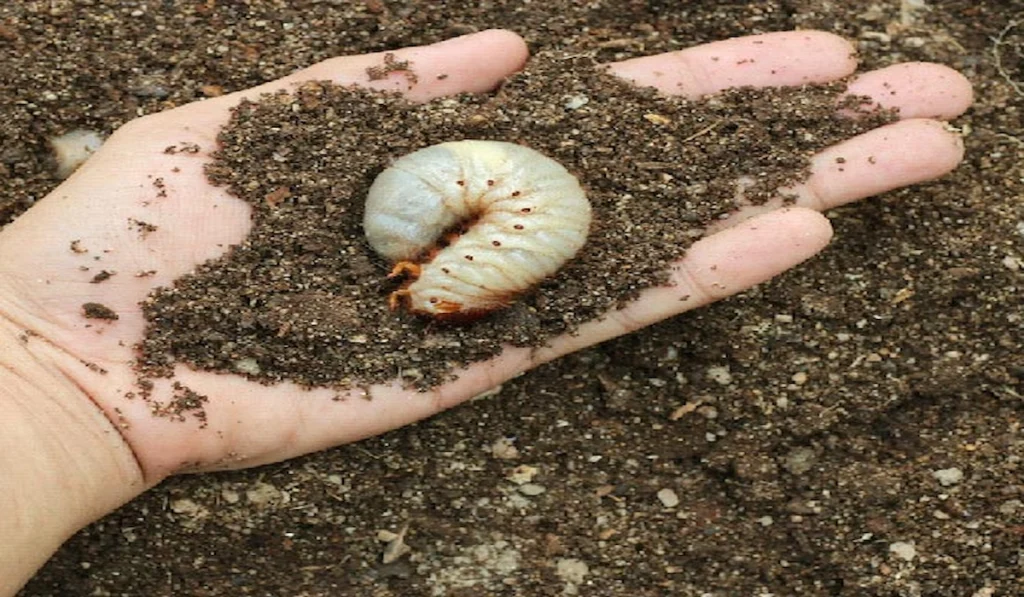
Grubs are the larvae of various beetles, most commonly the Japanese beetle, May/June beetle, and others. These larvae are typically white and C-shaped, living beneath the surface of your lawn where they feed on plant roots, including grass roots. The most damaging stage of grubs is the larval stage, when they are actively feeding.
The Impact of Grubs on Your Lawn
- Root Damage
Grubs are notorious for feeding on the roots of your grass. They burrow into the soil and feast on the tender roots that anchor the grass. As the roots become damaged, the grass becomes weak, begins to yellow, and dies. Without a strong root system, grass is unable to properly take in nutrients and water.
- Patchy, Brown Patches
The first noticeable symptom of a grub problem is often the appearance of large, unsightly brown patches. These patches spread quickly and may even feel spongy when walked on, as the roots no longer anchor the grass securely. Over time, these patches expand, making your once lush lawn look more like a dry, neglected field.
- Increased Animal Activity
A sure sign of grubs beneath your lawn is a sudden influx of animals, such as birds, raccoons, and skunks. These creatures are drawn to the grubs, digging up your lawn in search of a tasty snack. Their digging can cause even more damage to your grass, leaving unsightly holes and even more patches of dead grass.
- Weakening of the Lawn
As grubs continue to feed, the overall health of your lawn declines. Not only does the grass begin to die, but the soil becomes less able to retain water, further stressing the lawn. With weakened grass, your lawn is more susceptible to other pests and diseases, compounding the damage.
- Long-Term Consequences
If left unchecked, grub damage can lead to the complete death of your lawn. Once the roots are severely damaged, it can be difficult to repair the lawn without reseeding or replanting. In some cases, you may even need to replace the soil to restore your lawn’s health.
How to Spot Grub Damage Early
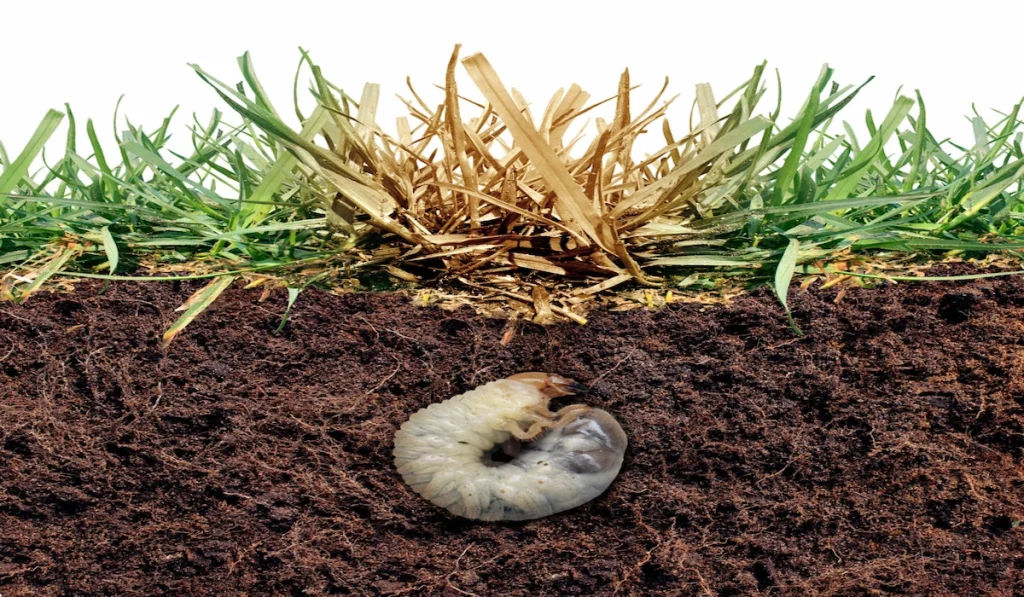
The earlier you catch a grub problem, the easier it is to manage. Keep an eye out for the following signs:
- Browning grass that doesn’t recover with watering.
- Soft or spongy spots in the lawn.
- Visible digging by birds or animals.
- Large areas of dying grass, especially during the summer months.
How to Prevent and Control Grub Damage
- Monitor Your Lawn Regularly
Check for signs of grubs every few weeks, especially during the late spring and early summer when they are most active. You can do this by digging up a small section of your lawn and inspecting the soil for grubs. If you find more than 10 grubs per square foot, it’s time to take action.
- Apply Beneficial Nematodes
One natural way to control grubs is to use beneficial nematodes, microscopic worms that parasitise grubs and kill them. They’re safe for pets, plants, and humans, but highly effective in controlling grub populations.
- Use Grub Control Products
There are a variety of chemical and organic grub control products available on the market. These products typically need to be applied in the late summer or early fall when grubs are actively feeding. Be sure to follow the instructions on the packaging for the best results.
- Keep Your Lawn Healthy
A healthy lawn is better equipped to fight off pests like grubs. Regularly fertilize your lawn, water it properly, and mow it at the correct height to encourage strong grass growth. The healthier the grass, the less likely grubs are to cause significant damage.
- Rethink Your Lawn Care Routine
If grubs have already caused substantial damage, you may need to reseed or even replace the soil. In severe cases, consulting a lawn care professional may be your best option for restoring your lawn’s health.
Final Thoughts
Grubs might be small, but they can cause big problems for your lawn. By staying vigilant, regularly monitoring your lawn, and taking proactive steps to control grubs, you can ensure your grass stays green and healthy year-round. Don’t let these pesky insects take over your yard—act early and keep your lawn in top shape!