

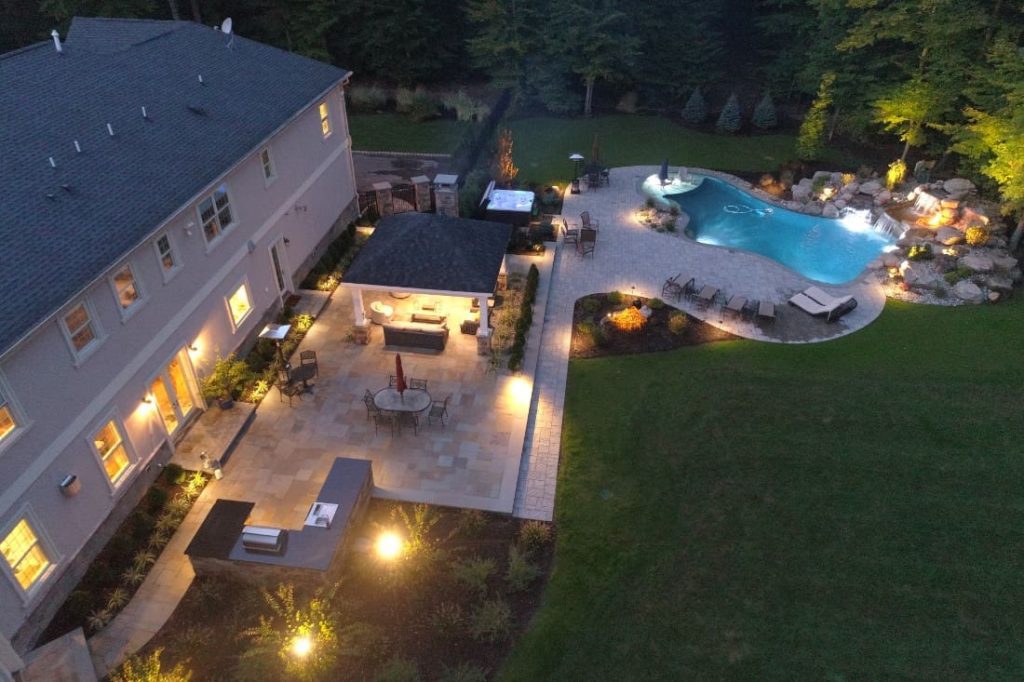
A well-designed landscape does not lose its beauty after sunset. With the right lighting approach, your garden and outdoor spaces can look even more impressive at night. Thoughtful landscape lighting improves safety, highlights natural features, and creates a welcoming atmosphere around your home. For gardeners and homeowners, understanding how to use lighting correctly can transform an ordinary yard into a visually striking outdoor space without overwhelming it.
This guide explains practical, proven lighting tips to highlight your landscape at night while keeping the design natural, balanced, and functional. The focus is on clarity, usability, and long-term value rather than decoration alone.
Why Landscape Lighting Matters After Dark
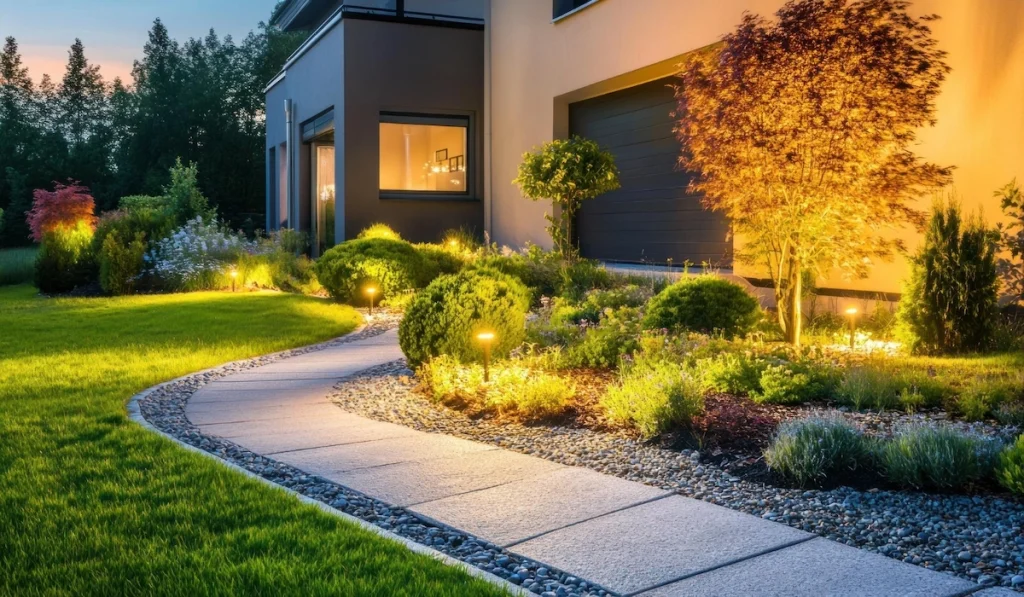
Landscape lighting serves more than one purpose. It improves visibility, guides movement, and protects against accidents, especially along pathways, steps, and entrances. At the same time, it adds depth and character to your garden by revealing textures, shapes, and focal points that are invisible in daylight.
From a gardening and landscaping perspective, proper lighting also extends the time you can enjoy your outdoor space. A well-lit landscape allows you to relax outside, host gatherings, or simply appreciate your plants and design even after the sun goes down. When done correctly, lighting enhances the landscape rather than competing with it.
Understanding the Basics of Landscape Lighting Design
Before installing any lights, it is important to understand how light interacts with outdoor spaces. Landscape lighting works best when it is layered, subtle, and intentional. Flooding the yard with bright lights often ruins the natural feel and creates harsh shadows.
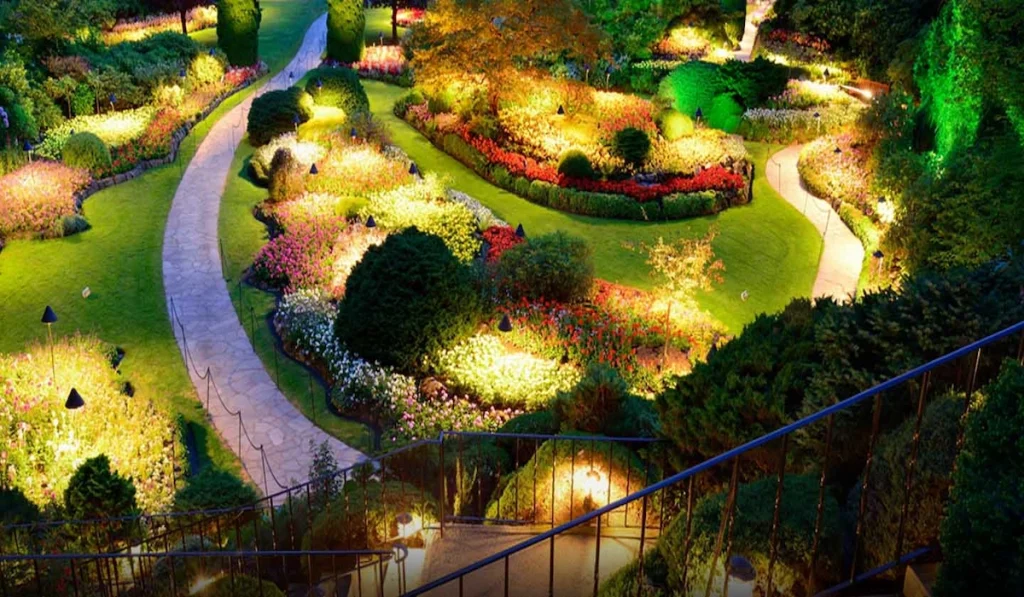
A good lighting design starts by identifying what deserves attention. Mature trees, stone features, water elements, garden beds, and architectural details are often strong candidates. Lighting should guide the eye gently from one area to another instead of illuminating everything equally. This approach creates balance and visual interest while maintaining a calm nighttime environment.
Choosing the Right Areas to Highlight
Not every part of your landscape needs light. Strategic placement is more effective than excessive coverage. Focus on areas that naturally stand out during the day and use lighting to enhance them at night.
Key areas often include pathways and walkways, which benefit from soft, low-level lighting that improves safety without glare. Trees and tall plants respond well to upward lighting, which highlights their shape and texture. Garden borders and flower beds can be softly lit to add depth, while water features reflect light beautifully, becoming natural focal points after dark.
Types of Landscape Lighting and When to Use Them
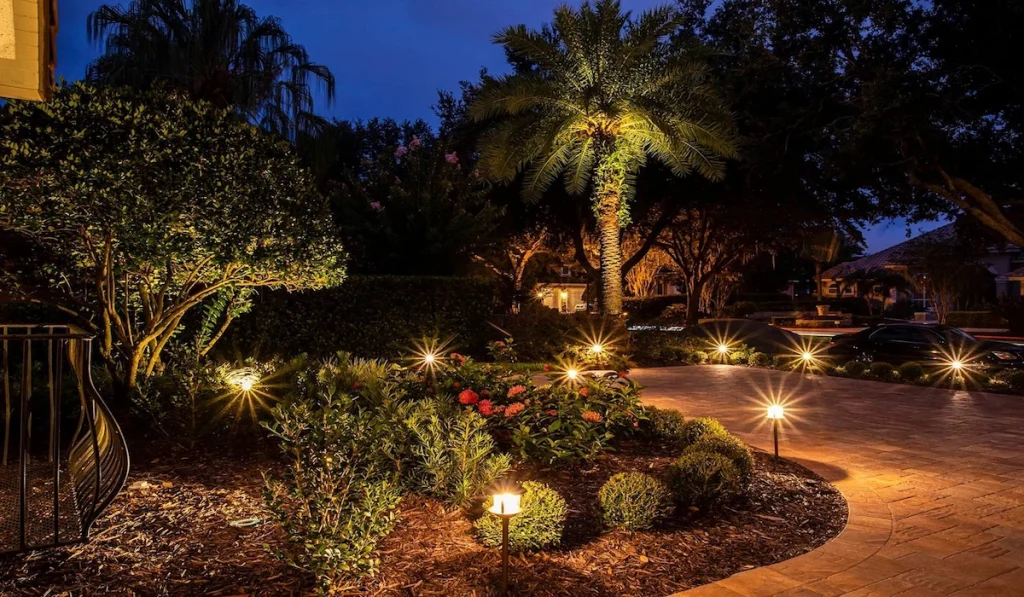
Different lighting techniques create different visual effects, and knowing when to use each one makes a significant difference. Uplighting is commonly used at the base of trees or large plants to emphasise height and structure. Downlighting, often placed in trees or on structures, mimics natural moonlight and creates a soft, realistic glow.
Path lights are best kept low and spaced evenly to guide movement without overpowering the landscape. Accent lighting works well for sculptures, garden features, or textured walls, helping draw attention to details that might otherwise be missed at night. Using these techniques together creates a layered lighting effect that feels intentional and refined.
Using Light Intensity and Colour Wisely
Brightness plays a major role in how your landscape feels at night. Softer light usually works better than harsh, bright illumination. Overly bright lights can flatten textures, wash out colours, and disturb nearby homes or wildlife.
Warm white lighting is generally preferred for gardens and landscapes because it feels natural and inviting. Cooler light temperatures may work for modern designs or security-focused areas, but they should be used sparingly. Consistency in light colour across the landscape helps maintain a cohesive look and avoids visual confusion.
Practical Lighting Tips for Gardeners and Homeowners
From hands-on experience, one of the most effective approaches is to test lighting at night before final installation. Temporary placement allows you to see how shadows fall and how plants respond to light as they move with the wind. This step often prevents common mistakes such as glare, uneven coverage, or poorly aimed fixtures.
It is also important to consider plant growth. Trees and shrubs will change in size and shape over time, and lights should be positioned with future growth in mind. Adjustability is a valuable feature in landscape lighting systems, allowing you to refine the look as your garden evolves.
Energy Efficiency and Safety Considerations
Modern landscape lighting has improved significantly in terms of efficiency and safety. LED lights are widely recommended due to their low energy use, long lifespan, and consistent performance. They reduce electricity costs while providing reliable illumination year-round.
Outdoor lighting should always be weather-resistant and rated for exterior use. Proper installation, including safe wiring and secure fixtures, helps prevent electrical issues and ensures long-term reliability. For homeowners unsure about installation, consulting a qualified professional is a practical and responsible choice.
Common Landscape Lighting Mistakes to Avoid
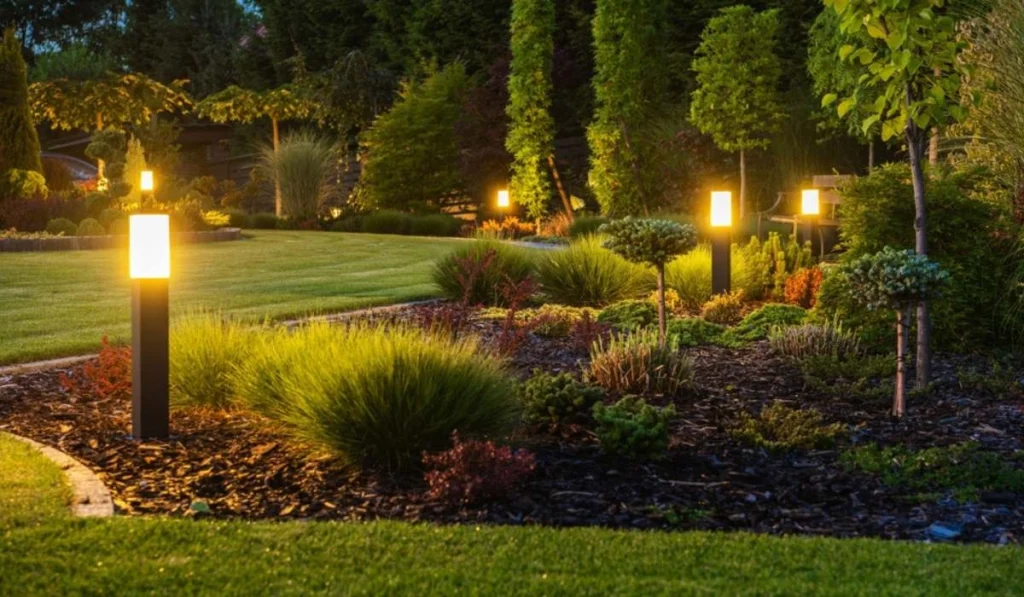
One of the most common mistakes is using too many lights, which can make the yard feel artificial and overwhelming. Another frequent issue is poor fixture placement, such as lights shining directly into windows or walkways, resulting in glare rather than comfort.
Ignoring maintenance is another problem. Dirt, debris, and plant growth can block light over time, reducing effectiveness. Regular checks and minor adjustments keep the lighting system performing as intended and preserve the landscape’s overall appearance.
How Landscape Lighting Adds Long-Term Value
Well-planned landscape lighting enhances curb appeal and increases a home’s perceived value. A thoughtfully lit yard creates a strong first impression and signals care, quality, and attention to detail. For homeowners, this can be especially valuable when hosting guests or preparing a property for sale.
Beyond appearance, lighting improves usability and safety, making outdoor spaces more functional year-round. This combination of beauty and practicality is what makes landscape lighting a worthwhile investment rather than a decorative extra.
Conclusion
Highlighting your landscape at night is not about making it brighter but about making it better. By focusing on key features, using appropriate lighting techniques, and maintaining balance, you can create an outdoor environment that feels inviting, safe, and visually engaging after dark.
For gardeners and homeowners, the best results come from thoughtful planning, patience, and a willingness to adjust over time. When lighting is used with purpose, it enhances the natural beauty of your landscape and allows you to enjoy it long after daylight fades.