

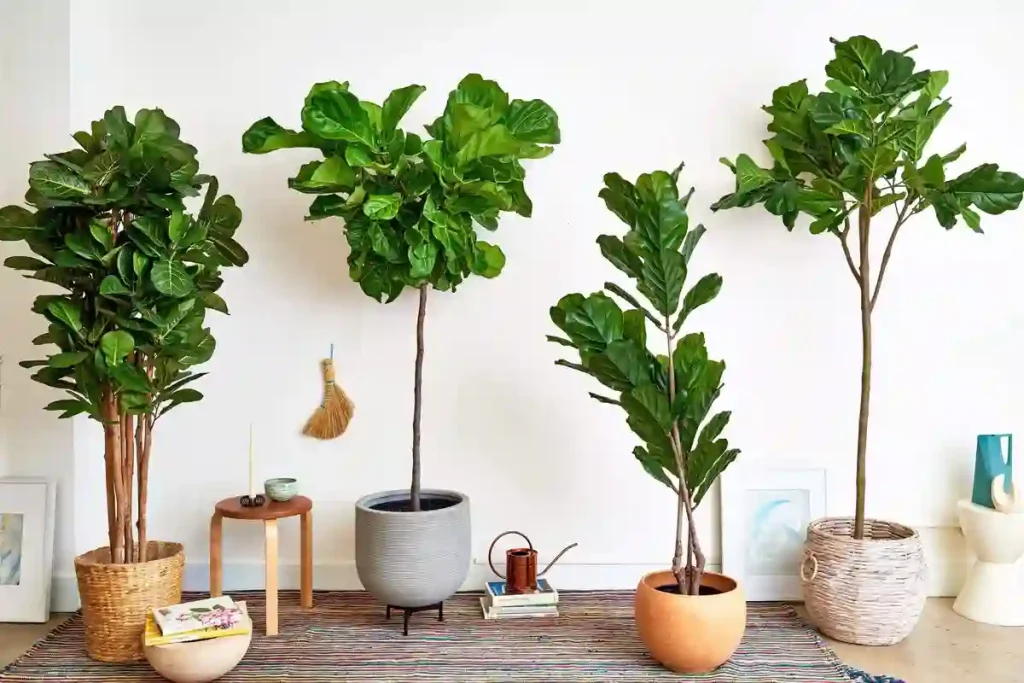
The fiddle leaf fig is one of the most popular indoor plants, known for its large, glossy, violin-shaped leaves and bold architectural presence. While it has a reputation for being finicky, proper care makes it surprisingly manageable. Understanding its natural environment and mimicking those conditions indoors is the key to long-term success.
Understanding the Fiddle Leaf Fig’s Natural Habitat
Fiddle leaf figs originate from the tropical rainforests of West Africa, where they grow in warm temperatures, high humidity, and bright, filtered sunlight. In the wild, these plants receive consistent light, steady moisture, and excellent air circulation. When grown indoors, problems usually arise when these conditions aren’t closely replicated. Stability and consistency matter far more than frequent adjustments.
Light Requirements for Healthy Growth
Bright, indirect light is essential for a thriving fiddle leaf fig. Place the plant near a large window where it can receive plenty of natural light throughout the day without direct sun hitting the leaves for extended periods. Direct sunlight can scorch the foliage, while insufficient light often results in slow growth, leggy stems, and leaf drop.
Rotating the plant every couple of weeks helps ensure even growth and prevents it from leaning toward the light source. If natural light is limited, a quality grow light can be an effective alternative.
Proper Watering Techniques
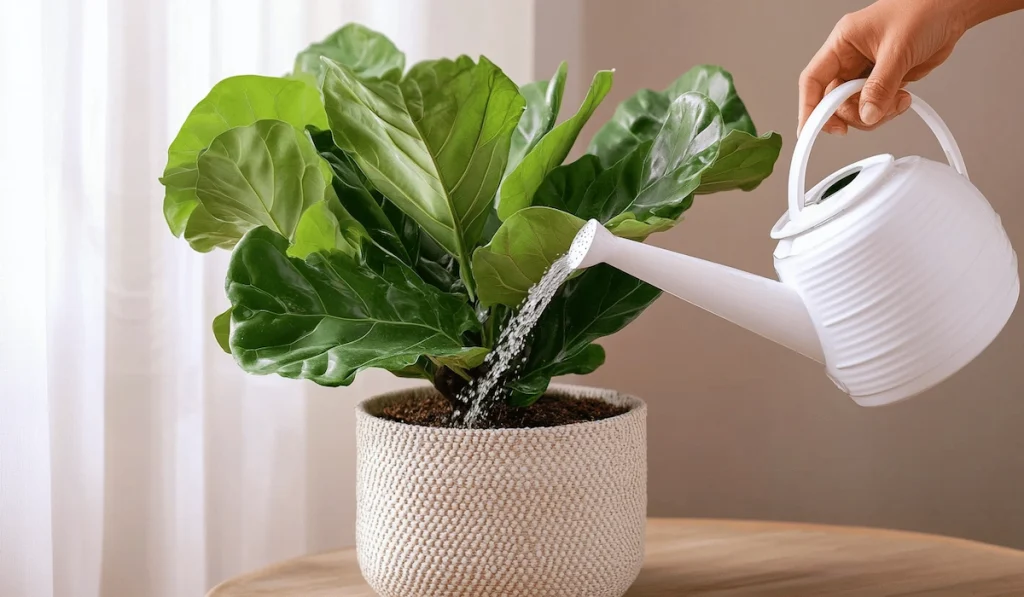
Watering is one of the most critical aspects of fiddle leaf fig care. The soil should be kept lightly moist but never soggy. Overwatering can lead to root rot, while underwatering may cause leaves to droop or develop brown edges.
Allow the top few inches of soil to dry out before watering again. When watering, water thoroughly until excess moisture drains from the bottom of the pot. Empty the saucer afterwards to prevent standing water from damaging the roots. Consistency is key—irregular watering schedules often stress the plant.
Choosing the Right Soil and Pot
Repotting is typically needed every one to two years or when roots begin to circle the bottom of the pot. Choose a container only slightly larger than the previous one to avoid excess moisture retention.
Temperature and Humidity Needs
Fiddle leaf figs thrive in warm indoor environments with stable temperatures. They prefer conditions between 65°F and 80°F and should be kept away from cold drafts, air conditioners, heaters, and sudden temperature changes.
Humidity also plays a vital role in leaf health. Dry air can cause brown leaf edges and poor growth. Increasing humidity through regular misting, a pebble tray, or a humidifier helps maintain lush, vibrant foliage—especially during winter months.
Feeding for Strong, Vibrant Leaves
During the growing season, typically spring through early fall, feeding your fiddle leaf fig supports healthy leaf development. A balanced liquid houseplant fertiliser applied every four to six weeks is sufficient. Avoid over-fertilising, as excess nutrients can damage the roots and cause leaf discolouration.
In cooler months, growth naturally slows, and feeding should be reduced or paused altogether.
Pruning and Leaf Care
Pruning helps maintain shape and encourages fuller growth. Removing damaged or yellowing leaves allows the plant to redirect energy toward healthy foliage. When pruning, always use clean, sharp tools to prevent disease.
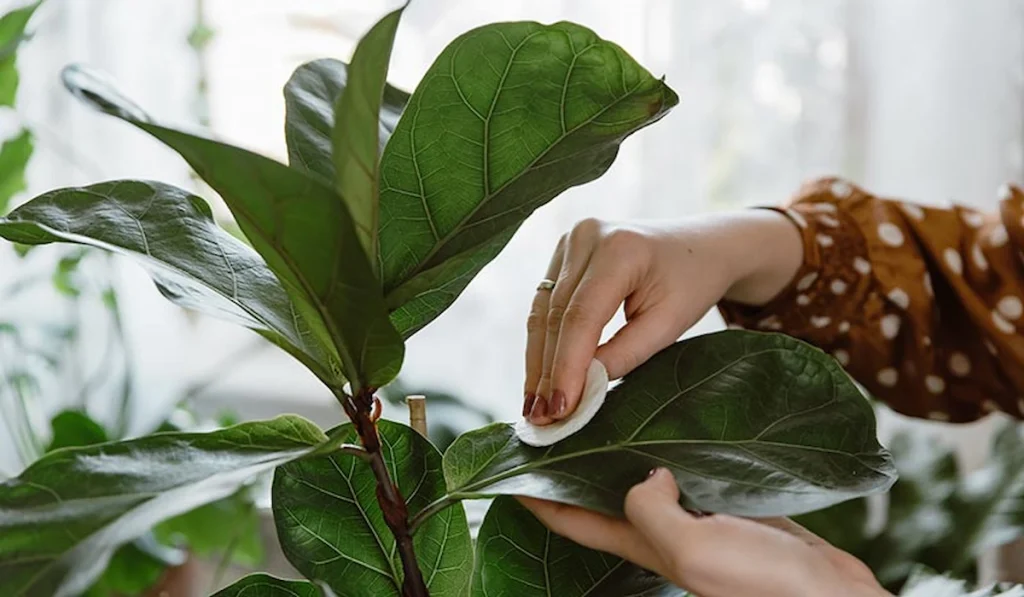
Regularly wiping the leaves with a damp cloth removes dust buildup and improves the plant’s ability to photosynthesise. Clean leaves also help you spot early signs of pests or stress.
Common Problems and How to Fix Them
Brown spots often indicate inconsistent watering or poor drainage, while yellow leaves may indicate overwatering. Sudden changes in light, temperature, or location commonly cause leaf drop. Fiddle leaf figs prefer stability, so avoid moving them frequently once they’ve adjusted to a spot.
Pests such as spider mites and scale can appear, particularly in dry conditions. Regularly inspecting and promptly treating with neem oil or insecticidal soap can prevent infestations from spreading.
Long-Term Tips for a Thriving Fiddle Leaf Fig
Patience and consistency are the most critical factors in successful fiddle leaf fig care. These plants don’t respond well to constant changes, so once you find a routine that works, stick with it. Pay attention to how your plant reacts to light, water, and humidity, and make gradual adjustments as needed.
With the right balance of light, water, and care, a fiddle leaf fig can grow into a stunning, long-lasting centrepiece that enhances any indoor space.